Belief is an essential component of human existence. Whether it be religious, atheistic, or political, believing in a system of values provides sustenance to the human psyche. Even among adherents of nihilism, one observes a pattern of belief that is systematic. However, why is it that humans need belief to sustain them? Furthermore, what is belief?
According to Webster’s dictionary, the latter of these is defined as “a state or habit of mind in which trust or confidence is placed in some person or thing.” In addition, it is “something that is accepted, considered to be true, or held as an opinion.” Thus, it is the immersion of the human psyche in a system of thought that provides a recognizable and relatable pattern of both thought and behavior. Belief is something that is “considered true” both implicitly and explicitly.
Therefore, belief can be considered one of the most powerful mechanisms of the human psyche, as it is the fundamental axiomatic structure by which one orients oneself. What one believes not only strongly influences thoughts and behaviors, but also provides essence and structure to perception. How one perceives oneself, others, and the world around them is strongly influenced by what one believes to be true.
The influence that belief has on thoughts and behaviors must be strongly considered when choosing a system of belief. What one believes can influence the acts against humanity in which one may engage. Thus, it is important that a belief structure is not only beneficial for the individual but for others as well.
In addition, what may sometimes appear to benefit the individual on the surface may, in fact, be detrimental. For example, if what one believes emphasizes hedonistic tendencies, although on the surface it appears to benefit the individual, the benefit is but expedient, with little to no development. Over time, this may only lead to a demented and demonic self that burdens the world and oneself.
Nevertheless, belief is that which often provides meaning and structure in the face of the chaos of life. The belief systems that human thought provides are means of organizing one’s psyche and the world around them. Without such systems, one discovers only chaos. It is through the perceptual template of belief that relatedness, coherence, and familiarity can emerge within the psyche of the individual.
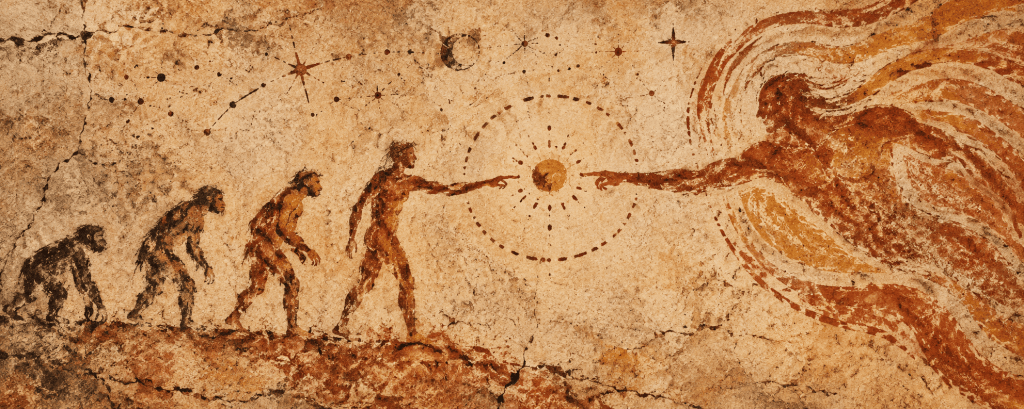
These belief systems appear to be a consequence of evolutionary processes. As humans evolved the capacity for symbolic thought, they began to formulate and articulate concepts related to the means of survival. These concepts would have then been organized and disseminated throughout individual tribes, helping promote coherence and cohesion. Cooperation among inhabitants would have become more efficient as communication between them developed in similarity.
As time progressed, these belief systems increased in complexity, with narrative elaboration developing alongside the values of survival. In addition, this increased complexity was accompanied by the unification of several regional tribes that went on to form the world’s first civilizations. With this formation came the introduction of writing, which further developed the complex nature of belief systems.
Diverse interpretations of existing belief systems flourished during the first millennium BCE, as religious scholars and philosophers contemplated writings of their day and earlier periods. The concepts of God, the soul, meaning, and value were central themes of revision. Religious scholars sought answers to these concepts through spiritual and religious means, while philosophers looked to logic and rationality as primary sources of understanding.
Complexity increased significantly during the Renaissance and Enlightenment, when scientific inquiry gradually began to emerge as a source of truth and validation. Observation and experimentation steadily replaced the religious notion of sacrifice and prayer.
Albeit, religious belief did not degrade into some primitive source of wishful thinking, but rather was allocated to those who perceived it as the source of all things. Likewise, science developed into its own system of epistemology, whereby individuals and groups could derive meaning, value, and relatedness. Both systems are now major epistemic foundations from which systems of belief originate and evolve.
Humanity now possesses a diverse range of belief systems to choose from that help provide sustenance to one’s life. Each belief system represents an interpretation of whatever epistemic truths either or both systems of religion and science have to offer. These interpretive frames of reference allow an individual to find what appears to be true—and it is this perceived truth that provides that individual with a means of categorizing themselves, others, and the world around them.
Thus, they are frames of reference that help form perception into coherent and relatable sets of propositional predictions. Every interaction with the world is a set of propositional predictions that are nested inside one’s belief frame of reference. These predictions can sometimes be accurate, while other times they may be inaccurate.
The degree of one’s devotion to a belief system will determine whether an inaccurate prediction provides the necessary information for revision. It is at this moment that an individual can benefit themselves and others by acknowledging the inaccuracy of the predictive belief reference. If acknowledged, accommodations to the belief propositions must follow.
These accommodations, therefore, represent the evolution of the Self toward a more sustainable existence, mirroring the collective’s attempts throughout the millennia preceding one’s existence. This act could be understood as hypothesis reformulation in scientific terms, and enlightenment or transfiguration in religious terms. Through this process, one organizes the psyche in a manner that reflects coherence and reality as such. Thus, the development of the Self is not merely dependent upon the coherence of one’s belief structure, but upon its capacity to accommodate and reorganize itself in accordance with an evolving understanding of reality.
How religious narratives and scientific inquiry might work together to deepen self-understanding and cultivate psychological wholeness.
Six million years have transpired since humans shared a common ancestor with chimpanzees — and since that time the discrepancy between human and chimpanzee capabilities has increased exponentially. Differences in general intelligence, manual dexterity, and sensory processing have provided us with the ability for symbolic generation (Donald, 1991; Tattersall, 2013). This symbolic generational ability has progressed through iconic representation to indexical reference to symbolic inference. Through this hierarchical referential and inferential pattern sequence, we have garnered the ability to manage ourselves and the environment in ways that no other species could fathom (Deacon, 1998).
Means of self-management involved categorical modes of occupation such as tool making, hunting, caregiving, and protecting. Each of these modes of occupation progressively developed into a shared network that enabled the survival of the group. This ingroup cooperation and collaboration allowed for sustainable redistribution that provided a bidirectional effect: occupational contribution leads to redistribution of resources that then leads to sustainability of both the individual and group (Rappaport, 1999; Sosis & Bressler, 2003; Tattersall, 2013).
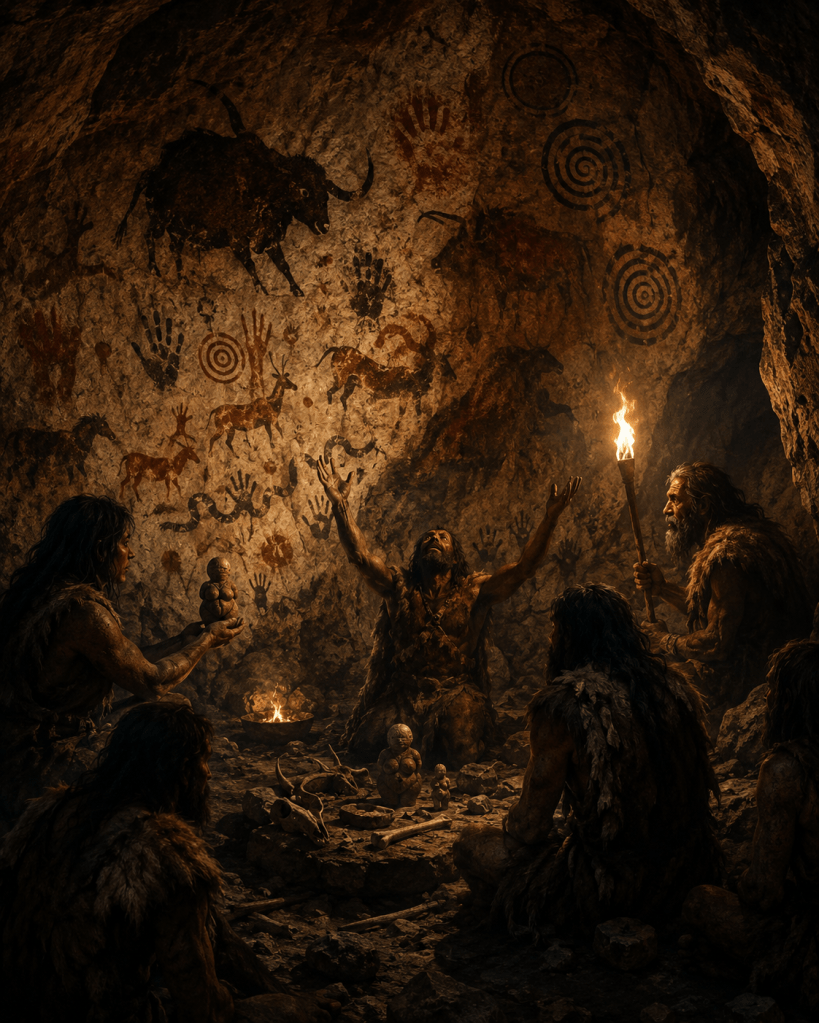
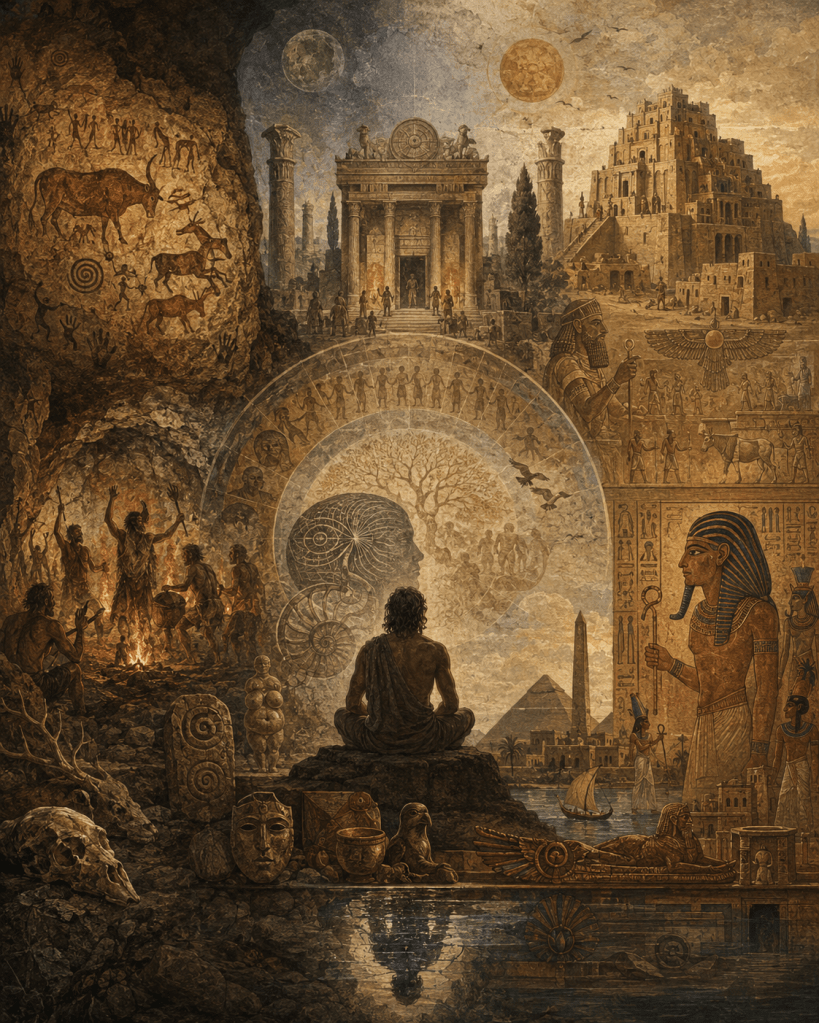
As we continued to evolve, self-manageable provisions increased in complexity. Symbolic thought and articulation was a significant contributor to these provisional complexities. This symbolic ability became evident into the Upper Paleolithic with the advent of artistic expression buried deep within caves throughout modern day Europe. Depictions of various animals, humans, anthropomorphic figures, and varying symbols fill the cave walls, analogous to that of Renaissance cathedrals. In addition to these symbolic articulations are the remnants of what appear to be ritualistic behavior such as animal sacrifice. Thus, these caves could have potentially housed the first religious experiences of humanity (Lewis-Williams, 2004; Narr, 2021).
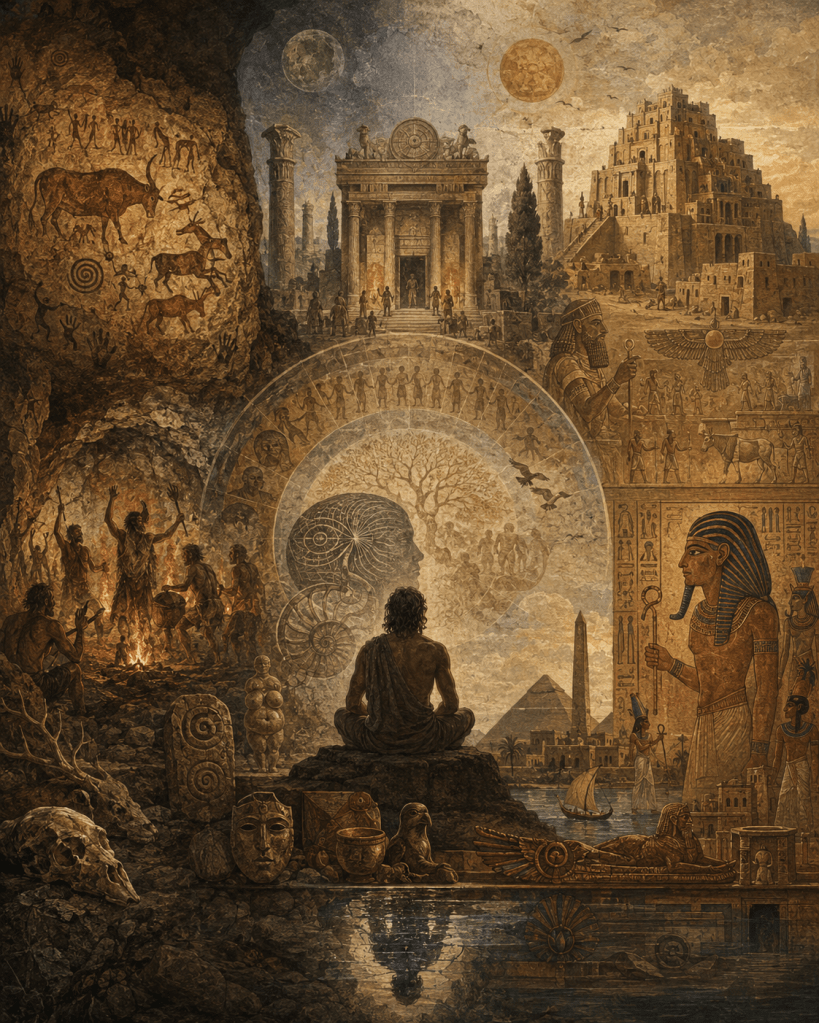
These primitive religions evolved themselves in articulative precision with symbolism progressing in complexity throughout the Upper Paleolithic and into the Neolithic. With the advent of agriculture and herding came an emphasis on the manufacturing of erected symbols found throughout the Neolithic Near East at sites such as Gobekli Tepe and Nevali Cori (Cauvin, 2000; Schmidt, 2010). As with the erected symbolism of the Neolithic, ancient civilization evolved this tradition with the construction of massive temples: the ziggurats of Sumer and the pyramids of Egypt, among others.
The development of these religious concepts only progressed further with the advent of written language in both Sumer and Egypt. Writing allowed for more precise articulation of religious ideas that were then later developed beyond previous generational constraints. Each subsequent generation was able to study previous religious ideas with increased scrutiny and thus discover discrepancies that could be contended with either narratively or theologically (Gross, 2012).
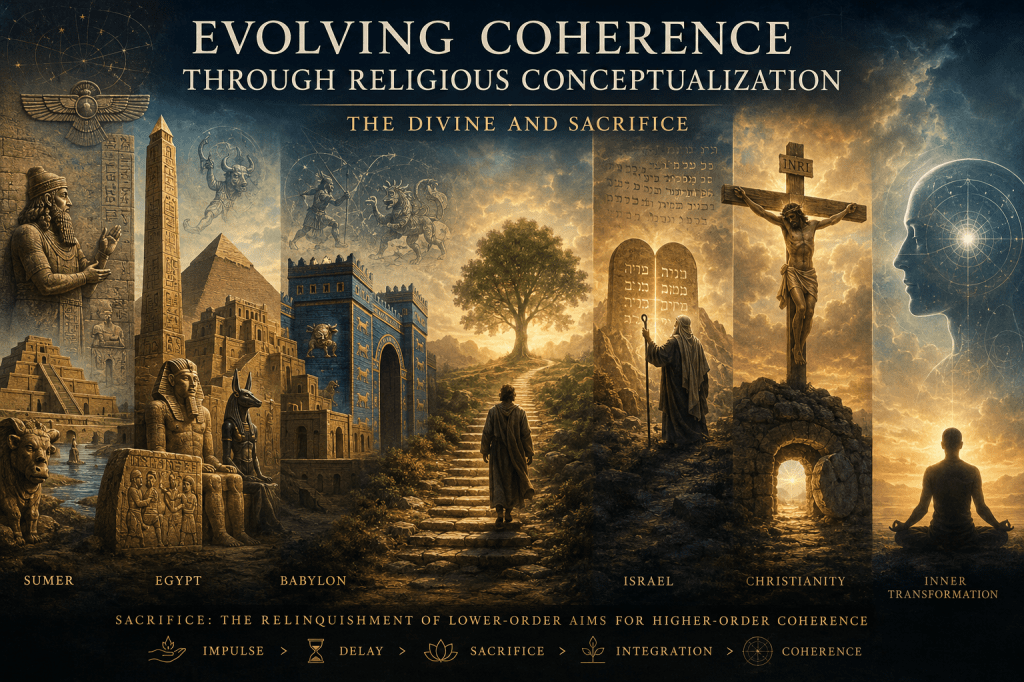
Progression from the ambiguous nature of prehistoric religion to the more articulative and precise conceptualization of ancient societies allowed for the development of more coherent belief structures. By the time of the ancient Babylonians and New Kingdom of Egypt, coherence through unification gradually become evident. The multitude of various forces of nature develop into a hierarchical system with a supreme deity at the pinnacle that is represented as something that constitutes a paradigmatic form of totality. This was only further evolved with the formation of Judaic and later Christian religions that sought to set the pinnacle form as the totality itself. Unification through integration that equated to coherence and complete functionality.
Viewed schematically rather than as a strictly linear history, these developments suggest an increasing human capacity to organize experience through more explicit and integrated symbolic systems. These belief structures were an attempt at organizing both the human psyche and the world as such. They were the accumulative progressive wisdom of human trial and error over the course of the millions of years since we were common apes. They worked, at least in part, because they were the empirical reality of what constituted survival and propagation of the species articulated in narrative drama form. In addition, it was in these value systems that ancient people submitted their existence to help provide meaning and structure (Bellah, 2011; Rappaport, 1999).
It was through these value systems that provided the individual perceptual schema a means by which to understand themselves and the world around them. Without such, coherence either dissolves into dissolution or attempts to develop a value structure of itself apart from the narrative drama of religion. However, according to both Nietzsche and Jung, the attempt of self-value construction leads to the formation of ideological structures that distort reality (Jung, 1968, 1969; Nietzsche, 1974).
For Nietzsche, this distortion became evident during the enlightenment wherein emphasis on rationalism and scientific inquiry began to capture societies’ perception. Though this development was healthy, as Nietzsche acknowledge, he was also aware of the repercussions of the complete dismantling of traditional value structures that resulted. “The death of God” was the sorrowful proclamation so often quoted by intellectuals (Nietzsche, 1974, §§ 125, 343). In a Jungian perspective, it was in this phrase that equated to the death of the Self. From here, the ego would reign in as the supreme while the Self and unconscious were repressed (Jung, 1968, 1969).
Repression of such results in a hyper-rationalistic mode of perception that puts the individual at the center of existence. Thus, the individual is the determinant of value in relation to a persona that is manifested at any given time. Though this orientation may suit the individual momentarily, it does not allow for efficient coherence and cooperation at the societal level, nor does it allow for proper development for the individual.
Nietzsche spoke directly about this dilemma while acknowledging that the death of religious structures would motivate the individual to develop their own value system (Nietzsche, 1974). As previously stated, traditional value systems were constructed through generations of trial and errors of millions of years. In addition, they were reconfigured through the contemplative efforts of scribes that devoted themselves to this articulated wisdom. Thus, for an individual to formulate their own value system through the acquisition of a variety of knowledge in conjunction with personal experience is exceptionally difficult if not impossible. Tradition cannot be cast aside as superstitious belief but rather needs to be synthesized gradually with progressive information in an integrative fashion.
While religion has offered an organized value structure that consists of the accumulated wisdom of evolving humanity, science has provided a way in which these value structures can be tested. We now possess the ability to empirically test value-laden ideas that are embedded within religious works for their validity. By utilizing the tools of science, we can come to understand how accurate ancient value systems were and are. For instance, testing the concept of judgment vs discernment that is a common feature within Christianity can help shed light as to how accurate these teaching may be (Barbour, 1997; Putnam, 2002; Weber, 1946).
Furthermore, comparing and testing interpretational models would be useful in understanding which frameworks are the most supported empirically. For instance, comparing interpretations surrounding the concept of judgment and discernment such as progressive interpretations promoting a non-judgment clause, while traditional interpretations emphasis discernment of the character of the person. Science could examine whether interpretations of judgment and discernment produce better interpersonal accuracy, greater compassion, stronger boundaries, reduced prejudice, improved psychological health, and greater social cooperation.
Not only can interpretations within a given religion be compared and tested, but those of other religions as well. For example, comparing and testing the concept of one’s connection with God between Islam and Christianity. Obviously, the means of testing such a concept could be done in relation to Jung’s idea of the Self being equated with the concept of God. That said, Islam articulates God as unapproachable due to his holiness, while Christianity emphasizes a direct relationship with the divine (Eliade, 1985; Eliade, 1988). A Jungian analysis could compare how differing configurations of divine transcendence and immanence shape the individual’s relationship to the self, community, moral authority, and reality (Jung, 1969).
Of course, the means of interpretational analysis and testing of religious concepts are numerous, however, exceptionally fruitful in a variety of ways. Interpretational analysis allows for a greater understanding of potential meanings of the writers of religious text, as well as the underlying psychological influence of the dramas. The latter of these two can help improve our comprehension of the evolving mechanism of human consciousness. By analyzing the underlying structure of value systems and their narrative circuitry, we can map out how the collective organized fundamental propositions of survival into a coherent and dynamic adaptive system. Furthermore, testing these propositions enables us to not only understand their validity but also how these propositions evolved in coherence and complexity. Thus, providing a glimpse into the evolving dynamics of human cognition and consciousness as we progressed technologically and intellectually as a species.
Religion is an early attempt to categorize and make sense of the world through survival propositions embedded within narrative dramas. Similarly, science is the attempt to categorize and make sense of the world albeit in a manner that is hypothetically formation and tested. Thus, religion is a retrospective mechanism that provides a foundation of the evolving human experience, while science is prospective providing a means of generating predictions of the human experience and testing them accordingly (Barbour, 1997).
Both systems complement each other in a unique and dynamic way that could help humanity progress evolutionarily. The mistake is to neglect the traditional wisdom of religion while favoring the progressive nature of science, and vice versa. The former leads to rapid acceleration of progressive mechanisms that result in upheaval, while the latter stagnates and dies. Rather than either extreme, we need to find the “Way” as promoted in the Buddhist’s tradition wherein we seek to synthesize and integrate elements of both systems in an evolving and oscillatory manner (Gethin, 1998). As we oscillate between the information provided by both systems, we then gradually evolve a comprehensive understanding of the nature of ourselves and reality as such.
Barbour, I. G. (1997). Religion and science: Historical and contemporary issues. HarperSanFrancisco.
Cauvin, J. (2000). The birth of the gods and the origins of agriculture (T. Watkins, Trans.). Cambridge University Press.
Deacon, T. W. (1998). The symbolic species: The co-evolution of language and the brain. W. W. Norton & Company.
Donald, M. (1991). Origins of the modern mind: Three stages in the evolution of culture and cognition. Harvard University Press.
Eliade, M. (1985). A history of religious ideas: Vol. 2. From Gautama Buddha to the triumph of Christianity (W. R. Trask, Trans.). University of Chicago Press.
Eliade, M. (1988). A history of religious ideas: Vol. 3. From Muhammad to the age of reforms (A. Hiltebeitel & D. Apostolos-Cappadona, Trans.). University of Chicago Press.
Gethin, R. (1998). The foundations of Buddhism. Oxford University Press.
Nietzsche, F. (1974). The gay science: With a prelude in rhymes and an appendix of songs (W. Kaufmann, Trans.). Vintage Books. (Original work published 1882)
Putnam, H. (2002). The collapse of the fact/value dichotomy and other essays. Harvard University Press.
Schmidt, K. (2010). Göbekli Tepe—the Stone Age sanctuaries: New results of ongoing excavations with a special focus on sculptures and high reliefs. Documenta Praehistorica, 37, 239–256. https://doi.org/10.4312/dp.37.21
Sosis, R., & Bressler, E. R. (2003). Cooperation and commune longevity: A test of the costly signaling theory of religion. Cross-Cultural Research, 37(2), 211–239. https://doi.org/10.1177/1069397103037002003
Tattersall, I. (2013). Masters of the planet: The search for our human origins. Palgrave Macmillan.
Weber, M. (1946). Science as a vocation. In H. H. Gerth & C. W. Mills (Eds. & Trans.), From Max Weber: Essays in sociology (pp. 129–156). Oxford University Press.
Symmetry, Agency, and the Evolution of Idealistic States
A form of idealistic perfectionism has become embedded within many contemporary postmodern-influenced movements—and embedded within this concept of idealism is an emphasis on symmetry. Symmetry, in this case, is a force of constraint and compression that helps reduce unnecessary and detrimental elements. This symmetrically induced idealism is evident not only in secular postmodernism but also in religion. Christianity, Islam, Buddhism, and many others promote a final destiny in the realm of symmetrical idealism: Christianity’s heavenly realm, Islam’s Jannah, Buddhism’s Nirvana, among others.
The prevailing interpretation of each religious paradigmatic destiny, again, is that of symmetry. They are all states in which deviations from the ideal (sin, dhanb, karma) do not exist, which would thus mean no free will either. Comparatively, many postmodernists perceive a utopian society wherein everyone exists in synchronous harmony. In this utopia, offenses of any kind are nonexistent.
Again, both religious and secular forms of idealism articulate a similar underlying proposition: symmetry results in harmony. This proposition is, in essence, correct; however, only in part. Yes, more symmetry will result in an increase in harmonic constraints. However, the tradeoff is that increasing constraints inevitably decreases the opportunity for free will, thus transforming a utopian society into a dystopian nightmare.
Though increased symmetry (constraints and compression) is a necessary and productive part of nature, it is also a process that must be moderated. As with nearly every process within space-time, there is a fundamental zone of proximal development. This proximal development of symmetrical attributes is especially evident in the process of evolution.
As species have evolved, they have increased in sophistication while simultaneously increasing in efficiency and efficacy, which are symmetrical attributes. Not only do organisms increase in symmetrical sophistication, but the process of adaptation itself provides increased symmetry through constraints and compression. Each generation experiences adaptive adjustments that increase efficiency and efficacy through selective constraining pressures (compression and consolidation). If the process were forced too abruptly, adaptation would not result.
Similarly, on a grander scale, one can observe the gradual evolutionary and adaptive process throughout the expansion of the universe—from the chaos of the initial phases of the Big Bang to the ordered elegance of the expansive web of galaxies one can observe today. It is through this process of increased symmetry, constraints, and compression that order is achieved. That said, however, this degree of order still possesses an underlying flux of primordial chaos that allows the cosmos to persist in an organic, adaptive, and malleable fashion.
Without adaptability (chaos/potential), developmental progression toward a stable and functional state (order/organization) cannot occur. However, the functional state is not a final state; instead, it must maintain an oscillating flux for functionality to persist. An excessive emphasis on order and organization negates the very essence of an authentically functional state.
Of course, the same can be stated regarding a constant desire for progression (adaptability/potential). An ever-evolving system cannot sustain itself without sufficient periods of integration that result in functional stability. Constant progression never allows for the sufficient assembly of novel adaptive information.
Both secular and religious emphases on a hypothetical idealistic state of existence, conceptualized as either a utopian society or heavenly realm, are merely conceptual attempts at symmetric rigidity. Both scenarios represent symmetrical, two-dimensional conceptualizations that negate agency and potentiality. They are therefore projections of hyper-rationalistic fantasies generated by undeveloped minds. This undeveloped status characterizes minds that no longer adapt to novel information but have instead become possessed by constrained perceptual schemas. They are traditionalists in the sense that they conserve formulated interpretive and idealistic elements that have been constrained and consolidated into a systematic formula. Linearity and inanimation are fundamental illustrative elements of this systematic formula.
Of course, much of what has been illustrated thus far is but a glimpse of what was articulated by the original conceptualizers, especially on the religious front. Therefore, what has been analyzed here concerns only the common interpretations of such conceptualized idealistic states. However, the underlying formulation of these paradigmatic conceptualizations is something quite different from their common interpretations. For example, the traditionally common interpretation of the Christian articulation of the heavenly realm is predicated upon the assumption of a perfected state. However, the biblical descriptions of such a place appear to reflect something quite distinct from the traditional interpretation.
According to both the Old and New Testaments, Lucifer was the highest angelic being in the heavenly realm, yet he is illustrated as exhibiting agency through his attempted ascension to the status of God. This agentic attempt is what ultimately led to his fall from this perceived idealistic state. It is this narrative that directly contradicts the traditional interpretation: asymmetry manifested within a symmetrical realm. A strictly symmetrical state provides no room for agency (asymmetry).
Given the evolutionary nature of religious belief—evident throughout the Mesopotamian religions that heavily influenced the writers of both the Old and New Testaments—it appears quite plausible that the concept of the heavenly state, too, is evolutionary. Over the millennia, the concept of idealism evolved and adapted alongside the growing informational sophistication of ancient scholars, as reflected in both law and religious ideals. Increased symmetry is a fundamental adaptive element of this conceptualization; however, it is also accompanied by the asymmetrical nature of being itself, which is demonstrated through the complementary relationship between sin and free will. This agentic proclivity of human existence is what allows learning and adaptation to occur, and it is that which provides the essence of connective realism among the individual, the collective, and reality as such.
Therefore, the idealistic state is an adaptive mode of symmetrical and asymmetrical qualities interacting within a larger connective field of functional potential. As a species evolves through its acquisition of information and advanced technologies, idealism itself evolves in relation to past, present, and future states. Within this integrative and adaptive space-time flux exists a constant oscillatory progression toward an ever-evolving, functionally potentiated state.
Sacrifice is the essence of human success. It is through the sacrifice of what is expedient in exchange for that which is meaningful that our predecessors were able to survive. It is the ability to forego what we would most want to do in the present (consummatory reward) in exchange for that which will matter most in the future (incentive reward). Without such sacrifice, humanity would not have adapted to the various selection pressures—e.g., climate change, increased nourishment requirements, mate attraction—all of which helped us evolve into the species we are today. Therefore, sacrifice is axiomatic to the process of long-term propagated success.
This concept evolved in complexity with the invention of writing, wherein it became an axiom embedded within religious and mythological narratives. From ancient Sumer and Egypt to Babylon and Persia, and later in Judaism and Christianity, the concept of sacrifice as a means to ascend (evolve) was pivotal. In the Sumerian story of Gilgamesh, Enkidu’s death forces Gilgamesh to confront the fantasy that the existing self can remain unchanged, prompting his arduous quest for immortality and, ultimately, a transformed relationship with mortality itself. Later in Babylon, the story of Marduk and Tiamat represents a similar pattern of sacrificing comfort to contend with potential that results in habitable order.
With the emergence of the Old Testament writings beginning around the first millennium BCE came another evolution of the concept of sacrifice. During this period, the religion of the ancient Israelites developed amid a contention between polytheistic traditions and an increasingly monotheistic orientation over several centuries. Psychologically, this can be interpreted as the collective consciousness seeking to unify its perception of the self and reality as such. Consequently, monotheism took center stage, and with it came a transformation of both the concept of God and the orientation of sacrifice. It was not sacrifice itself that evolved, but rather the object of sacrifice. No longer were sacrifices made to multiple gods that constituted a pantheon; instead, these were increasingly unified around the divine figure of Yahweh. Thus, the process of sacrifice was directed toward a unified orientation that reduced complexity while potentially increasing the efficacy of both the individual’s and collective’s everyday lives. In addition, this move may have reduced some of the ambiguity commonly found within preceding pantheistic religions.
Psychologically, the move toward unification of the divine can be interpreted as an evolutionary shift in the collective human psyche: toward increased coherence through stronger constraints upon the underlying value system. The various aims of the collective archetypes were unified into a single, overarching figure that was symbolic of the unified aim of success. To achieve any established goal, one must sacrifice the things necessary to trek toward that goal. Religion amplified this concept through the ideal representation of Yahweh and the various patriarchs and matriarchs found within the narratives of the Old Testament.
Christianity continued this evolving theme through the person of Christ. This manifestation of the divine in the flesh provided a physical representation that increased relatability with the divine aspect of human nature. In doing so, participants of the faith could resonate with the unified divine physical manifestation in a profoundly meaningful way. The incarnation may have reduced some of the abstraction inherent in an unseen transcendent God by embodying the divine ideal within a human form. This potential reduction in ambiguity may have thus increased feelings of certainty for the individual. This increased certainty was not solely a religious theme but one of precision in aim as well, reflecting a higher resolution of consciousness.
Consequently, this increase in precision of the aim of human value and meaning resulted in a sophistication of the concept of sacrifice itself. The archaic conceptualization of sacrifice as the physical shedding of blood from a particular animal was reconfigured through Christ. Animal sacrifice was no longer needed to connect with the divine and achieve whatever aim one had in mind. Instead, humanity was to follow the example of Christ, which psychologically can be interpreted as requiring the sacrifice and transformation of rigid ego-identifications through a descent into the unconscious. Thus, sacrifice led to the rebirth of the individual, enabling them to move closer to the goal (the divine).
Over time, this ongoing process would help unify the individual through the death of the parts of the self that were no longer necessary. It is the elimination of expedient distractions in exchange for meaningful engagement. Not only does this process tend to develop the individual, but it can alter their relationship with reality as well. As one continues to make the necessary sacrifices, the resulting transformations tend to impact opportunities and other individuals. “Successful” individuals throughout history can attest to this effect.
Psychological literature suggests that increased coherence is associated with greater psychological well-being. In addition, when this coherence is befitted with meaningful aims and the necessary sacrifices, the individual may become healthier both physically and psychologically. Thus, it is imperative—just as the ancients may have come to understand through trial, error, and the formation and evolution of religious concepts—that both the individual and society cultivate meaningful psychological coherence. Such coherence requires the continual sacrifice of lower-order aims, rigid identifications, and expedient desires in service of a more integrated orientation toward value and meaning. Sacrifice, in this sense, is not merely loss. It is the relinquishment through which higher-order organization becomes possible.
Is artificial intelligence (AI) becoming a conscious entity? Here, I discuss how consciousness appears to have evolved over evolutionary time through various mechanisms, including sensory modalities, neuroanatomical functions, and quantum processes. Similarly, these mechanisms, either organically or synthetically, responsible for the development of consciousness will also be necessary for conscious AI to become a reality.
“God is dead, God remains dead, and we have killed him.” — Friedrich Nietzsche
The Death of Religion
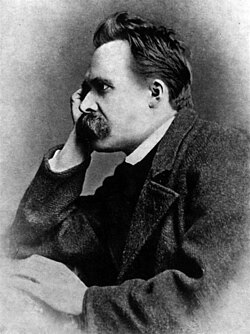
Toward the end of the nineteenth century, the death of God was proclaimed by Nietzsche (Nietzsche, 1974/1882). Though many in modern society have perceived this proclamation as a triumph over religious dogma, Nietzsche perceived it as a means toward the replacement of religious dogma with that of rationality. Through this transfer of power, he foresaw tyranny through secular means and a society wherein meaning structures would have to be constructed by the individual.
However, though the latter of these may appear liberating to those who oppose religion, it is here that the real enigma arises. For individuals in a rationalistic framework to attempt to construct whole value systems for themselves is but a futile attempt at an individualized religion predicated on arbitrary self-interest and ideas. Of course, this is precisely what secular adherents have accused religion of doing. Their perception is partial at best — and that is exactly what a rationalistic perceptual framework tends to generate (McGilchrist, 2019).
Nevertheless, their partial perception possesses truth in that a select few within the confines of religious institutions have sought to control the many through their dogma. Fair enough. However, that is only a part of the whole context of events that led to the formation and establishment of religions — that is, the evolutionary and psychic components. Religion was and is an evolving system of perception that not only attempts to create meaning for humanity but also articulates the evolving human psyche. Thus, there is value in religion, even apart from its potential spiritual significance, that anyone who is intellectually curious should consider.
The Evolution of Religion
Symbolic thought has gradually evolved since humans last shared a common ancestor with chimpanzees approximately six million years ago. The mechanisms responsible for this orchestration appear to have begun with bipedalism, which helped orient human vision toward the vast horizon wherein novelty resided and exploration was necessary. As our ancestors developed into Australopithecus approximately four million years ago, subtle adaptations transpired. One of these adaptations included larger social groups that increased pressure on cooperation and communication as means of survival. Additionally, prototype tool use and the eating of cooked meat emerged during this time, leading to dramatic changes in early hominid physiology (Tattersall, 2013; Wrangham, 2009).
These dramatic changes became apparent in the first members of the genus Homo, Homo erectus. The most significant change was the near doubling in size of the cranium from that of their predecessors, which allowed for increased precision and complexity in tool making, social dynamics, pair bonding, and hunting. Physiological changes involved an increase in average height and reduced gut size and body hair (Tattersall, 2013). Moreover, the feet of Homo erectus adapted to meet the needs of the ground, enabling greater stability and running, while hands no longer sought the branches of trees but stones to fashion into tools (Kivell, 2015).
In addition to the increased complexity of the Homo psyche and physiology came the means of moving out of Africa and into the far reaches of the globe such as Europe, Asia, and Siberia. This movement outward, along with the reliance on hunting, increased the necessity of greater social complexity with an emphasis on mimetic behavior, wherein cooperation and collaboration were both efficient and effective for the survival of the species. Individuals began to mimic the behaviors of others, enabling a gradual progression in sophisticated tool making and hunting abilities. Over time, this gradual adaptive process accelerated exponentially, ultimately leading to more intelligent members of the genus Homo (Tattersall, 2013).
As Neanderthals arrived on the scene around 400,000 years ago, and then migrated into Europe 200,000 years ago, sophistication in tool making skills, hunting, and social dynamics increased yet again. This increase was predominantly due to another leap in cognitive capacity, from the 880cc of Homo erectus to the 1400cc found in Neanderthals (Tattersall, 2013). Among these sophistications exhibited by Neanderthals is evidence for symbolic thought and ritualistic behavior found in burials and body paintings (Nielsen et al., 2020). It was with this member of the genus Homo that faint glimmers of religion first emerged.
However, it was not until the arrival of Homo sapiens approximately 200,000 years ago that the hominid psyche experienced a dramatic transformation. It was here that hominids progressed from mimetic perception to semantic perception. No longer did one simply observe and mimic others’ behavior, but rather the individual began to experience and interpret reality for themselves. Existence took on a different meaning that gradually instigated an articulation of this newfound perceptual ability (Donald, 1991; Tattersall, 2013).
One such exemplifier was the use of language, which appears possible only in humans, as their predecessors did not possess the necessary locale of the larynx to properly produce language. This is not to say that they did not communicate, as that is most likely the case. However, it is to say that they did not possess the same communicative abilities that enabled concise articulation as Homo sapiens did (Donald, 1991). The difference between Homo sapiens and their predecessors’ articulatory abilities became most evident with the advent of artwork, with the earliest evidence found in Indonesia dating back 68,000 years ago (Oktaviana et al., 2026). Though the real immersive experience of symbolic expression did not emerge until 40,000 years ago, thousands of miles away in Europe (Tattersall, 2013).
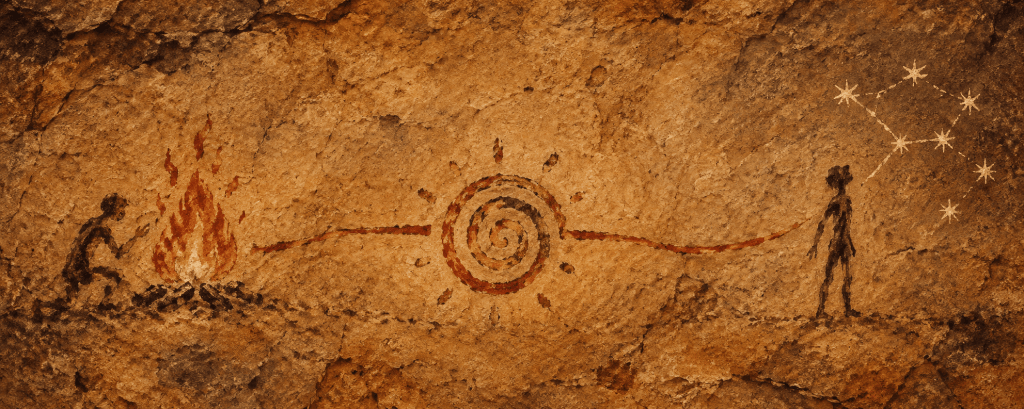
At the beginning of the Upper Paleolithic era (40,000 years ago), human creativity experienced an explosion wherein artwork not only increased exponentially in quantity, but in quality as well. Magnificent depictions of various animals, symbols, and geometric shapes can be found either painted or etched onto cave walls throughout modern-day Europe. Much of the artwork appears to be narrative in form, depicting hunting scenes, rituals, or other events of significance. In addition, most of these narrated depictions are predominantly found deep within the cave’s interior, thus suggesting a ritualistic significance to these artworks (Tattersall, 2013).
These were not simple entrance cave-dwelling locations. On the contrary, they were several hundred feet, sometimes even a kilometer or more, through interior cave obstacles. Moreover, many of the people at this time dwelled in constructed huts and not caves, as is commonly depicted in classic science fiction films and cartoons. Many researchers have interpreted at least some decorated Paleolithic caves as sanctuaries, and some archaeological studies now support their use as deep ritual spaces rather than ordinary dwelling areas (Barzilai et al., 2024; Garate et al., 2020; Medina-Alcaide et al., 2021).
These early religions took on an anthropomorphic and animistic approach to perceiving the world. Prominent anthropomorphic figures included the vulture, serpent, and owl. Female Venus figurines, too, were a part of the religious dynamic. Symbols involved were spirals, discs, and wavy lines. All of these, in connection with their later renditions found throughout written ancient religions, symbolized a death-and-rebirth motif. This motif was common predominantly due to the experience of prehistoric human existence, wherein hunting and fishing were heavily relied upon for survival. Following the acquisition of food during spring and summer months, bones of the animals would often be memorialized in the winter in hopes that a regenerative process would transpire, one that would provide more sustenance again in the subsequent spring (Gimbutas, 1991).
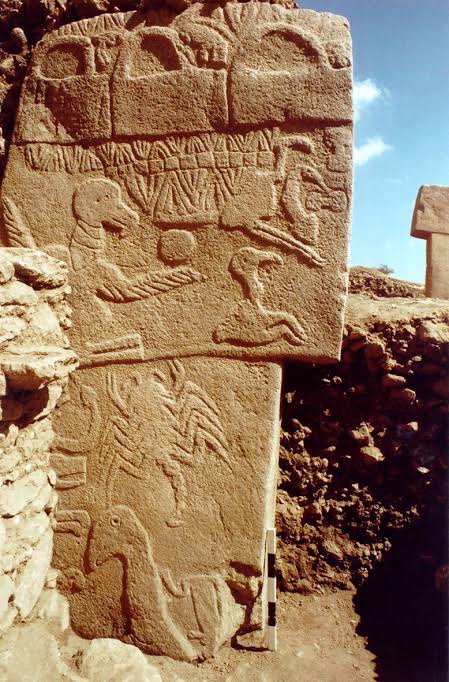
Emerging out of the last ice age and the Younger Dryas event (12,000 years ago) into the Neolithic era, humans evolved these preceding concepts alongside their newfound abilities in construction, agriculture, and herding. Beginning at Göbekli Tepe, no longer was the female goddess of Venus isolated; rather, now she was accompanied by ambiguous male figures and the male anthropomorphic equivalent, the bull (Gimbutas, 1991; Schmidt, 2010). Religion had dichotomized itself, and with greater precision. Artwork took on a new form at GöbekliTepe and surrounding sites with erected statues and pillars that symbolized these deities. Not only was a new form evident, but greater emphasis on precision and accuracy of detail emerged as well (Schmidt, 2010).
Progressing into the late Neolithic period (7,500 years ago), the precision and accuracy of detail seeped over into architectural designs. No longer did people reside in nomadic circular huts, but rather they settled into rectangular and more permanent dwellings. Precision was emphasized in the clear-cut rectangular designs where, for the first time, ninety-degree angles were used. In addition, builders used sophisticated and elaborate designs for community living wherein roadways, irrigation, and walls were constructed for efficiency. These evolved features of architecture continued to progress immensely throughout the course of the subsequent millennia with the emergence of civilization in both Sumer and Egypt around 6,000 years ago through modern times (Cauvin, 2000).
The predominant underlying driver for the innovative progress of humanity was the meaning and value structures that orient people toward such endeavors. At first glance, it would appear the reason would be because of gods that would devastate humanity if it erred from doing so. However, the fundamental reason is more profound than that explanation. For all intents and purposes, it would appear that religion was fundamental to human existence in that society, culture, and the individual within were all one with the local belief system. This would be due to the fact that religious ideas were not arbitrary in nature but rather were a byproduct of an evolving human psyche and perceptual system (Neumann, 1954).
Religion as a Collective Attempt to Unify the Psyche
A lack of arbitrariness in religions is evident in the fact that most religions were not constructed by a small subset of the population at any given time. On the contrary, most religions are the byproduct of aggregated works and thoughts from a variety of peoples over an extensive span of time. This is especially evident with the emergence of systematic writing in Sumer and Egypt 5,000 years ago. With the variety of texts supplied to modern-day scholars, one can observe the pattern of religious ideas evolving throughout time. Not only is this evidence within a given culture such as ancient Sumer, but the evolving influence of these ideas becomes apparent in other, later cultures such as Babylon, Greece, and the Hebrew Bible and Christianity (Eliade, 1981).
In the early forms of religion, the divine feminine reigned alongside an animistic spirit. Emerging out of the Paleolithic period and into the Neolithic period, the divine feminine acquired a male counterpart that provided balance in the narrative value structure of humanity (Gimbutas, 1991). At the time of the formation of civilization in Sumer and Egypt, written records were formed that elaborated on the narratives of old while at the same time incorporating ample novel characters into the plot. These novel characters were an indication of the level of sophistication and intelligence that humanity had achieved at that time. Furthermore, these novel characters symbolized, aside from their spiritual significance, various personas or archetypes that acted on the human psyche (Eliade, 1981; Neumann, 1954).
For the first time, the human collective took oral traditions and wrote them down while combining them with novel aspirations. However, this was not the work of one or a few at one period of time, but rather the aggregation of collective tradition channeled through scribes over the course of several hundred years in two separate locations. This trend continued even after societies were overthrown, such as the Assyrians overthrowing the Sumerians, and then the Babylonians overthrowing the Assyrians. Yet, through conquest, the narratives remained relatively similar, with only the gods assuming different names. The changes to the narratives that did occur were actually more sophisticated changes that represented an evolving human psyche rather than pure manipulation (Eliade, 1981; Neumann, 1954).
These narratives continued to evolve as surrounding cultures acquired the knowledge, such as Zoroastrianism at the beginning of the first millennium BC. Here, the narrative reduced the number of gods into a single deity, which was reflective of an evolving ideal generated in the evolving consciousness of humanity. It was an attempt to unify the human psyche into an ideal form that could be comprehended and exemplified. This advanced attempt influenced the Israelites to follow the same pattern, however, in a more sophisticated manner with extensive and elaborate literature on the topic. Again, the literature the Israelites put together was authored by multiple authors over a span of several hundred years, thus revealing an evolving trend in attempting to apprehend the world and the human psyche (Eliade, 1985; Neumann, 1954).
At the turn of the first century AD, Christianity took the concept of the ideal to another level by personifying it through the person of Jesus Christ. It is here that the narrative not only provided humanity with a source of knowledge about the world and human purpose, but rather proclaimed that everyone was endowed with value that must be attended to. This value, of course, was the human psyche. Its declaration was that humanity could unify and transform itself by contending with the demons within through acquiring the knowledge of God, which is equivalent to the knowledge of oneself and the world around them. Through extensive contemplation and study, one could show themselves “approved” before the glory of God, which then transforms them into a whole and unified individual (Jung, 1956).
Restoring Balance in the Progress of the Human Psyche
As time progressed, humanity developed its ideas into more philosophical inquiry, yet while still encapsulated in a religious framework. It was not until the Enlightenment and post-Enlightenment periods of the seventeenth, eighteenth, and nineteenth centuries that humanity began to separate from its religious predecessors. This occurrence, of course, is where one is brought back to Nietzsche’s proclamation of the death of God. From then on, for many, especially in the realm of academia, religion has gradually faded into the background as superstitious nonsense. However, to separate from religion entirely without acknowledging what value lies within, especially in an evolutionary manner, humanity is destined to neglect where it came from, which increases the potential of not understanding where to go. The narrative value structure of religion has helped evolve and guide human thought and behavior since its inception, and to discard it so easily reveals a lack of awareness and immaturity on the part of modern-day humanity.
It appears that what has occurred is a similar fate to what many of the ancients endured before developing to a point of psychic actualization, and that is the adherence to literalism. For the ancients, the concepts of sacrifice, God, angels, demons, miracles, and the like, though potentially real in one form or another, were taken literally. Thus, instead of making the proper psychological and physical sacrifices necessary to achieve a particular goal, they believed that this power lay within the realm of sacrificing animals to a god. As silly and superstitious as many may believe this to be, modern humanity is not far off, albeit in an opposing direction. Now, instead of desiring to comprehend the utility and evolving nature of religious thought, modern humanity perceives the text strictly in a literal manner, albeit through a rationalistic perspective. This may be somewhat distinct from the ancient mythological perception of religious ideas; however, modern humanity still perceives these ideas in a fundamentally literal form, though in a slightly different manner. Only through humility can modern humanity reclaim religious thought in a sophisticated manner that will complement scientific inquiry and help restore balance to the progress of the human psyche.
References
Barzilai, O., Marder, O., Tejero, J.-M., Ayalon, A., Bar-Matthews, M., Weissbrod, L., Rebollo, N. R., Aldeias, V., Miller, C. E., Zilberman, U., Agam, A., Yeshurun, R., Hershkovitz, I., & Barkai, R. (2024). Early human collective practices and symbolism in the Early Upper Paleolithic of Southwest Asia. Proceedings of the National Academy of Sciences, 121(50), e2404632121. https://doi.org/10.1073/pnas.2404632121
Cauvin, J. (2000). The birth of the gods and the origins of agriculture (T. Watkins, Trans.). Cambridge University Press.
Donald, M. (1991). Origins of the modern mind: Three stages in the evolution of culture and cognition. Harvard University Press.
Eliade, M. (1981). A history of religious ideas (Vol. 1, W. R. Trask, Trans.): From the Stone Age to the Eleusinian Mysteries. University of Chicago Press.
Eliade, M. (1985). A history of religious ideas (Vol. 3): From Muhammad to the Age of Reforms. University of Chicago Press.
Gárate, D., Rivero, O., Ruiz-Redondo, A., Rios-Garaizar, J., Intxaurbe, I., Salazar, S., Aranburu, A., Bourrillon, R., & Petraglia, M. D. (2020). The cave of Atxurra: A new major Magdalenian rock art sanctuary in northern Spain. Journal of Archaeological Science: Reports, 29, 102164. https://doi.org/10.1016/j.jasrep.2019.102164
Gimbutas, M. (1991). The civilization of the goddess: The world of Old Europe. HarperSanFrancisco.
Jung, C. G. (1956). Symbols of transformation (R. F. C. Hull, Trans.). Princeton University Press.
Kivell, T. L. (2015). Evidence in hand: Recent discoveries and the early evolution of human manual manipulation. Philosophical Transactions of the Royal Society B: Biological Sciences, 370(1682), 20150105. https://doi.org/10.1098/rstb.2015.0105
McGilchrist, I. (2019). The master and his emissary: The divided brain and the making of the Western world (2nd ed.). Yale University Press.
Medina-Alcaide, M. Á., Gárate, D., Intxaurbe, I., Sanchidrián, J. L., Rivero, O., Ferrier, C., Mesa, M. D., Pereña, J., & Líbano, I. (2021). The conquest of the dark spaces: An experimental approach to lighting systems in Paleolithic caves. PLOS ONE, 16(6), e0250497. https://doi.org/10.1371/journal.pone.0250497
Neumann, E. (1954). The origins and history of consciousness (R. F. C. Hull, Trans.). Princeton University Press.
Nielsen, M., Langley, M. C., Shipton, C., & Kapitány, R. (2020). Homo neanderthalensis and the evolutionary origins of ritual in human society. Philosophical Transactions of the Royal Society B: Biological Sciences, 375(1805), 20190424. https://doi.org/10.1098/rstb.2019.0424
Nietzsche, F. (1974). The gay science (W. Kaufmann, Trans.). Vintage Books. (Original work published 1882)
Oktaviana, A. A., Joannes-Boyau, R., Hakim, B., Burhan, B., Sardi, R., Adhityatama, S., Jalandoni, A., Hamrullah, Sumantri, I., Tang, M., Lebe, R., Iswadi, Ilyas, I., Abbas, A., Jusdi, A., Duli, A., Hidayatullah, N. A., Nurmin, Sindara, S. H., … Aubert, M. (2026). Rock art from at least 67,800 years ago in Sulawesi. Nature.https://doi.org/10.1038/s41586-025-09968-y
Schmidt, K. (2010). Göbekli Tepe — the Stone Age sanctuaries: New results of ongoing excavations with a special focus on sculptures and high reliefs. Documenta Praehistorica, 37, 239 — 256.
Tattersall, I. (2013). Masters of the planet: The search for our human origins. St. Martin’s Griffin.
Wrangham, R. (2009). Catching fire: How cooking made us human. Basic Books.
Development is a process composed of both partial and contextual elements. Each progressive step toward a conceptualized goal belongs to a longer sequence of integrative movements that together constitute a whole. These parts must be retained within consciousness if the individual is to comprehend the developmental process as such.
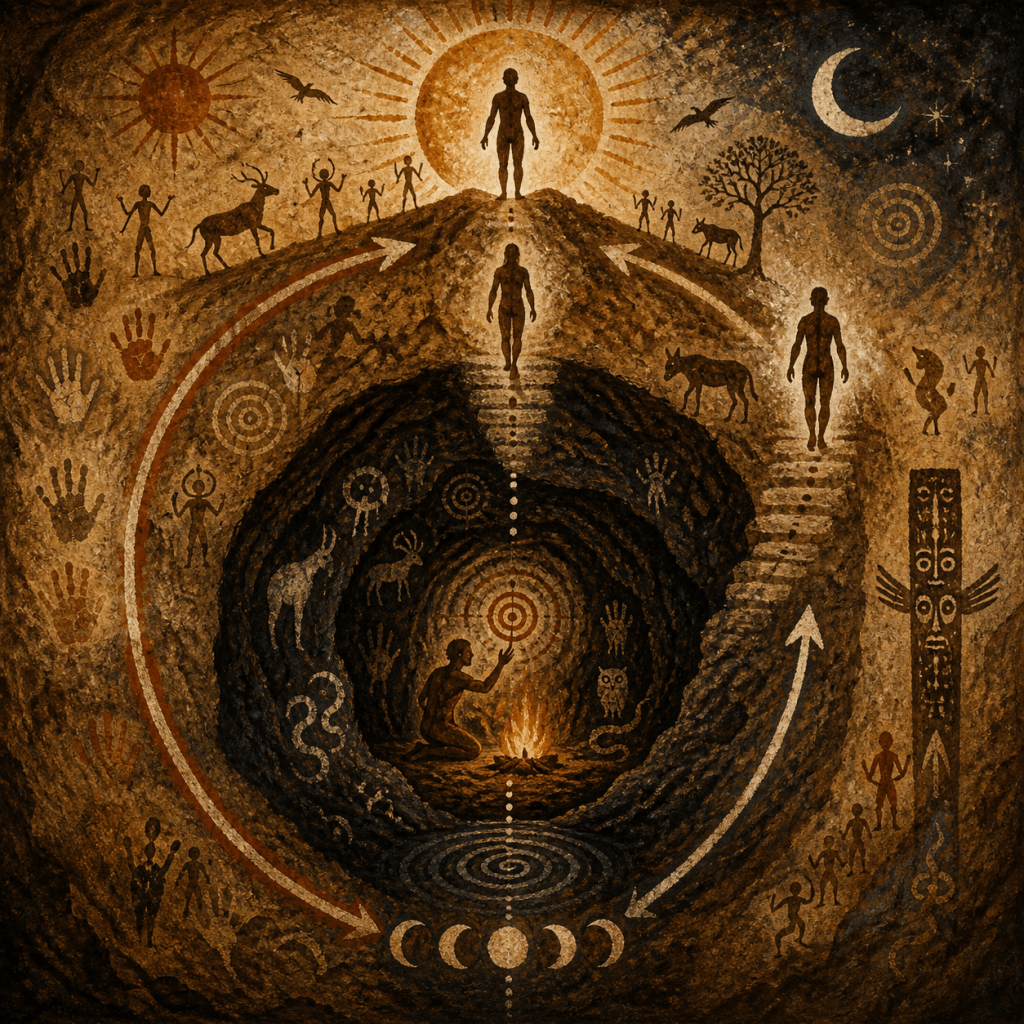
In Jungian terms, development often unfolds through dichotomous movements of descent and ascent within the life of the ego. The ego is the center of identity and awareness in the individual, while the Self is the larger totality within which the ego is situated. Beneath these structures lies the unconscious, both personal and collective. Development requires the integration of unconscious material into the ego, increasing both the precision of identity and the individual’s comprehension of the external world.
Times of difficulty often symbolize periods in which one descends into the unconscious. Yet it is precisely here that valuable material lies hidden. During such periods, the individual is called to encounter, comprehend, and integrate novel contents arising both from within and beyond the unconscious itself. Inner contents are often approached through retrospective and prospective contemplation, while outer contents are encountered through novel experience — study, travel, dialogue, or other forms of contact with what is unfamiliar. Through this process, the ego assimilates unconscious material and is gradually transformed into a more differentiated and integrated center of identity.
From there, the ego ascends out of the abyss of the unconscious and into a moment of differentiated wholeness. Yet this wholeness is never final. It is a temporary elevation, one that will eventually give way to another encounter with unconscious material in one form or another. Nevertheless, it is through these cyclical periods of descent, integration, and ascent that the individual gradually becomes more whole and more differentiated. Over time, these developmental cycles form a larger sequence of contextual patterns of wholeness. Consequently, precision of identity emerges alongside an increased comprehension of reality itself.
Cognitive heuristics (shortcuts/bias) are an adaptive quality of efficiency. Each time one interacts with their environment, they are predisposed to rely on them in an effort to conserve psychological resources. Though these innate tendencies provide a means of efficiency and stability, they also reduce one’s ability to acquire and integrate novel information.
Both are essential adaptations; however, the former is an adaptive process of conservation, while the latter is progressive. The former would, at least in part, be a necessary function of everyday being. To reduce the use of cognitive heuristics while increasing acquisition and integration in all facets of everyday life would simply overwhelm the individual to a point of collapse and regression. Contrarily, if one simply relies on cognitive heuristics while never engaging in the process of acquisition and integration, stagnation results.
Rather, the ideal approach is the adaptable utility of both processes wherein either are utilized in their proper context. Cognitive heuristics are utilized in most mundane tasks for increased efficiency and reduced complexity, while acquisition and integration are utilized at particular moments of encounter with novelty and ambiguity that aid in comprehension, accommodation, and transformation.
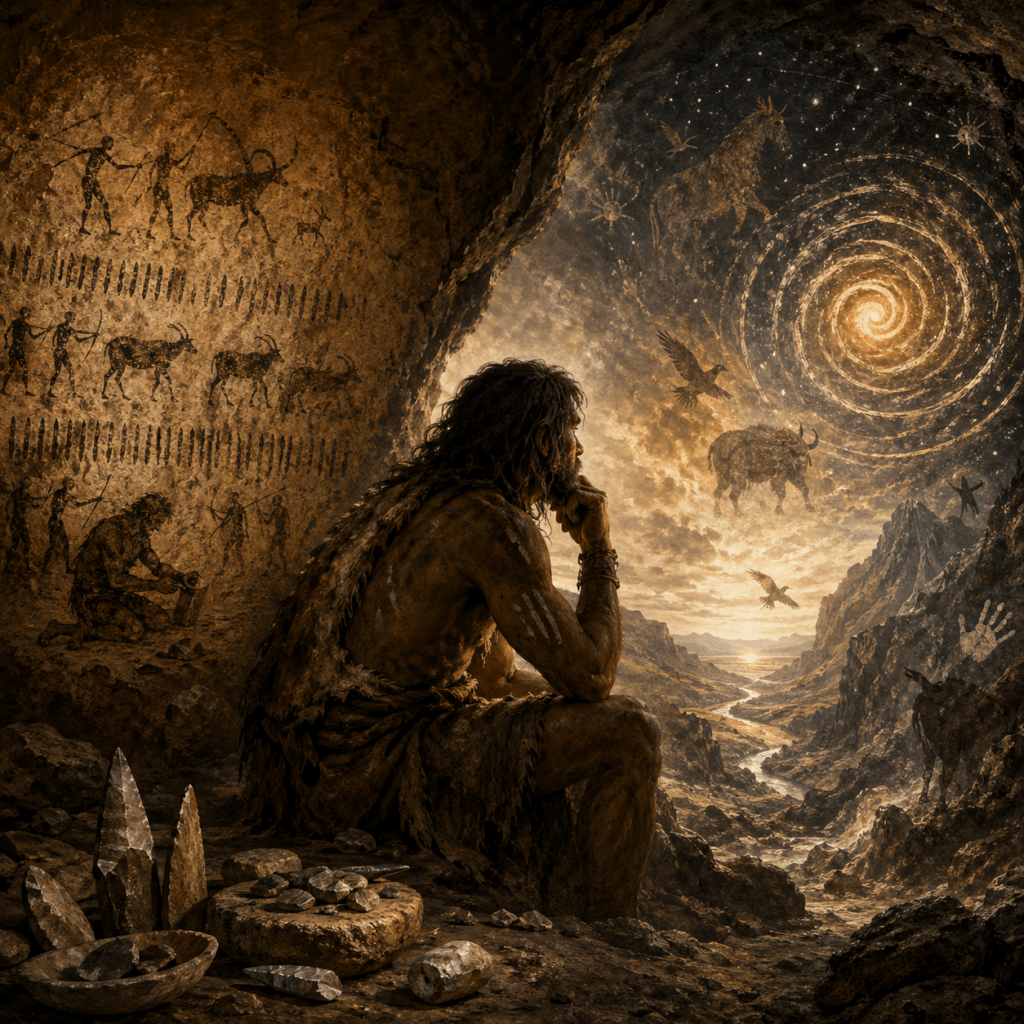
Thus, an oscillating process between efficiency and integration provides a more balanced and wholesome approach to being — one that both preserves and transforms the individual. In this sense, one might think of the process as the oscillation between the cave and exploration: the cave as that which shelters, stabilizes, and conserves, and exploration as that which exposes one to novelty, ambiguity, and the possibility of development. Both are necessary. One preserves the individual from dissolution in the overwhelming complexity of life, while the other prevents him from becoming enclosed within rigidity and stagnation.
“Individuation and the Challenge of Integration in the Age of Distraction”
Human cognition is a complex mechanism by which one is able to develop conceptual systems that provide coherent perceptions of the world around them. It is within these conceptual systems that meaning structures develop throughout life, acquired through our interactions with the world. It is a bidirectional process wherein we use our current systems to navigate the world, while at the same time updating those systems with novel information we encounter along our way. Additionally, these systems are not only used in navigating physical reality but conceptual spaces such as books and lectures.
As we encounter such novelty, we process it through our current perceptual models that filter information that is relevant to our preexisting structure. Useful information is assimilated into that structure while contradictory or ambiguous information is either manipulated to fit one’s preexisting structure or ignored. Only through practice can one develop skills to acknowledge and then critically think on that information to see how to accommodate it into their current structure. This is often accomplished by reconfiguring the structure to fit the information which, depending on the degree of reconfiguration, reorganizes one’s perception in a dramatic manner.
The process of accommodation is an adaptive process, and it appears to be the means that helped the human species excel so rapidly in our evolutionary history. Since the emergence of Homo sapiens some 200,000 years ago, we have adapted to all types of environments, invented language and art, developed religious ideas, constructed monumental structures of symbolic significance (Tattersall, 2013; Donald, 1991).
All these adaptable achievements have significantly improved our survivability as a species, and they have led us to the convenient society that we currently inhabit. Despite these adaptable achievements, modernity has provided conveniences that appear to have limited our adaptability trait. We have now become more reliant on the achievements of humanity rather than on the intrinsic drive that helped lead us to such achievements.
It is here that much of humanity has traded innovation and discovery for novelty seeking and satiation. Consequently, a fragmentation of the psyche has plagued many as is evidenced in attentional diffusion, identity polarization, and reduced ambiguity tolerance, while a narrowing of perceptual value that prioritizes stimulation emerges as the meaning-making medium. Thus, modern digital environments disproportionately reward rapid salience detection over sustained integrative reasoning, potentially complicating the process of individuation and adaptive meaning-making.
Something went wrong. Please refresh the page and/or try again.
Into the Depths of the Unconscious
Regarding the significance of accommodation of novel information, Jung went further with this concept into the depths of the unconscious. He believed that an encounter with novel information was not just strictly a need for perceptual reconfiguration through accommodation, but rather it was something more profound than that. Wrestling with novel information was a journey into both the individual and collective unconscious wherein the individual contends with concealed and unknown parts of the Self. In mythology, this is symbolized as the hero’s descent into the unknown where they confront and overcome the dragon of chaos in hopes of transforming both themselves and society and restoring order in due process (Jung, 1968).
Jung thought this process to be imperative for the individual to pursue throughout their life, especially as they matured into old age. In fact, he believed individuation to be the very essence of maturation. It is a cyclical endeavor where an individual encounters novel information, contends, integrates, and reconfigures their psyche, which is then pursued once again until unification is achieved. As one contends with new information/unconscious forces, over time they gradually unify their psyche into a coherent and stable structure, thus mimicking, to a degree, the process of human evolution itself on a micro scale. Consequently, if one does not participate in such experiences, fragmentation and confusion results (Jung, 1968).
Modernity and Meaning-Making:
Modernity presents an issue for many regarding the process of individuation as it presents an overwhelming amount of information while also providing too many distractions. Information overload — both quantity and quality — exhaust the process of individuation as the information becomes a dragon too large and diverse to contend with. Similarly, the vast amounts of distractions in the forms of smart phones, social media, gaming, and other forms of entertainment, beckon for one’s attention and thus diversify and reduce cognitive resources (Korte, 2020).
With the induction of smart phones with their portability and instant access to a wealth of information and entertainment, habitual patterns of cognitive engagement may be shifting (Korte, 2020). Social media and their algorithmic configurations that develop in accordance with an individual’s salience and emotional vulnerabilities have been associated with reduced sustained engagement in effortful material in some individuals (Turel et al., 2014; Montag & Diefenbach, 2018). Instant access to content that is stimulating and novel and requires short attentional effort has further compounded the issue (Alter, 2017; Leroy, 2009; Ophir et al., 2009). What were designed to be utilized as tools to help stimulate the curiosity of the human mind has now become the pacifier of the weary (Orben & Przybylski, 2019). Convenience and entertainment have blunted the intrinsic drive of innovation and curiosity.
Sustained attention is essential in the engagement and completion of any complex and meaningful task. However, technology has significantly reduced our ability to sustain attention by increasing attentional volatility through persistent task switching common among avid smart phone users (Leroy, 2009; Castelo et al., 2023). Skowronek et al. (2023) have found that even the mere presence of a smart phone can reduce attentional performance.
Comparatively, reading skills have also experienced a significant decline since the inception of smart phones. Wolf (2018) found a reduction in inferential processing when using digital platforms compared to tangible prints for reading. Similarly, Delgado et al. (2018) conducted a meta-analysis on the effects of digital vs printed reading on contextual comprehension and found print outperformed digital. The Programme for International Student Assessment (PISA, 2022) revealed a decline in reading performance across several industrialized nations. Good reading skills are essential in acquiring and contending with novel information, especially as the complexity of what is being read increases.
Both attention and reading skills are essential in attending to and acquiring novel information that can be evaluated, contended with, and integrated. Thus, without such attributes and skills, the process of individuation becomes exceptionally difficult. Additionally, the amount and diversity of information that has resulted from increased internet access and globalization has only compounded this issue (Alsaleh, 2024). The modern person is thus overwhelmed and overextended to the point of exhaustion.
Unifying Attention and Developing Reading Skills
To properly attend to anything in life, one must set their complete attention to whatever it maybe they are desiring to attend to. By narrowing down on the substance or experience at hand, the vital information contained within can then emerge. Jung revealed this as vital concealed information as the “treasure” that was protected by the dragon depicted in classic mythology and fairy tales. Only by attending to the treasure can one retrieve what is essential for integration. For example, when Moses in the story of Exodus encounters the burning bush, he turns his attention to it and it was this attention that allowed for the disclosure of vital information to manifest out of it. In cognitive terms, sustained attention enables the extraction of latent complexity from stimuli that would otherwise remain perceptually inert.
Similarly, by developing good reading skills by engaging with books that pushes one’s current skill level, that development can occur. Not only does reading development transpire, but concealed information hidden within the complexity emerges during engagement that can help develop the Self as well. This, of course, often requires disciplined and focused reading that may also necessitate pauses for contemplation on particular passages or retreat to a dictionary for improved comprehension of difficult words. However, it is here that one’s comprehension of both the Self and reality can improve that leads to wholeness and greater well-being.
Developed and Unified Self in the Modern World
Modernity is not in and of itself a root cause of the fragmentation of attention or decline in reading ability, nor is it the impediment of the individual drive towards innovation and transformation. Rather, the fundamental issue is both the collective’s and individual’s propensity to allow the commodities of modernity to overwhelm and suppress the intrinsic human capacity for adaptive integration. What is needed is not a rejection of modernity but a regulation of one’s own attention and resource allocation. How and where, one directs one’s attention and resources will determine what resourceful treasures they may discover.
By reducing unnecessary distractions while narrowing one’s attention on the essentials, they can then begin to increase efficiency in everyday life. However, even more importantly, they can then devote their extra time that was previously invested in a variety of overwhelming stimulus into investigating the more profound parts of reality and their Self. Investing resources and attention towards challenging information where one can wrestle with the unconscious elements of both the collective past and the Self. Therein is where concealed “truths” can be made manifest that will allow for integration and reconfiguration. It is this reconfiguration that transforms what was unknown into the useful known that is unified, innovative, and more aware than before.
Alter, A. (2017). Irresistible: The rise of addictive technology and the business of keeping us hooked. Penguin Press.
Castelo, N., Bos, M. W., & Lehmann, D. R. (2023). Task switching and attentional fragmentation in digital environments. Journal of Experimental Psychology: General, 152(4), 1023 — 1041.
Delgado, P., Vargas, C., Ackerman, R., & Salmerón, L. (2018). Don’t throw away your printed books: A meta-analysis on the effects of reading media on reading comprehension. Educational Research Review, 25, 23 — 38. https://doi.org/10.1016/j.edurev.2018.09.003
Donald, M. (1991). Origins of the modern mind: Three stages in the evolution of culture and cognition. Harvard University Press.
Jung, C. G. (1968). The archetypes and the collective unconscious (R. F. C. Hull, Trans.). Princeton University Press. (Original work published 1959)
Korte, M. (2020). The impact of the digital revolution on human brain and behavior: Where do we stand? Dialogues in Clinical Neuroscience, 22(2), 101 — 111. https://doi.org/10.31887/DCNS.2020.22.2/mkorte
Leroy, S. (2009). Why is it so hard to do my work? The challenge of attention residue when switching between work tasks. Organizational Behavior and Human Decision Processes, 109(2), 168 — 181. https://doi.org/10.1016/j.obhdp.2009.04.002
Montag, C., & Diefenbach, S. (2018). Towards Homo digitalis: Important research issues for psychology and the neurosciences at the dawn of the Internet of Things and the digital society. Sustainability, 10(2), 415. https://doi.org/10.3390/su10020415
Ophir, E., Nass, C., & Wagner, A. D. (2009). Cognitive control in media multitaskers. Proceedings of the National Academy of Sciences, 106(37), 15583 — 15587. https://doi.org/10.1073/pnas.0903620106
Orben, A., & Przybylski, A. K. (2019). The association between adolescent well-being and digital technology use. Nature Human Behaviour, 3, 173 — 182. https://doi.org/10.1038/s41562-018-0506-1
Skowronek, J., Seifert, A., & Keller, S. (2023). The mere presence of smartphones reduces cognitive performance: A meta-analytic review. Computers in Human Behavior, 139, 107537.
Tattersall, I. (2013). Masters of the planet: The search for our human origins. Palgrave Macmillan.
Turel, O., He, Q., Xue, G., Xiao, L., & Bechara, A. (2014). Examination of neural systems sub-serving Facebook “addiction.” Psychological Reports, 115(3), 675 — 695. https://doi.org/10.2466/18.PR0.115c31z8
Wolf, M. (2018). Reader, come home: The reading brain in a digital world. Harper.
Adaptive Engagement, Information Integration, and the Formation of Coherent Experience
What and how one perceives is the direct consequence of conscious awareness in relation to the dimensions of space-time. Perception is influenced by an array of various interacting biological, cognitive and environmental systems and elements. The plethora of hormones, neural activity, and subatomic arrangement help develop a contextual panorama that provides essence to experience. However, how do all of these facets of experience form into a coherent model wherein meaning and experiential sustenance persist? The fundamental relational dynamic between a constrained evolutionary perceptual system and the continuous flow of emerging potential appears to encourage such coherent model formation. This encouragement is informational provision to the one who possesses the model — and it is up to how they utilize this information that dictates how the model develops.
Human consciousness is a fundamental perceptual constraint that results from millions of years of adaptive behaviors and thought processes. Over time, this system has stabilized into a coherent structure that provides humans with a pathway of interactive potential. As one engages with the environment, each interaction is an unfolding of coherent potentiality. These unfolding events are a bidirectional relational dynamic between the coherent adapted structure of consciousness and the stable potential of existence. These forces produce both coherence and manifest potential.
Though humanity has evolved this relational coherence between consciousness and reality, there are variations on the individual level. These variations are predicated upon past generational developmental experiences and the learned experiential scaffolds of the individual. If previous generations engaged at an insignificant level with reality, then the consequential developmental of subsequent generations are that of lower coherence. The same applies on the individual level — less engagement results in lowered coherence. The reverse, however, can be said if the engagement of both previous and present conscious participants is sufficient.
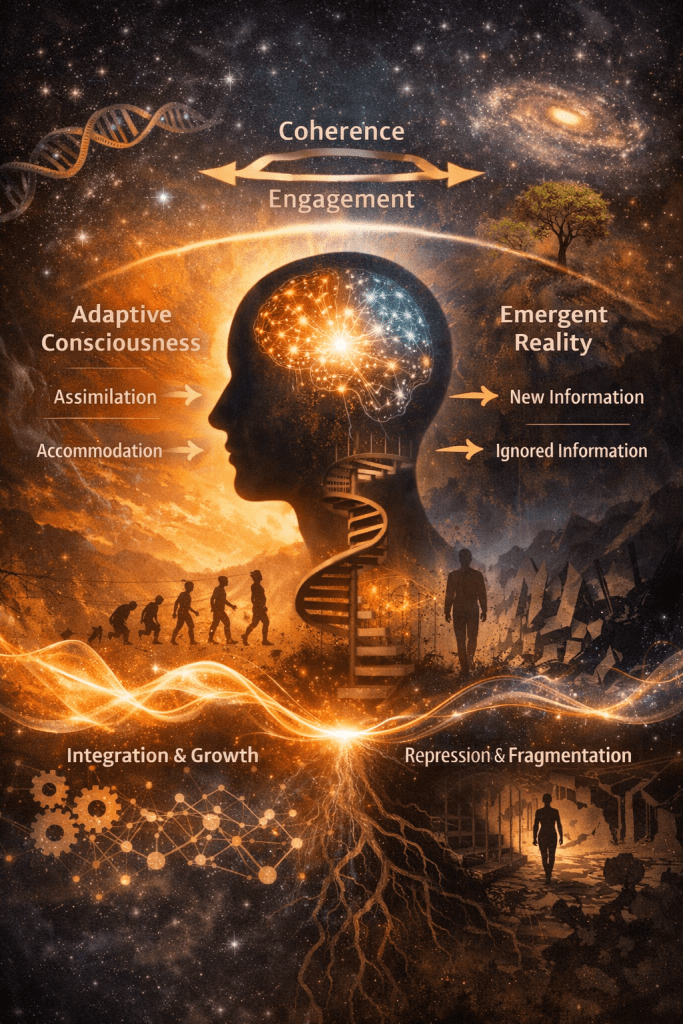
Sufficient relational engagement is a process of information acquisition followed by either assimilation or accommodation. Which process occurs is determined by the level of relational congruence between the information obtained and the preexisting structure of consciousness. If the information acquired is at least partially congruent with one’s consciousness, then simple assimilation can be proceeded. Contrarily, if the information is largely incongruent with this structure, then a process of accommodation must be engaged.
Accommodation requires a reconfiguration of the preexisting conscious model in a way that accommodates the novel information without losing its essence. If one chooses to forego this process when novel information is encountered, they then risk increasing incoherence. The reason for this increased risk rather than a more neutralized stagnation of consciousness is that the information is now evident within the structure.
Even if the individual sought to consciously discard the information, it would only transfer to the unconscious. Since the unconscious is the primitive foundational substrate of consciousness itself, any information that resides within that contradicts the coherence of the latter emergent model of consciousness will only weaken its structure. And the more information of this sort is ignored, the greater the risk of incoherence to the point of delusion occurs.
Therefore, it is paramount that an individual — and the generations preceding and proceeding from them — do not ignore novel information. With that said, novel information is the interactional sustenance by which consciousness can mature its frame of reference that further enhances the relational dynamic with being. The more one acknowledges and seeks to integrate encountered information into their preexisting model through comprehension and accommodation, the greater the coherence of that model within itself and its relationship with reality.