“A comprehensive understanding of reality requires a multilevel perceptual framework.”

The Nature and Evolution of Perception
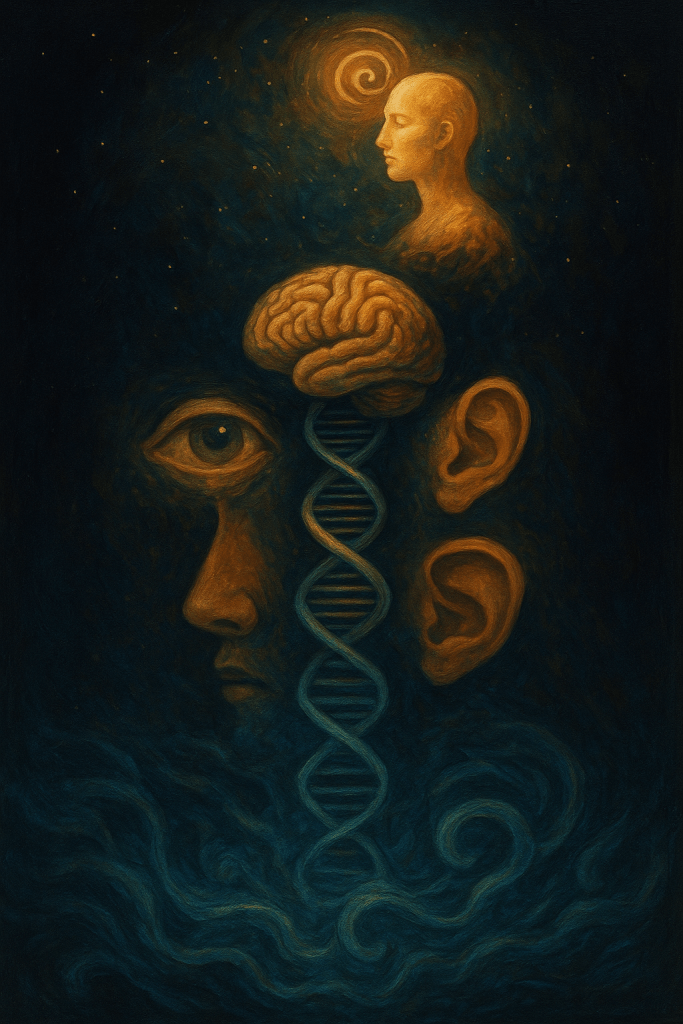
Human perception is a unique and mysterious function — a vessel through which consciousness becomes reality. Perception, at its most fundamental level, is an interpretational model by which we come to understand and act in the world. It is a mechanism that incorporates both meaning and utility; however, it is more than a strict dual mechanism. Rather, it is nested within a broader multivariant interpretational framework.
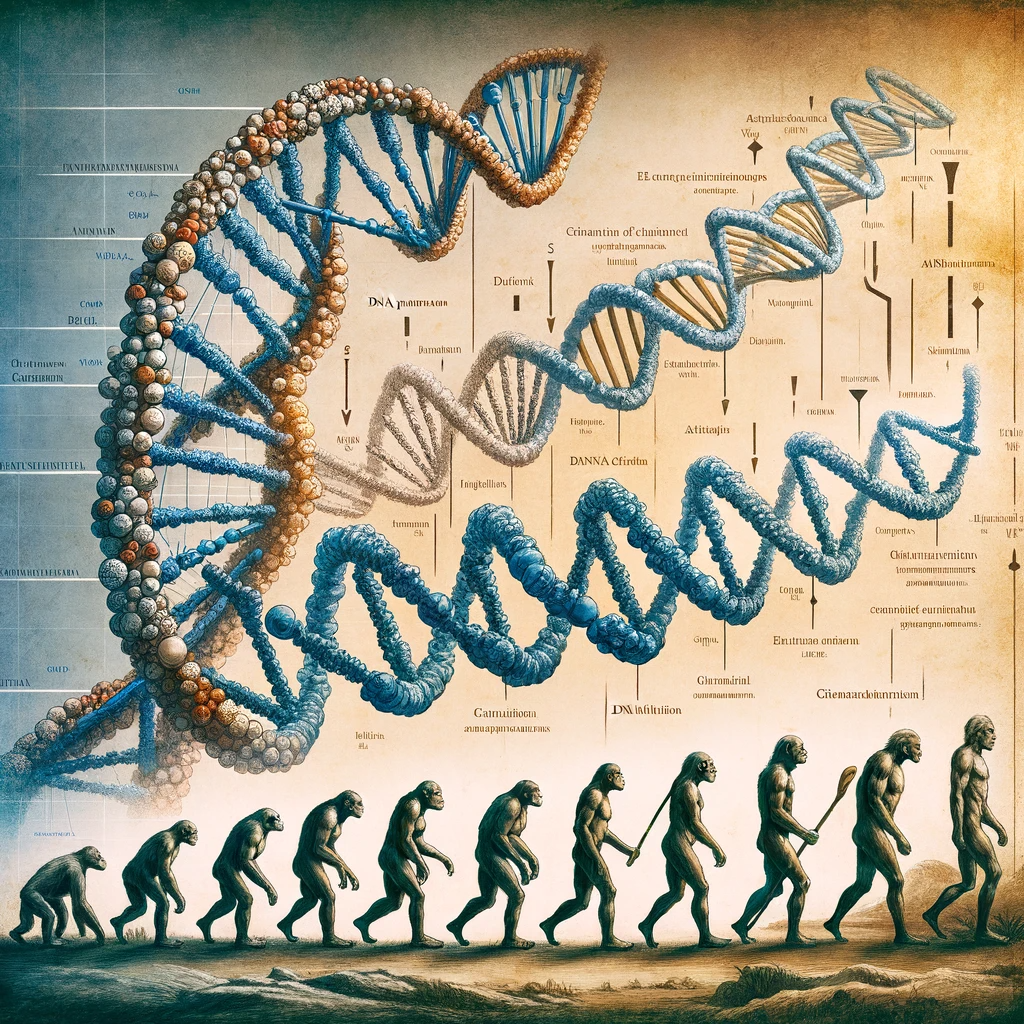
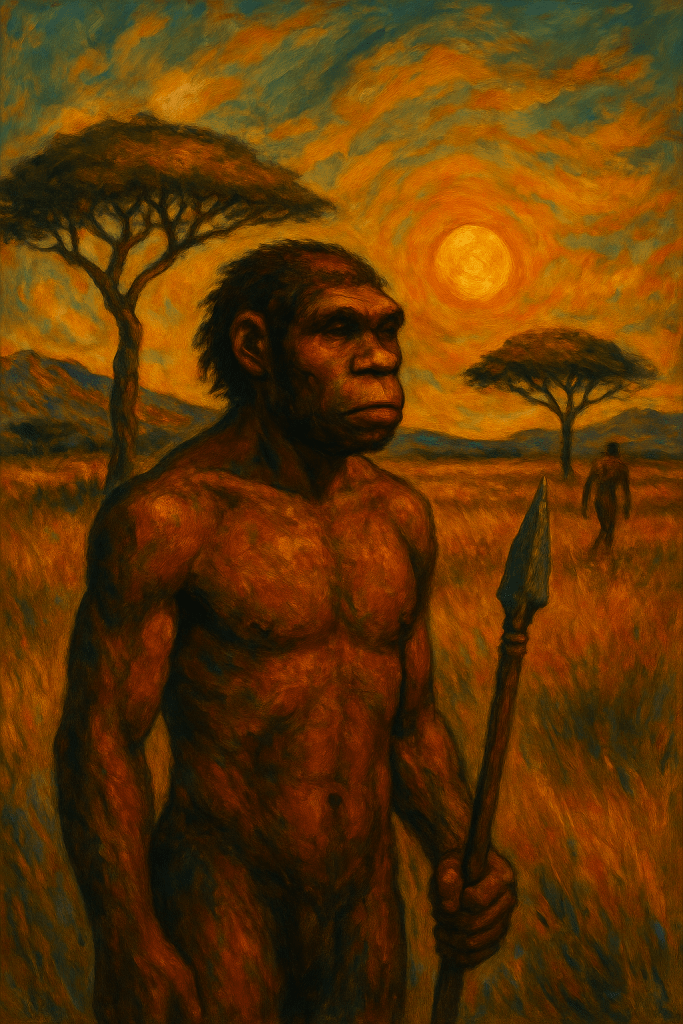
Our primitive ancestors began to develop perceptual frameworks perhaps as early as Australopithecus, around 3.4 million years ago (mya), where the earliest use of stone tools is evidenced (Tattersall, 2013). These early stone tools, called Lomekwian tools, were simple in design, with cores produced through unidirectional flaking (Finestone, 2025). Despite this simplicity, tool-making requires hand-eye coordination and the ability to precisely manipulate objects — a feature commonly associated with the left hemisphere of the brain (McGilchrist, 2019). It is here that proto-humanity began developing perceptual frameworks that allowed them to navigate and understand the world around them, including the early foundations of a sense of self.
The emphasis on left-hemisphere development was further enhanced — perhaps even earlier — through Australopithecus’s habitual bipedalism. This advanced ability requires balance and precision to remain upright while moving on two feet. Thus, both tool-making and bipedalism contributed not only to neural buildup within the left hemisphere but also to increased bilateral communication between it and the right hemisphere.
This increased hemispheric communication would have helped stimulate perceptual coherence through the development of large neural networks that coincided with increasing brain size. When Homo erectus emerged between 2 and 1.8 mya with nearly double the cognitive capacity of Australopithecus, this increased perceptual ability is evident. For instance, the tool-making abilities of Homo erectus improved significantly in design and variety compared to their earlier counterparts (Firestone, 2025). Not only were these newly evolved hominids producing more sophisticated stone tools in various forms, but they also began crafting bone tools from multiple animals (de la Torre et al., 2025).
Improvements in tool-making were not the only indicators of increased perceptual coherence. Other contributing factors include fire use, migrations, and improved hunting skills. All of these behaviors involved left-hemispheric precision and apprehension while simultaneously relying on the right hemisphere’s navigational abilities and peripheral vantage point.
Increased hemispheric synchronicity in Homo erectus developed further in Homo heidelbergensis (700,000–200,000 years ago) and Neanderthals (400,000–40,000 years ago). Neanderthals, for example, used sophisticated methods in developing their tools (Çep et al., 2021) and created some of the first art (Francesco d’Errico et al., 2025). Coinciding with these advancements were early indications of cloth-wearing (Wales, 2012), all of which imply an increased sense of self-awareness.
As Homo sapiens emerged around 200,000 years ago, hominid cognitive capabilities increased once again. This increase is not evidenced by overall brain size — which was somewhat smaller than that of their predecessors — but rather by increased complexity of thought tied to frontal lobe development (Pinson et al., 2022). With this complexity came a greater articulation of inner states of being — essentially, a more elaborated mode of perception.
Duality of Perceptual Representations
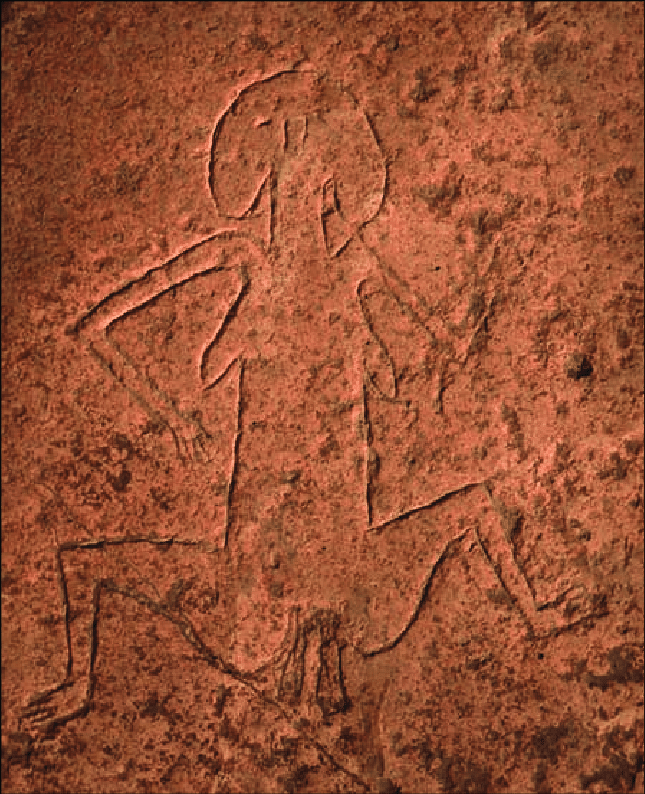
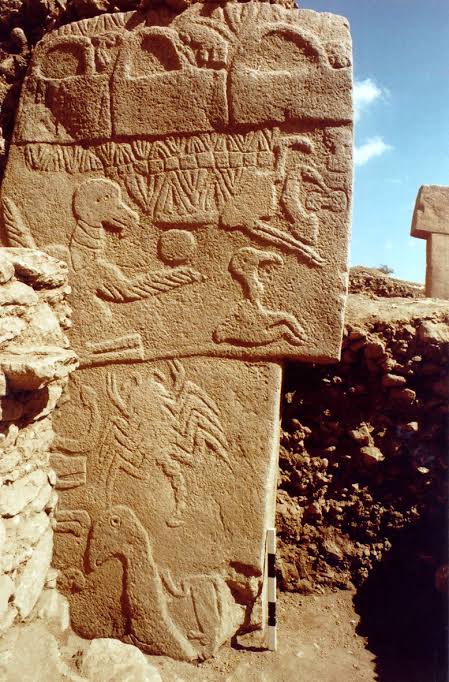
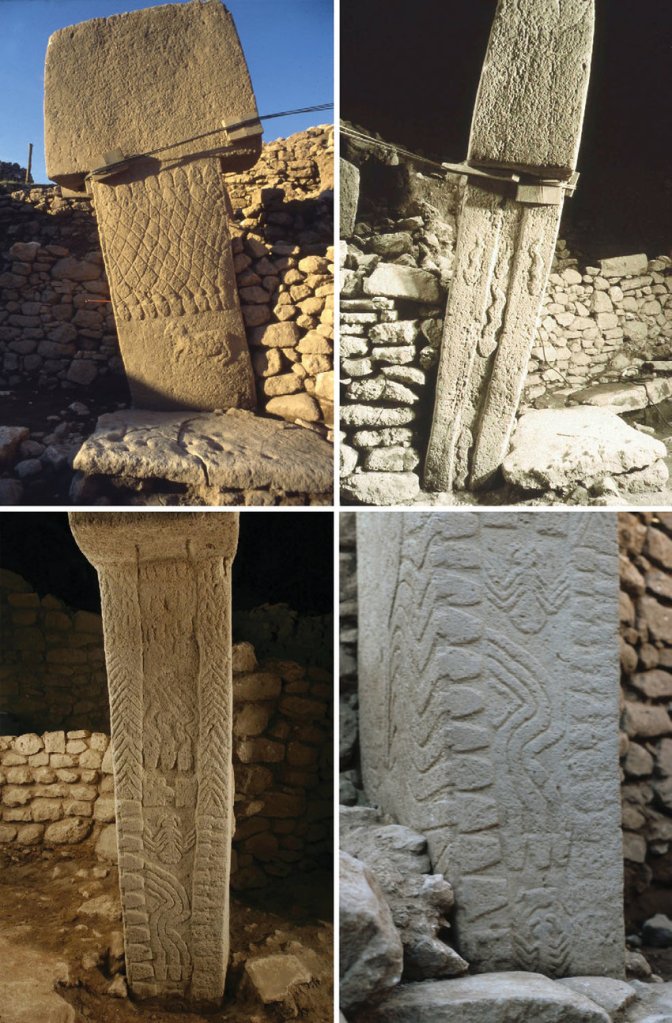
Entering the Upper Paleolithic age (40,000–10,000 years ago), humans began creating sophisticated cave art. These early depictions were often zoomorphic (antelopes, bison, snakes) and abstract (spirals, discs, zigzags) — symbolic representations of external observations and internal conceptualizations. Each motif was imbued with meaning designed by the individual or the group, while also reflecting functional components such as hunting scenes (Gimbutas, 1989).
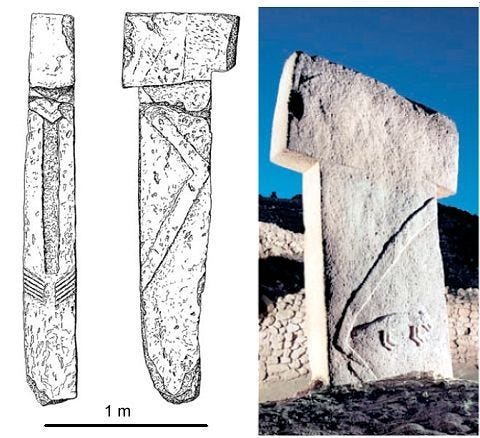
A perceptual shift occurred as early humans transitioned from the Paleolithic into the Neolithic, when agriculture and herding first emerged (Cauvin, 2000). With these new modes of subsistence came a transformation of perception. No longer were humans relying solely on the immediate gifts of nature; instead, they were becoming the proprietors of their own destiny. For the first time in hominid history, control of subsistence was in their hands — from stone to plant, from animal to ritual, the ability to manipulate had increased dramatically.
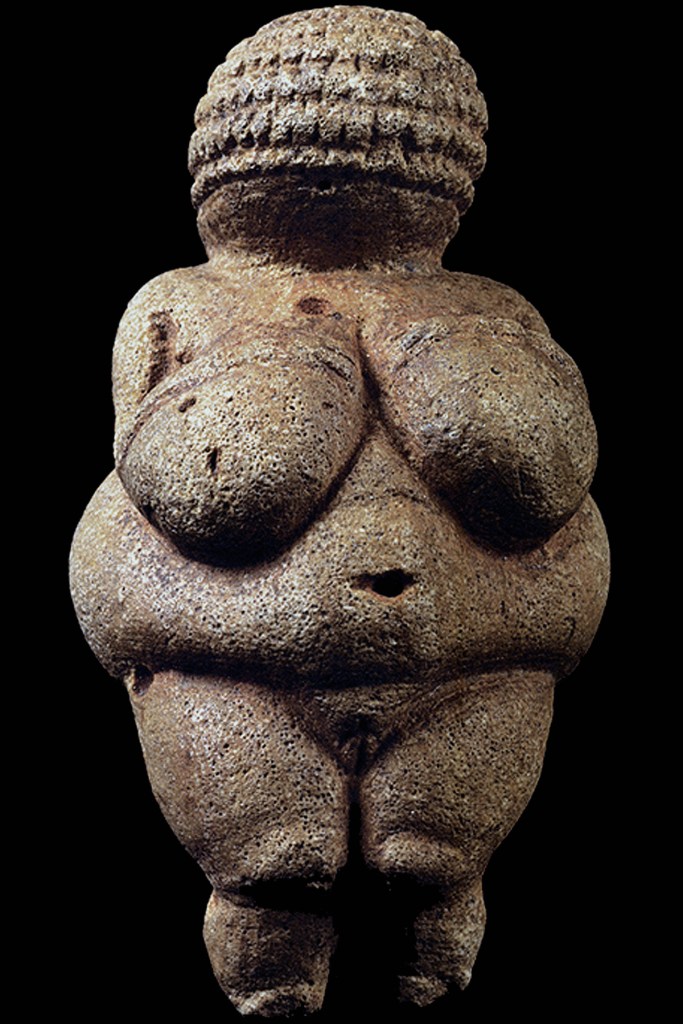
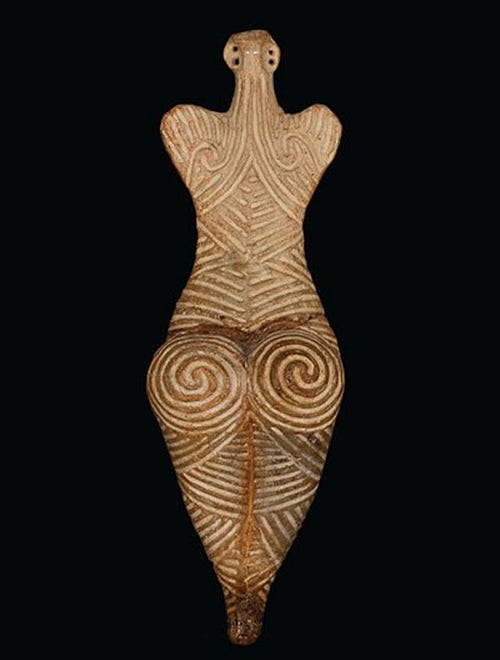
This perceptual shift brought about new structures of meaning, manifested most strongly in the symbolic forms of the female and the bull. Although divinity had long been attributed to the female (e.g., Venus figurines), the Neolithic elaborated a dual dynamic: the symbolic meaning of fertility and creation paired with the utilitarian functions of agriculture and herding.
Development of a Multivariant Perception
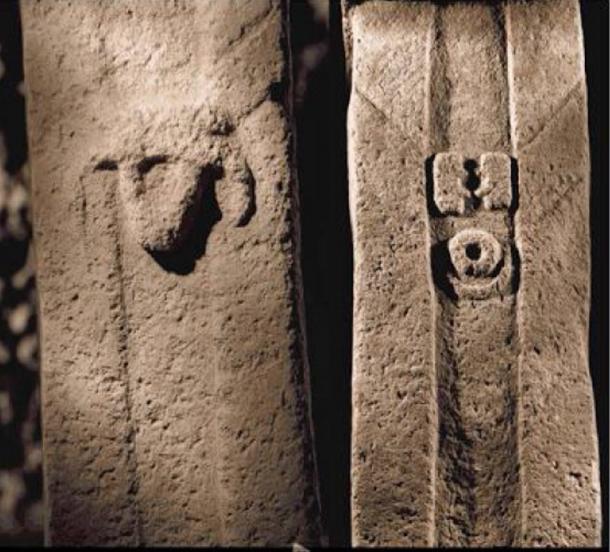
Over the thousands of years that followed, humanity developed a more precise conceptualization of this duality of perception — particularly through the evolution of the bull into human form. This transformation produced the male counterpart of the ancient religious system. Not only did humans evolve the bull into a male god, but depictions of both female and male divine figures increased in acuity. Their physical features evolved from amorphous outlines into intricately differentiated forms (Cauvin, 2000).
With the rise of urbanism in Sumer and Egypt around 6,000 years ago, these deities expanded into multi-personage structures. Although various factors contributed to this development, a multivariant perception is a fundamental axiom behind it. This expansion reflects an evolutionary phenomenon brought about by increased cognitive complexity.
The outdated dual system of perception found in the Paleolithic and Neolithic eras was not discarded but expanded. A new perceptual system emerged — one that included duality yet moved beyond it toward a multivalent conception of reality itself. This shift paralleled the fabric of reality at the physical level (wave–particle duality). It enriched humanity’s capacity to comprehend the overarching structure of existence.
Each divine figure represented a facet of human personality and the forces of nature. These personages were arranged hierarchically, symbolizing a structured model of significance imposed upon various aspects of human nature and reality. This hierarchy constituted a value system — an ordering of utility, functionality, and meaning.
Certain aspects, especially fundamental ones, held greater value than others. For instance, Anu, the sky creator god of ancient Sumer, occupied a higher position than the lesser deities of the Anunnaki. Translated into human existence, this implies that the material substrate of reality holds primary value for survival, compared to other experiential modes.
However, this hierarchy does not devalue the other modes of attention — such as creativity, imagination, or contemplative experience. Rather, all facets are interconnected, and the exclusion of any disrupts the overall functionality of the system. In the psyche, such disruption leads to pathological shifts in perception and behavior.
Modernity and the Narrowing of Perception
As humanity progressed, certain facets of this interconnected perceptual system began to erode. This is especially evident in early Christianity. Although Zoroastrianism and Buddhism articulated elements of the unified psyche, Christianity was the first to express this unification in a coherent, holistic manner.
Christianity’s model was not incorrect in itself — it unified the diverse forces of psyche and nature into a coherent framework. It beautifully retained both the material (bull) and spiritual (divine feminine) aspects of ancient perception and integrated the diversity of deities through transformation and adaptation. Yet, the collective’s dogmatization of this interpretive structure introduced rigidity and ultimately fractured the coherence of the perceptual framework.
For Jung, this dogmatization represented an overaccentuation of the ego — a severing from the collective unconscious. Though intended to free humanity from primal instincts, it instead produced a constricted mode of perception that neglected the creative forces of the unconscious. This constriction was exacerbated in the scientific revolution of the 18th and 19th centuries. Nietzsche (1883) expressed concern that the revolutionary rise of science had eroded the ancient mythos, leaving only rationality in its wake.
This overemphasis on rationality has narrowed human perception. Precision has increased, but comprehension has decreased. McGilchrist (2019) describes this as overreliance on the left hemisphere’s functional mode. Similarly, Jung (1956) argued that modernity has overdifferentiated the ego, pushing humanity toward hyperrationality.
Without mythos, humanity lacks a navigational framework for confronting the unknown. The presuppositional structures that guided humanity for millennia have dissolved. Nietzsche proposed that humanity must become its own god — the cumulative wisdom of evolution incarnate — and create a new system of values. Yet such a task, in practice, is impossible.
Thus, we face the question: How can humanity reorient itself in a way that promotes survival and genuine development?
The Integration of Conscious and Unconscious Structures
The path forward is the reintegration of conscious and unconscious structures — both individually and collectively. To accomplish this, we must return to the catalysts that fractured our perceptual model: religious dogmatization and the scientific revolution.
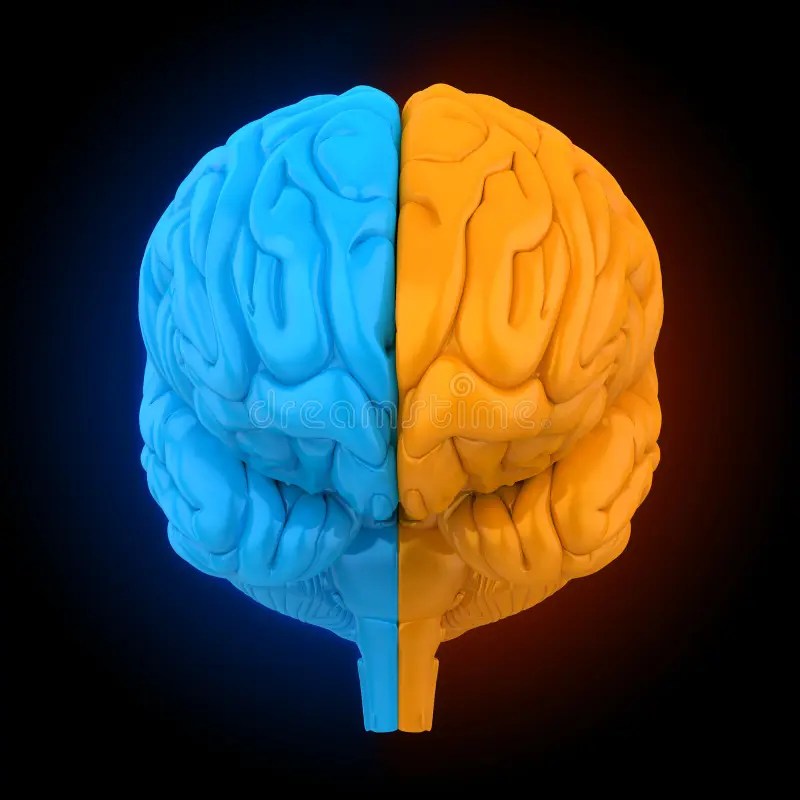
Dogmatization is an expression of the left hemisphere’s need for control — its craving for certainty. Certainty helps reduce anxiety and creates a sense of order, but it is only a navigational assistant. True navigation originates in the right hemisphere, where context, meaning, and holistic understanding reside. Without right-hemispheric context, the left hemisphere becomes lost — yet paradoxically remains convinced of its own correctness.
Thus, although dogmatized Christianity offered believers psychological security, it produced far greater long-term harm by constricting perception. Science, in parallel, attempted to discard mythos entirely. Its overreliance on rationality stripped humanity of meaningful perceptual structures, even while maintaining absolute certainty in its own framework.
Both systems, when absolutized, become artificial structures built on limited knowledge. Both have produced immense suffering. And both continue to blame each other while refusing introspection — a classic manifestation of the left hemisphere’s rigidity.
What then should humanity do?
The solution lies not in choosing between religion or science, but in integrating the valuable aspects of both — and discarding their dogmatic elements.
Dogma must be stripped away from both domains. This allows the latent creative, unconscious forces to recombine perceptual elements into a more coherent holistic framework.
For example, the Genesis creation narrative has been confined by literal dogma, yet the text is inherently multivariant and can be interpreted through multiple valid lenses. If empirical evidence contradicts a given interpretation, one must revise the interpretation. The same holds for science. The evolution of the universe does not necessarily refute Genesis when approached metaphorically or psychologically.
Some scientists, such as Gerald Schroeder (2009), have shown how the evolutionary history of the universe aligns meaningfully with the Genesis account. This type of integrative synthesis is precisely what modern humanity needs.
Jung’s work also stands as a testament to successful integration — uncovering the evolutionary layers of the psyche within religious symbolism. With modern scientific tools unavailable to Jung, humanity can extend his project even further.
Ultimately, the key qualities required for this task are humility and openness — right-hemisphere virtues. Integration will require cooperation, dialogue, and synthesis across disciplines. But if humanity succeeds, it will reconstruct a unified model of meaning — one capable of orienting both individuals and societies toward authentic progress.
Within such a reconstruction lies the possibility of a unified understanding of reality itself — a comprehensive unification of the fundamental essence of being.
References
Cauvin, J. (2000). The birth of the gods and the origins of agriculture. Cambridge University Press.
Çep, B., Schürch, B., Münzel, S.C., & Frick, J.A. (2021). Adaptive capacity and flexibility of the Neanderthals at Heidenschmiede (Swabian Jura) with regard to core reduction strategies. PLoS ONE, 16(9): e0257041. https://doi.org/10.1371/journal.pone.0257041
d’Errico, F., Mauran, G., Pitarch Martí, A., Majkić, A., & Stepanchuk, V. (2025). Evidence for symbolic use of ochre by Micoquian Neanderthals in Crimea. Science advances, 11(44), eadx4722. https://doi.org/10.1126/sciadv.adx4722
Finestone, E. (2025). Early stone tool technology in hominin evolution. Oxford Research Encyclopedia of Anthropology. https://oxfordre.com/anthropology/view/10.1093/acrefore/9780190854584.001.0001/acrefore-9780190854584-e-637.
Gimbutas, M. (1989). The language of the goddess. Harper San Francisco.
Jung, C. (1956). Symbols of transformation. Princeton University Press.
McGilchrist, I. (2019). The master and his emissary. Yale University Press.
Nietzsche, F. (1883). Thus spoke Zarathustra: A book for everyone and no one. Penguin Classics.
Pinson, A., Xing, L., Namba, T., Kalebic, N., Peters, J., Oegema, C. E., Traikov, S., Reppe, K., Riesenberg, S., Maricic, T., Derihaci, R., Wimberger, P., Pääbo, S., & Huttner, W. B. (2022). Human TKTL1 implies greater neurogenesis in frontal neocortex of modern humans than Neanderthals. Science (New York, N.Y.), 377(6611), eabl6422. https://doi.org/10.1126/science.abl6422
Schroeder, G.L. (2009). The science of God. Free Press.
Tattersall, I. (2013). Masters of the planet. St. Martin’s Griffin Publishing. Wales, N. (2012). Modeling Neanderthal clothing using ethnographic analogues, Journal of Human Evolution, 63(6), 781-795, ISSN 0047-2484. https://doi.org/10.1016/j.jhevol.2012.08.006


























 Michael Thacker