“The Cognitive Transformation Underlying Personal Renewal”
Establishment of Perception
How we perceive reality is predicated upon the internal cognitive mechanisms we construct. This cognitive mechanism is known as a schema — a perceptual framework through which we interpret reality. The building process of schemas initiates, perhaps, even as early as gestation, when voices, hormonal changes, and maternal stress are received and processed.
However, this early cognitive initiation does not imply that one is born into the world absent of any preconceived schematic elements. Quite the contrary: we all possess ancient remnants from our evolutionary past, extending back some 3.5 billion years. These ancient remnants interact with more recent inherited dispositions from parents, grandparents, and so forth.
These inherited foundations — ancient and recent — are essential in the schema formation process. They form the substrate upon which personal experiences can build in a stabilized manner, however imperfect that foundation may be.
Bit by bit, schemas are constituted. This process becomes especially evident following birth. Not only are external stimuli felt and heard, but they also become visually acquired and internally organized. Attention, thinking, and categorizing are the fundamental characteristics by which schemas are formed. Information is systematized into adaptive, referential, interconnected sequences that emerge as the environment necessitates.
Neuroanatomy of Perception
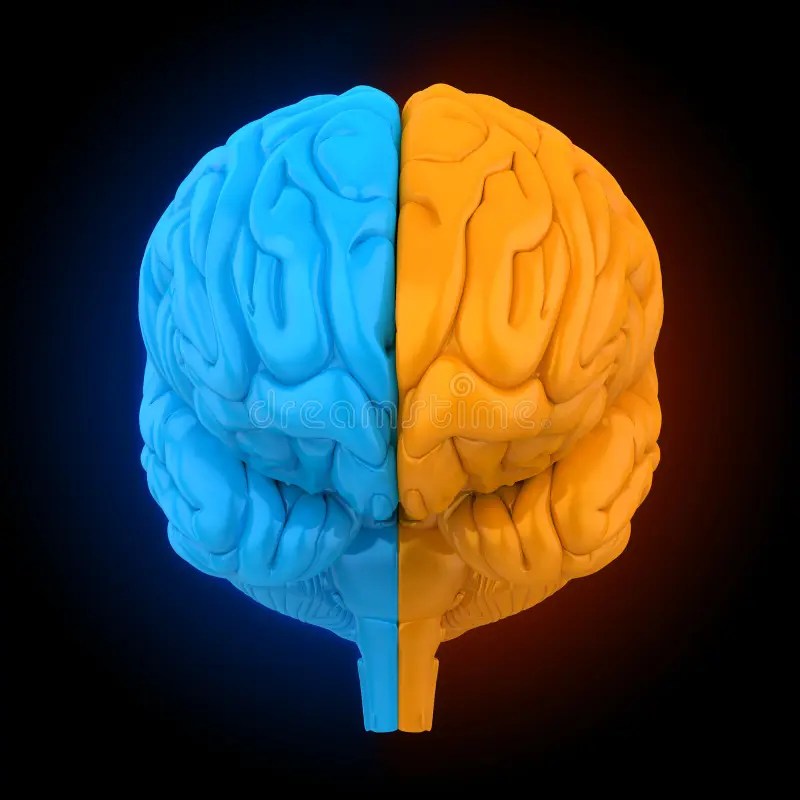
Neuroanatomically, these processes unfold through an interconnected dynamic between the right and left hemispheres. Each hemisphere provides its own distinct means of perceiving and receiving information. The right hemisphere perceives the world holistically, specializing in pattern recognition and contextual parameters, while the left hemisphere is more precise, specializing in analyzing parts and categorization (McGilchrist, 2019).
It is through this interplay that an individual begins to make sense of themselves and the world around them. By perceiving and analyzing received information in light of both holistic and analytical mechanisms, one can construct a coherent and logically sound schema.
However, if emphasis shifts toward an inequality between the hemispheres — especially if the left hemisphere becomes dominant — a partial perception results. Over time, this partial perception becomes the finished product. Rigidity and stagnation follow, as the left hemisphere tends toward certainty in its own interpretations.
Evolution of Perception
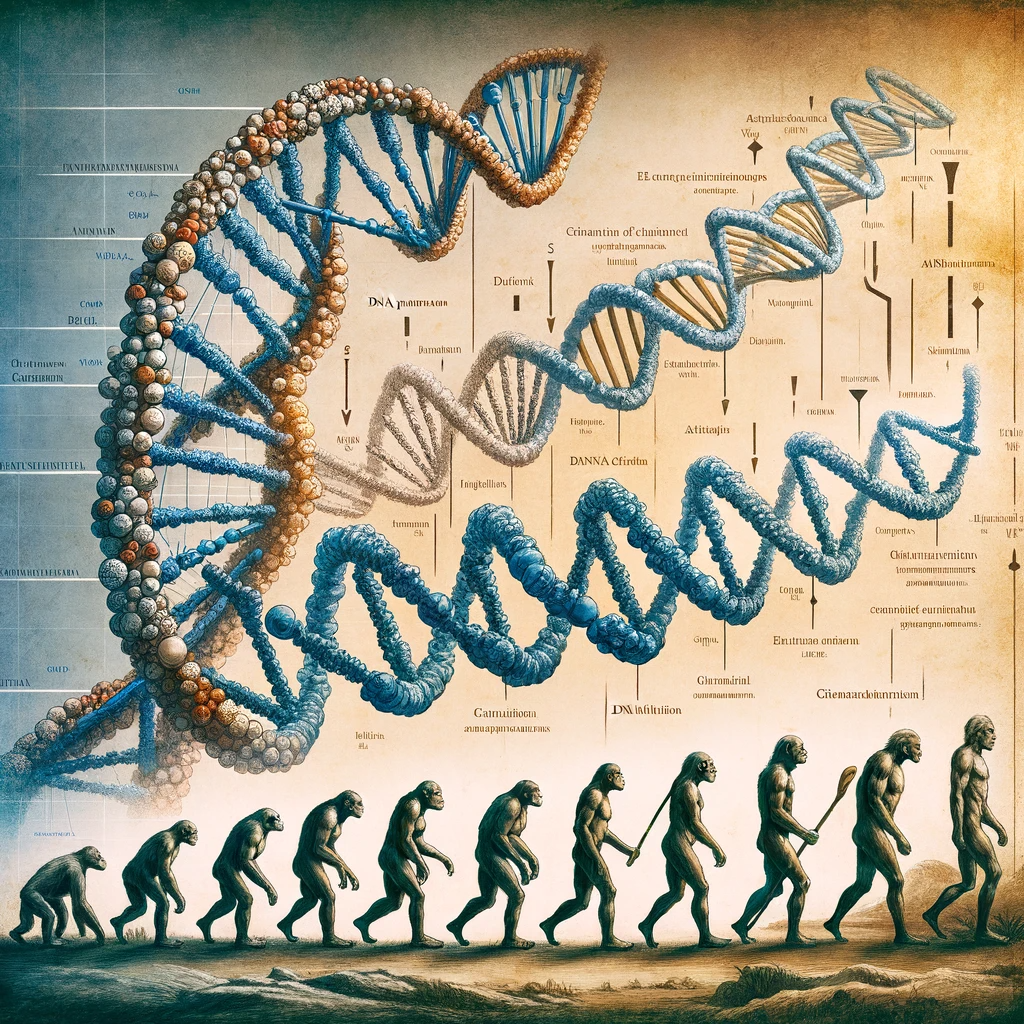
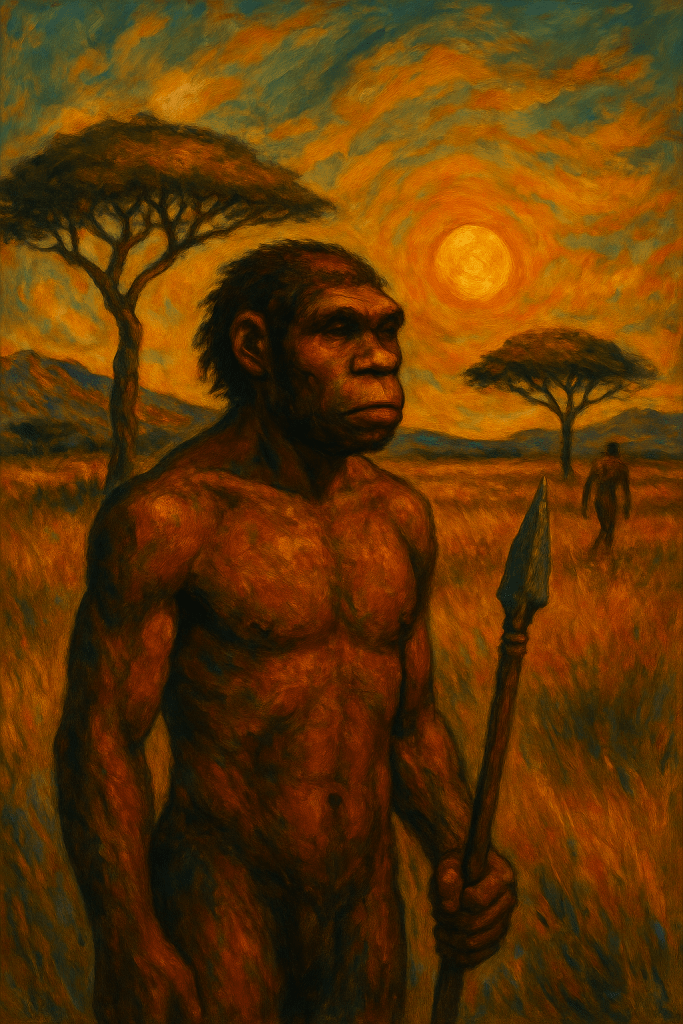
Evolutionarily, the hominin lineage propagated and transformed into new species through adaptation. These adaptations were not simply behavioral or physical — though they resulted in both — but began at the more fundamental levels of cognition and epigenetics. As hominins engaged with the world, contending with the challenges emerging around them, these novelties interacted with both genetic and cognitive processes.
A prime example is the climatic shifts that occurred multiple times in our evolutionary history. One such shift occurred approximately 650,000 years ago, coinciding with the divergence of Neanderthals and Denisovans (Sánchez Goñi, 2020).
Environmental changes appear responsible for the emergence of these new hominins. How? Through a dual mechanism: perceptual shift and epigenetics.
To survive climate change, our ancestors had to reorganize their perceptual models because the world they inhabited fundamentally changed.
This reorganization occurred through the acquisition of novel information, which was then integrated into existing frameworks — sometimes to the point of complete reconfiguration. Behavioral modifications followed, supporting survival.
Over thousands of years of contending with this shifting environment, and through new patterns of perception and behavior, underlying genetic processes unfolded. These processes contributed to increased brain growth and other physiological changes that characterized Neanderthals and Denisovans (Libedinsky et al., 2025).
Individuation and Personal Schematic Transformation
Translated to the personal level, this process of acquiring novel information and transforming perception is the essence of individuation. For Jung (1956), individuation required that an individual contend with new information — symbolized as the dragon in myth — with conscious awareness. One must critically analyze novelty to determine how it fits within one’s current perceptual and conceptual framework.
This is akin to what our primitive ancestors underwent when facing the upheaval of their environment. Developmental psychologist Piaget described this process as “assimilation” and “accommodation.” Assimilation involves incorporating new information into an existing schema. Accommodation requires the schema itself to be reconfigured (Babakr et al., 2019).
Assimilation requires minimal cognitive effort, whereas accommodation demands substantial resources. In the ancestral context, climate change necessitated accommodation — a full restructuring of perception. Those who adapted survived; those who did not perished.
Accommodation emerges when there is a mismatch between the interpretational model and the new information. When received humbly, this mismatch leads to a transformation of both perception and behavior — the psychological equivalent of the hero’s ascent in Jungian thought. The psyche reorganizes, reorienting how one navigates the world.
As time elapses, underlying epigenetic processes unfold, leading to phenotypical expressions visible to others. In mythological language, this psychological transformation mirrors the resurrection motif — a descent into chaos followed by reemergence into a reconfigured mode of being. This transformation is evidenced not only behaviorally and cognitively but, to a degree, physiologically.
Jung, C. (1956). Symbols of Transformation. Princeton University Press.
Libedinsky, I., Wei, Y., de Leeuw, C., Rilling, J. K., Posthuma, D., & van den Heuvel, M. P. (2025). The emergence of genetic variants linked to brain and cognitive traits in human evolution. Cerebral Cortex, 35(8). https://doi.org/10.1093/cercor/bhaf127
McGilchrist, I. (2019). The Master and His Emissary. Yale University Press.
Sánchez Goñi, M. F. (2020). Regional impacts of climate change and its relevance to human evolution. Evolutionary Human Sciences, 2, e55. https://doi.org/10.1017/ehs.2020.56
Exploring the dialogue between brain, being, and the pursuit of wholeness
Author’s Note
This essay is part of an ongoing exploration into the evolution of human consciousness — a synthesis of neuroscience, depth psychology, and symbolic archaeology. It traces how our perception, shaped by the hemispheric balance of the brain, has evolved from the mythic to the analytical, from the cave wall to the temple pillar. Through this unfolding, I seek to illuminate the dialogue between cognition and meaning — and the quiet possibility of equilibrium that awaits beyond our modern fragmentation.
Introduction
Throughout humanity’s evolutionary history, shifts in both intelligence and perception have occurred, often following periods of environmental upheaval. These shifts were products of novel adaptive strategies that caused incremental adjustments in cognition — the result of reoriented neural pathways and the activation of dormant genes. After thousands of years of implementing these adaptive strategies, humanity began to experience abrupt increases in both intelligence and perception (Libedinsky et al., 2025; Sánchez Goñi, 2020).
Such abrupt changes become increasingly evident as humanity progressed through more recent epochs, particularly from the Paleolithic to modern times. These shifts are visible throughout the Paleolithic period, when art first became a prominent practice among prehistoric peoples (Aubert et al., 2019; Srivastava, 2020). The Neolithic period then introduced dramatic innovations — megalithic structures, agriculture and herding, improved weaponry, and the formation of coherent religious systems (Cauvin, 2000; Schmidt, 2010). Each stage of development only refined these capacities, advancing precision and clarity in every domain.
Precision and clarity appear to be the hallmarks of enhanced cognition — and with them, the necessity for systemization. Why? Because both arise from neuroanatomical shifts and the intrinsic nature of curiosity. Three fundamental facets of this precise, systemized orientation are evident: cohesion, functionality, and progression. These facets apply not only to society but to the individual psyche as well.
Neuroanatomical Shift
Since humans and chimpanzees diverged from a last shared common ancestor approximately six million years ago, our brains have increased substantially in size and complexity. A major leap occurred in our transition from Australopithecus to Homo erectus some 2.2 million years ago — a near doubling in brain size. From there, expansion continued, reaching its peak with Neanderthals (Püschel et al., 2024).
With the emergence of Homo sapiens, however, a new trend appeared: instead of expanding in size, the brain increased in capacity. This efficiency is evident in the greater number of neurons within the human neocortex, particularly the frontal lobe — the seat of critical and complex thinking (Pinson et al., 2022).
Along with this cognitive refinement came a shift in hemispheric utility. McGilchrist (2019) revealed a fundamental distinction between right and left hemispheric modes of attention: the right perceives the world holistically and peripherally, while the left seeks precision and control. The right is imaginative and integrative; the left, analytical and categorical.
Humanity began moving toward the left-hemispheric mode in the Paleolithic era, with the introduction of artistic design. The precision required for symbolic expression suggests the growing involvement of the left hemisphere. This subtle reliance increased into the Neolithic, visible in the construction of monumental architecture, agricultural organization, and the emergence of figurative representation.
Sites such as Göbekli Tepe and Jericho exemplify this shift: architectural precision, sustainable agriculture, and the differentiation of male and female figurines all point toward the rising influence of left-hemispheric categorization (Cauvin, 2000; Schmidt, 2010).
As time progressed, this categorical and precise mode continued to shape civilization. Technological innovations, religious institutions, and hierarchical social structures all attest to an increasing dominance of left-hemispheric perception. At the heart of this development lies an enduring human trait — curiosity.
Human Curiosity
Curiosity has characterized human behavior since Homo erectus first migrated out of Africa nearly two million years ago (Bae & Manthey, 2025). Scrivner (2022) suggests that curiosity is an adaptive trait that enables humans to better navigate and understand their environment. This exploratory impulse fosters innovation — whether objective or subjective — as humanity continually seeks to improve its condition.
Whether driven by novelty-seeking or the desire to comprehend the unknown, humanity possesses an intrinsic longing to explore and apprehend (Scrivner, 2022). This propensity intensifies across millennia, especially as intelligence increases. Curiosity, as a facet of openness to experience, is strongly correlated with higher intelligence (Schretlen et al., 2010).
As intelligence evolved, so too did the desire to categorize the world for comprehension and control. This drive likely coincided with increased left-hemispheric engagement — the side that dissects, defines, and organizes reality.
Yet this same curiosity that propelled humanity forward can, if left unchecked, create imbalance. McGilchrist (2019) warns of pathological left-hemispheric dominance — an overreliance on precision that excludes wholeness. I seek to extend his observation through a deeper evolutionary lens.
Appreciation and Apprehension
From tools, art, and fire to agriculture and megaliths, humanity has long sought to understand both itself and the cosmos. This expanding apprehension culminated in hierarchical institutions, complex governments, and meaning-oriented religious systems — each amplifying the role of the left hemisphere (Cauvin, 2000; McGilchrist, 2019).
As with all pursuits, there are trade-offs. Precision and clarity have provided coherence to the human story, but often at the cost of individuality. Categorization enhances cohesion and efficiency, yet risks stripping humanity of freedom. Progress achieved collectively can impede the growth of the individual soul.
These trade-offs echo the state of modern society — an era that privileges institutional functionality over personal meaning. Trade-offs are inevitable in nature; however, they can be harmonized rather than polarized. McGilchrist (2019) proposes a necessary return to right-hemispheric balance — not by abolishing the left, but by restoring the dialogue between them.
Such equilibrium parallels Jung’s process of individuation — a dynamic oscillation between the ego (left hemisphere) and the collective unconscious (right hemisphere) (Jung, 1956). Through this process, both society and self can move toward a state of wholeness.
A civilization that helps each individual integrate these hemispheric and psychological opposites will foster empathy, creativity, and renewal. Through the interplay of apprehension and appreciation, humanity may yet rediscover equilibrium — and in doing so, usher in the next phase of evolution: the evolution of consciousness itself.
May we learn again to see with both eyes of the mind — one of reason, and one of wonder.
— Michael Thacker
References:
Aubert, M., Lebe, R., Oktaviana, A. A., Tang, M., Burhan, B., Hamrullah, Jusdi, A., Abdullah, Hakim, B., Zhao, J. X., Geria, I. M., Sulistyarto, P. H., Sardi, R., & Brumm, A. (2019). Earliest hunting scene in prehistoric art. Nature, 576(7787), 442–445. https://doi.org/10.1038/s41586-019-1806-y
Bae, C.J. & Manthey, C. (2025). Out of Africa I revisited: Life history, energetics, and the evolutionary capacity for early hominin dispersals, Quaternary Science Reviews, 370, ISSN 0277-3791, https://doi.org/10.1016/j.quascirev.2025.109690.
Cauvin, J. (2000). The birth of the gods and the origins of agriculture. Cambridge University Press.
Jung, C. (1956). Symbols of transformation. Princeton University Press.
Libedinsky, I., Wei, Y., de Leeuw, C., Rilling, J. K., Posthuma, D., & van den Heuvel, M. P. (2025). The emergence of genetic variants linked to brain and cognitive traits in human evolution. Cerebral cortex, 35(8), bhaf127. https://doi.org/10.1093/cercor/bhaf127
McGilchrist, I. (2019). The master and his emissary. Yale University Press.
Pinson, A., Xing, L., Namba, T., Kalebic, N., Peters, J., Oegema, C. E., Traikov, S., Reppe, K., Riesenberg, S., Maricic, T., Derihaci, R., Wimberger, P., Pääbo, S., & Huttner, W. B. (2022). Human TKTL1 implies greater neurogenesis in frontal neocortex of modern humans than Neanderthals. Science (New York, N.Y.), 377(6611), eabl6422. https://doi.org/10.1126/science.abl6422
Püschel, T.A., Nicholson, S.A., Baker, J., Barton, R.A. & Venditti., C. (2024). Hominin brain size increase has emerged from within-species encephalization, Proc. Natl. Acad. Sci. U.S.A. 121 (49) e2409542121, https://doi.org/10.1073/pnas.2409542121
Sánchez Goñi, M. F. (2020). Regional impacts of climate change and its relevance to human evolution. Evolutionary Human Sciences, 2, e55. https://doi.org/10.1017/ehs.2020.56
Scrivner, C. (2024). Curiosity: A behavioral biology perspective’, in Laith Al-Shawaf, and Todd K. Shackelford (eds), The Oxford handbook of evolution and the emotions. Oxford Publications. https://doi.org/10.1093/oxfordhb/9780197544754.013.20
Schmidt, K. (2010). Göbekli Tepe – the Stone Age Sanctuaries. New results of ongoing excavations with a special focus on sculptures and high reliefs. Documenta Praehistorica, 37, 239-256. https://doi.org/10.4312/dp.37.21
Schretlen, D. J., van der Hulst, E. J., Pearlson, G. D., & Gordon, B. (2010). A neuropsychological study of personality: trait openness in relation to intelligence, fluency, and executive functioning. Journal of clinical and experimental neuropsychology, 32(10), 1068–1073. https://doi.org/10.1080/13803391003689770
Tracing the evolution of awareness from quantum entanglement to symbolic self-reflection.
By Michael Thacker
Author’s Note:
This essay explores the evolution of consciousness as an emergent hierarchy — from the proto-conscious field of quantum entanglement to the symbolic articulation of the human psyche. It integrates perspectives from physics, genetics, sensory biology, neuropsychology, and depth psychology to illustrate how awareness unfolds as a unified process across the scales of being.
Introduction
Consciousness has been a mystery to humanity since the initial emergence of writing — and most likely well into our evolutionary past, evidenced in burials of the dead beginning over 100,000 years ago (Zaidner et al., 2025). Early representations of humanity’s awareness of consciousness appeared during the Paleolithic period (≈50,000 BP) as stone carvings of spirals, snakes, and bulls (Gimbutas, 1989). These carvings symbolized “life energy,” or in Jungian terms, the libido (Jung, 1956).
Millennia later, the concept of consciousness evolved from an overarching field that inhabited all life into an individual soul that only humans possessed. The Sumerian word for soul or spirit was gidim, which translated to an animated spirit or ghost of the individual (Choksi, 2014). This concept was developed further in the Old Testament, where everyone possessed a nesama — the “breath of life” or soul. The New Testament writers expanded upon this with the Greek term pneuma to describe the soul of humanity — often translated as “spirit,” but best understood as the rational soul.
The introduction of a rational component to the concept of the soul was revolutionary — signifying a developmental step toward individual significance. This significance can be better understood by examining the evolving religious significance of the individual from Sumer to the first century ACE.
During the third millennium BCE, the Sumerians believed the king to be a god incarnate, possessing the power to govern all things. Centuries later, this concept developed to situate the king as a son of the gods rather than a god himself. However, both roles positioned the king to “inherit” access to dwell with the gods forever in the heavens after death (Neumann, 1954).
As the centuries progressed, so too did this concept of death and resurrection — one that eventually extended to all inhabitants of Babylon (Sumer). The Old Testament writers absorbed this idea, which was further developed in the New Testament. There, all of humanity possesses a “soul,” and through the death and resurrection of Jesus, those who believe in the “king” are granted access to the eternal realm (Neumann, 1954).
Though the symbolic understanding of consciousness (soul) has evolved throughout millennia, a scientific comprehension of this enigma remains elusive. It is therefore necessary to integrate this symbolic dimension within a multifaceted framework of consciousness. The symbolic significance is not a mere artifact of culture but an evolutionary phenomenon that may be directly related to the essence of consciousness itself. Other facets that must be considered include quantum physics, genetics, sensory modalities, neuroanatomy, and symbolism.
To understand consciousness as an emergent hierarchy, we must move beyond the isolated study of its components toward a model that perceives its interdependent strata as facets of a unified field. Each level — quantum, genetic, sensory, neural, and symbolic — contributes to the architecture of awareness in ascending complexity, while remaining rooted in the same underlying continuum of reality.
Hierarchy of Consciousness
These five facets of consciousness — quantum, genetic, sensory, neuroanatomical, and symbolic — are best understood as an amalgamated hierarchy rather than separate qualities. The most fundamental level is the quantum realm, where proto-consciousness resides. This level is followed by the genetic structures inherent within multicellular organisms that help “activate” aspects of consciousness into existence. From there, consciousness is experienced and further developed through the sensory and neuroanatomical systems. Finally, it emerges into symbolic articulation — the self-reflective expression of awareness.
The Quantum Foundation: Proto-Consciousness and the Field of Entanglement
Quantum physics pertains to the realm of particles and their subcomponents — a peculiar realm of unpredictability where particles exist as both wave and particle simultaneously (Li et al., 2023). Only when an observer (consciousness) interacts with these particle-waves does the wavefunction collapse and the particle aspect solidify. This solidification gives rise to the tangible reality we engage with daily — from trees and buildings to one another (Codex, 2023).
Multiple experiments over the past two centuries have demonstrated that a particle must be observed to solidify. The first was Young’s famous “double-slit” experiment, wherein photons shot through double slits produced a wave pattern, revealing the paradox of wave-particle duality and the instantaneous, communicative nature of reality (Kim & Ham, 2023).
A later study by the Weizmann Institute of Science (1998) used a sophisticated detector to spot passing electrons and found that — even without human observation — the particles “knew” they were being detected, collapsing their wavefunction. This not only illustrates the entangled nature of particles but also suggests the presence of proto-consciousness.
A more recent experiment by Vedovato et al. (2017) supported this view. Their satellite-ground interferometer extended thousands of miles into space, reflecting photons through complex mirror configurations. At the final moment, the photons collapsed from wave to particle — seemingly aware of the measurement decision through a phenomenon known as retrocausality.
The accumulating evidence supports the idea of a proto-conscious awareness capable of communicating with itself across time. This instantaneous, interconnected communication suggests a fundamental field of proto-conscious activity from which higher forms of consciousness emerge.
Genetic Mediation: The Biological Encoding of Awareness
Deoxyribonucleic acid (DNA) — the double-helix molecule that underlies all life — encodes, transmits, and expresses information (Openstax, 2021). Through epigenetics, genes can be switched on or off depending on environmental factors, allowing traits to manifest as genotypes or phenotypes (Meza-Menchaca et al., 2024). Over roughly 3.8 billion years, this process has driven life’s evolution (Kitadai & Maruyama, 2018).
DNA sustains an organism’s biological functionality across generations, yet this continuity is adaptable. Environmental pressures can activate or deactivate genes, producing new physical and behavioral traits (Meza-Menchaca et al., 2024). Over time, this process gave rise to major evolutionary transitions — such as the first fish adapting to land through genetic activation that eventually produced limbs and lungs (Gregory, 2008).
Epigenetics also shapes cognition. Libedinsky et al. (2025) revealed that shifts in gene expression correlate with cognitive advancements, such as the divergence of Homo sapiens and Neanderthals roughly 600,000 years ago — a period marked by dramatic increases in brain size and complexity.
Because these biological structures are composed of subatomic particles, DNA itself may participate in the same proto-conscious field. Thus, as organisms grow in complexity, consciousness likewise evolves into a more intricate, self-referential structure that enhances survival and adaptability.
Sensory Integration: The Embodied Gateways of Awareness
Evolving from this genetic-environmental interplay were the sensory modalities essential for engagement with the environment. These include visual, auditory, gustatory, olfactory, and vestibular systems (Frangeul et al., 2016).
Sensory systems allow organisms to gather and process information necessary for survival — locating food, identifying threats, navigating terrain (Roca et al., 2025), and making adaptive decisions (Zheng & Gu, 2024). As sensory modalities evolved, so did the capacity for multisensory integration, enabling organisms to analyze and interpret complex stimuli (Kanemura & Kitano, 2023). In hominids, this refinement paralleled the expansion of neuroanatomical features responsible for perception and thought.
Neuroanatomical Integration: The Architecture of Perception and Experience
Human cognition evolved alongside the brain’s structural transformation — increases in cortical folding, myelination, and hemispheric differentiation. This allowed greater information processing and more nuanced perception of reality.
McGilchrist (2019) highlights this hemispheric differentiation: the right hemisphere perceives holistically, attuned to ambiguity and relational context, while the left is analytical, focused on precision and control. The right hemisphere perceives patterns and meaning; the left isolates and defines.
This dual architecture mirrors the wave-particle duality of reality itself — the right hemisphere reflecting the wave’s uncertainty, the left embodying the particle’s stability (Codex, 2023; McGilchrist, 2019).
Symbolic Expression: Consciousness Reflecting Upon Itself
Perception is shaped not only by neuroanatomy but by the internal dialogue of thought. As humans evolved, subjective processing deepened — culminating in the symbolic articulation of internal experience.
Around 50,000 years ago, early humans began to carve and paint symbols on cave walls, transforming inner perception into external representation (Neumann, 1956; Srivastava, 2020). These were not mere depictions but expressions of consciousness becoming self-aware.
Developmentally, the human child follows a parallel path. Around age four, children begin expressing inner perception symbolically, later refining this into language and abstract reasoning (Babakr et al., 2019; Yu & Nagai, 2020). Such self-expression signals individuality — the emergence of a meta-aware self capable of reflection and empathy.
Through millennia, symbolic articulation matured — from cave art to writing, myth, religion, and science — each an externalization of the psyche’s evolution (Jung, 1956).
Entangled Awareness: The Unity of Consciousness and Reality
The five facets of this amalgamated hierarchy — quantum, genetic, sensory, neuroanatomical, and symbolic — collectively compose a coherent architecture of awareness.
Connection with reality begins at the quantum level, where the wave-particle duality allows matter and mind to co-participate. Through quantum entanglement, this wavefunction interacts with the organized particle systems of living organisms, forming the basis of consciousness as a dynamic field of interrelation.
As this system grows in complexity, it acquires the capacity for self-reference and reflection. Organisms with advanced sensory and neural systems not only perceive their environment but interpret it — shaping and being shaped by it in turn.
At higher levels, consciousness interacts within the overarching quantum-entangled field, allowing each individual awareness to be both unique and unified — an independent locus of perception within the shared web of existence.
Consciousness, therefore, may not merely observe reality but participate in its unfolding — each act of awareness a mirror in the cosmic field reflecting itself into being.
Frangeul, L., Pouchelon, G., Telley, L., Lefort, S., Luscher, C., & Jabaudon, D. (2016). A cross-modal genetic framework for the development and plasticity of sensory pathways. Nature, 538(7623), 96–98. https://doi.org/10.1038/nature19770
Gimbutas, M. (1989). The language of the goddess. Harper San Francisco.
Jung, C. (1956). Symbols of transformation. Princeton University Press.
Kanemura, I., & Kitano, K. (2023). Association between different sensory modalities based on concurrent time series data obtained by a collaborative reservoir computing model. Scientific reports, 13(1), 173. https://doi.org/10.1038/s41598-023-27385-x
Kim, S., & Ham, B. S. (2023). Revisiting self-interference in Young’s double-slit experiments. Scientific reports, 13(1), 977. https://doi.org/10.1038/s41598-023-28264-1
Kitadai, M. & Maruyama, S. (2018). Origins of building blocks of life: A review[J]. Geoscience Frontiers, 9(4), 1117-1153. DOI: 10.1016/j.gsf.2017.07.007
Li, J. K., Sun, K., Wang, Y., Hao, Z. Y., Liu, Z. H., Zhou, J., Fan, X. Y., Chen, J. L., Xu, J. S., Li, C. F., & Guo, G. C. (2023). Experimental demonstration of separating the wave‒particle duality of a single photon with the quantum Cheshire cat. Light, science & applications, 12(1), 18. https://doi.org/10.1038/s41377-022-01063-5
Libedinsky, I., Wei, Y., de Leeuw, C., Rilling, J. K., Posthuma, D., & van den Heuvel, M. P. (2025). The emergence of genetic variants linked to brain and cognitive traits in human evolution. Cerebral cortex, 35(8), bhaf127. https://doi.org/10.1093/cercor/bhaf127
McGilchrist, I. (2019). The master and his emissary. Yale University Press.
Meza-Menchaca, T., Albores-Medina, A., Heredia-Mendez, A. J., Ruíz-May, E., Ricaño-Rodríguez, J., Gallegos-García, V., Esquivel, A., Vettoretti-Maldonado, G., & Campos-Parra, A. D. (2024). Revisiting epigenetics fundamentals and its biomedical implications. International journal of molecular sciences, 25(14), 7927. https://doi.org/10.3390/ijms25147927
Neumann, E. (1954). The origins and history of consciousness. Princeton University Press.
Roca, M., Eren, G. G., Böger, L., Didenko, O., Lo, W. S., Scholz, M., & Lightfoot, J. W. (2025). Evolution of sensory systems underlies the emergence of predatory feeding behaviours in nematodes. bioRxiv : the preprint server for biology, 2025.03.24.644997. https://doi.org/10.1101/2025.03.24.644997
Vedovato, F., Agnesi, C., Schiavon, M., Dequal, D., Calderaro, L., Tomasin, M., Marangon, D. G., Stanco, A., Luceri, V., Bianco, G., Vallone, G., & Villoresi, P. (2017). Extending Wheeler’s delayed-choice experiment to space. Science advances, 3(10), e1701180. https://doi.org/10.1126/sciadv.1701180
Yu, L., & Nagai, Y. (2020). An Analysis of Characteristics of Children’s Growth through Practical Art. Healthcare (Basel, Switzerland), 8(2), 109. https://doi.org/10.3390/healthcare8020109
Zaidner, Y., Prévost, M., Shahack-Gross, R., Weissbrod, L., Yeshurun, R., Porat, N., Guérin, G., Mercier, N., Galy, A., Pécheyran, C., Barbotin, G., Tribolo, C., Valladas, H., White, D., Timms, R., Blockley, S., Frumkin, A., Gaitero-Santos, D., Ilani, S., Ben-Haim, S., … Hershkovitz, I. (2025). Evidence from Tinshemet Cave in Israel suggests behavioural uniformity across Homo groups in the Levantine mid-Middle Palaeolithic circa 130,000-80,000 years ago. Nature human behaviour, 9(5), 886–901. https://doi.org/10.1038/s41562-025-02110-y
Zheng, Q., & Gu, Y. (2024). From Multisensory Integration to Multisensory Decision-Making. Advances in experimental medicine and biology, 1437, 23–35. https://doi.org/10.1007/978-981-99-7611-9_2
Tracing the evolution of the human psyche through the meeting of the feminine and masculine principles in the world’s first temple.
By Michael Thacker — Part III of “From Venus to Marduk: The Evolution of Sacred Consciousness” Research Series
Author’s Note: This essay continues an exploration of the evolution of consciousness through the lens of symbolic archaeology and depth psychology. Building upon The Feminine Ouroboros and The Younger Dryas and the Dawn of Consciousness, this installment examines Göbekli Tepe as the threshold between undifferentiated unity and the first emergence of dual awareness — the encounter of the First Parents.
Introduction
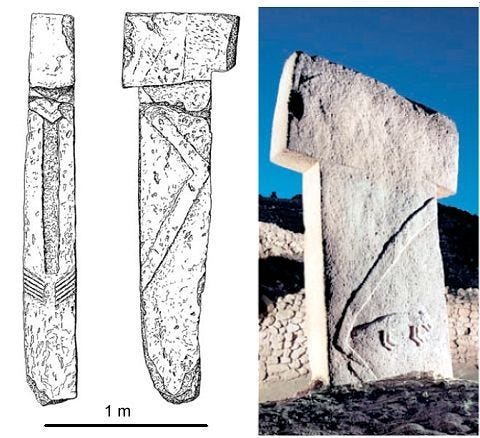
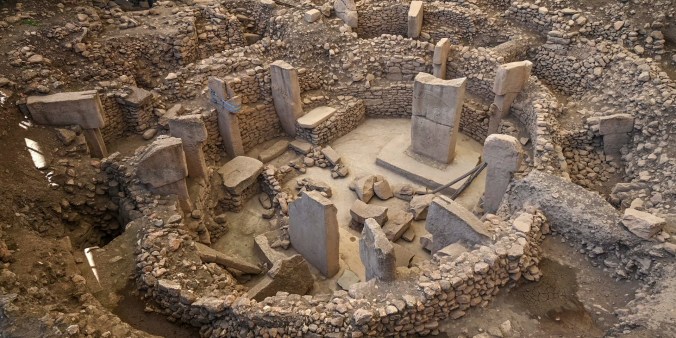
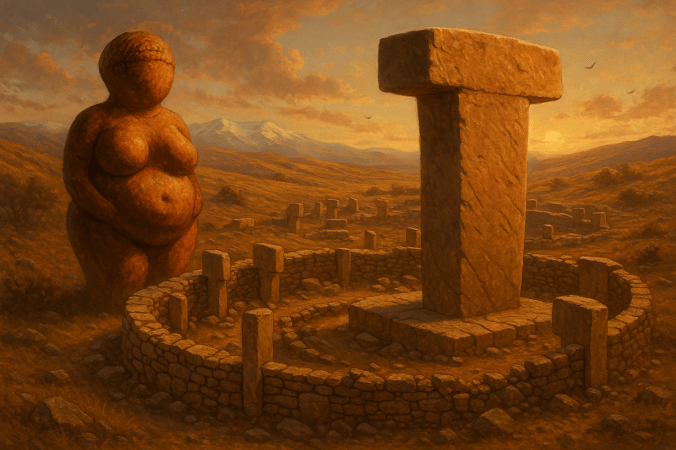
Approximately 12,000 years ago, a megalithic structure was constructed in the southern landscape of modern-day Turkey known as Göbekli Tepe (≈11,600–10,800 BP). The site consists of several circular enclosures outlined with massive T-pillars hewn from limestone, each weighing between 10 and 50 tons and standing roughly 3.5 meters tall (Judkins, 2025). The purpose of this structure remains a mystery; however, many scholars believe it served as one of the earliest temples. This is supported by a wealth of animal bones discovered at the site — indicative of ritual sacrifice (Schmidt, 2010).
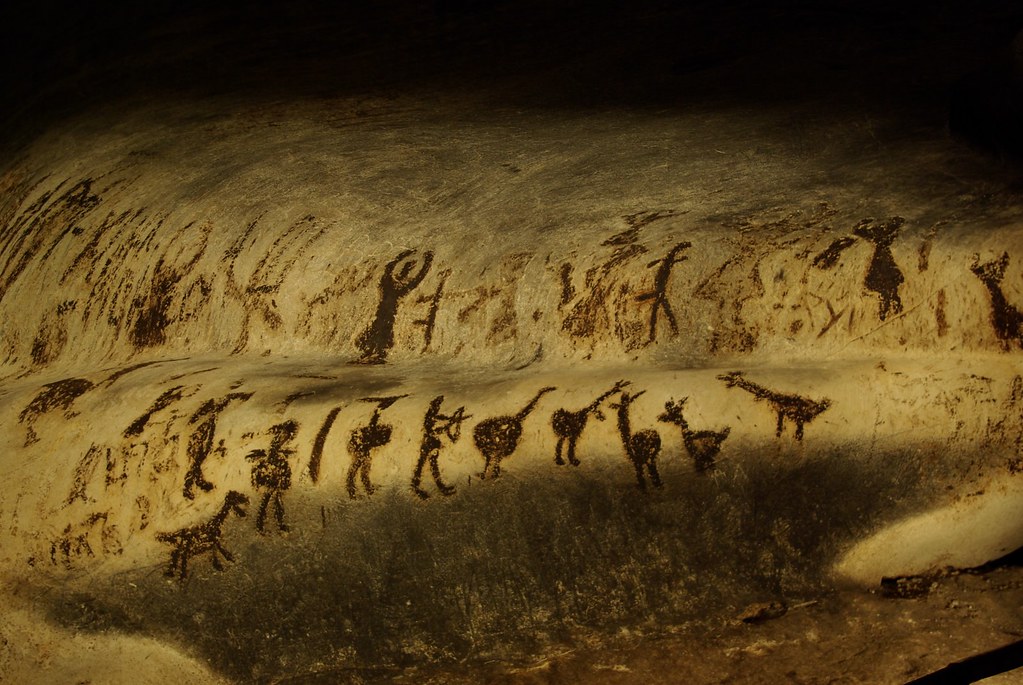
Before Göbekli Tepe, humanity lived in a hunter-gatherer mode of being that required mobility and adaptability — a time known as the Paleolithic period (≈50,000–12,000 BP). Caves provided shelter and community, and within them, humanity began translating experience into abstract expression through paintings and carvings. These depictions often portray hunting scenes, likely representing either actual events or symbolic rituals (Srivastava, 2020).
Among these scenes are abstract motifs — spirals, parallel lines, and zigzags — later associated with the Divine Goddess in the Neolithic and Copper Age. This symbolic continuity, along with the widespread discovery of Venus figurines, suggests a Paleolithic emphasis on the divine feminine. The relative absence of masculine imagery outside of hunting scenes reinforces this interpretation (Gimbutas, 1989; Srivastava, 2020).
The transition from the Paleolithic to the Neolithic (≈11,800–8,500 BP) marked a profound cultural and environmental shift as hunter-gatherers began settling into agrarian life. This transition followed the Younger Dryas, a climatic reversal lasting from 12,800 to 11,500 BP that brought cold, arid conditions and resource scarcity. The subsequent return of warmth and moisture revitalized flora and fauna, catalyzing a resurgence of human creativity and the birth of agriculture (Munro, 2003).
Throughout human history, such climatic fluctuations have repeatedly triggered evolutionary leaps. For instance, the transition from Australopithecus to Homo erectus involved not only tool use, cooking, and bipedalism, but also major environmental change — a crucible that produced taller, leaner humans with doubled brain capacity (Sánchez Goñi, 2020; Wrangham, 2009).
Modern research echoes this pattern: novel environments — whether physical or informational — stimulate neuroplasticity and activate dormant genes. Studies in evolutionary epigenetics have found striking parallels between past climatic shifts and major transitions in hominid cognition (Libedinsky et al., 2025; Sánchez Goñi, 2020).
The impact of the Younger Dryas on human cognition is evident not only in the advent of agriculture but also in the construction of Göbekli Tepe. The site’s earliest phase (Layer III) immediately follows this period, ca. 11,600 BP (Dietrich et al., 2013). Its architectural sophistication, unprecedented in the archaeological record, suggests a major cognitive and cultural transformation.
Human consciousness had evolved in an exceptional way — producing the skills, imagination, and symbolic capacity to build monuments to the unseen.
Göbekli Tepe: The World’s First Temple
The precise function of Göbekli Tepe remains debated, yet most scholars agree it served as a sanctuary. Evidence of animal sacrifice and ritual feasting supports this view (Judkins, 2025; Schmidt, 2010).
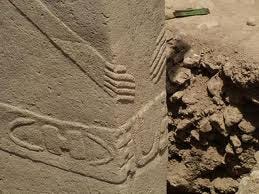
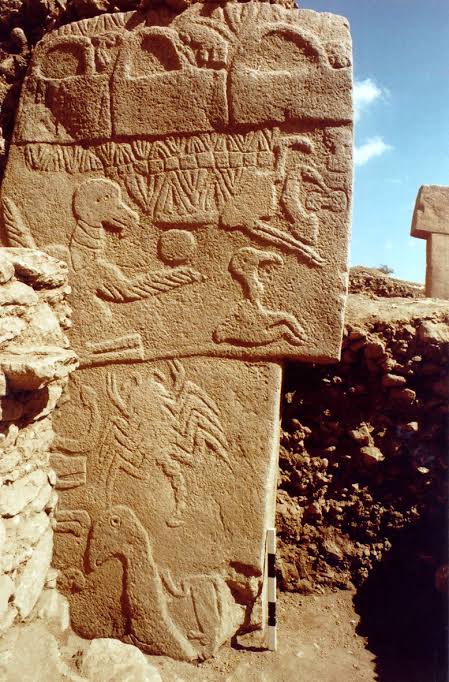
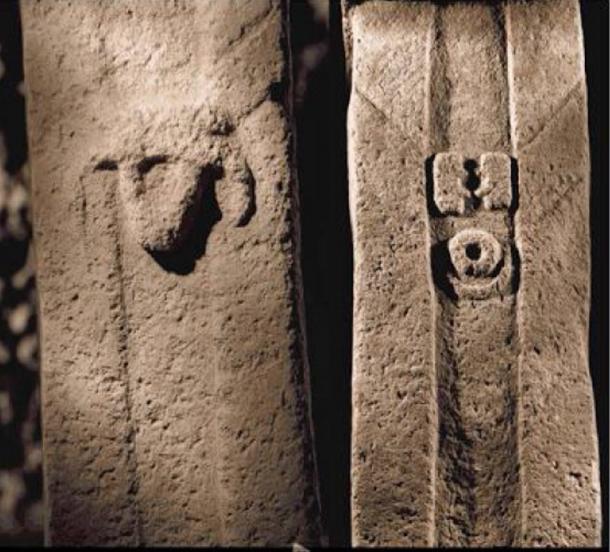
Carved into its pillars are intricate symbols — animals, crescent moons, handbags, and abstract designs such as a recurring H-shaped motif. Nearby sites like Nevali Çori reveal similar architectural and ritual features, indicating a shared cultural tradition. The absence of domestic structures further reinforces the interpretation of Göbekli Tepe as a site of pilgrimage and worship (Schmidt, 2010).
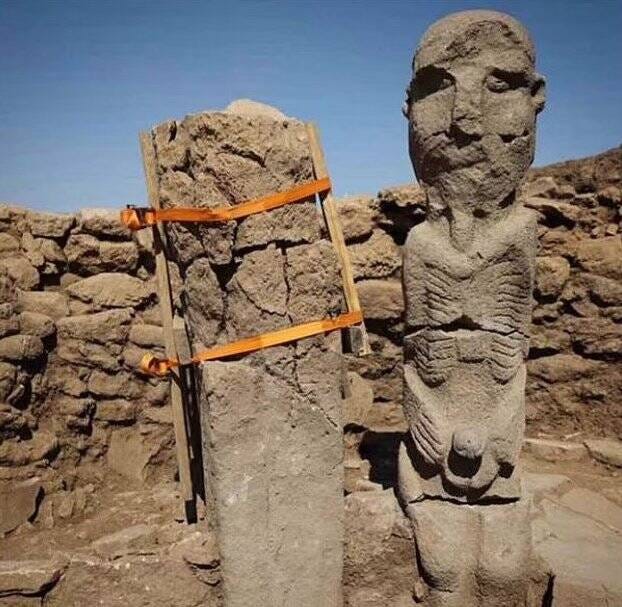
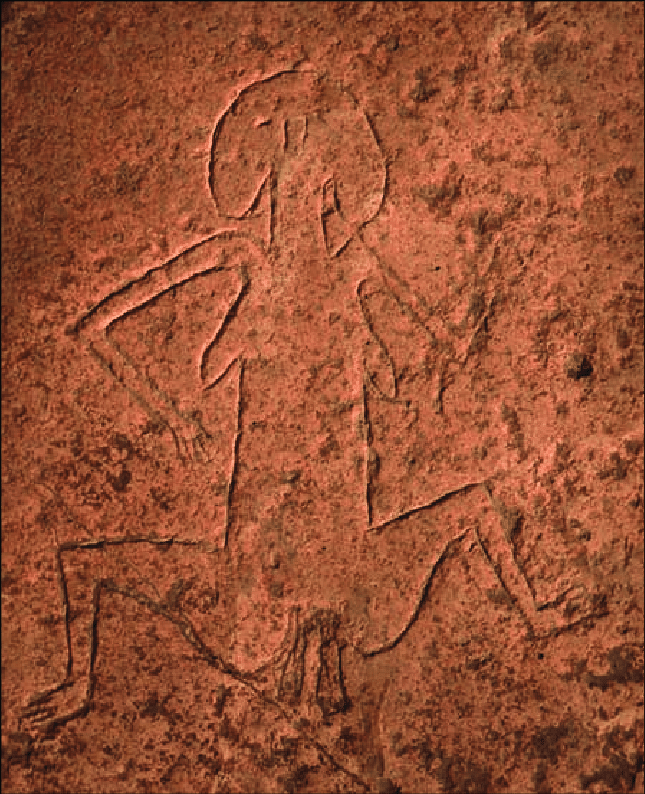
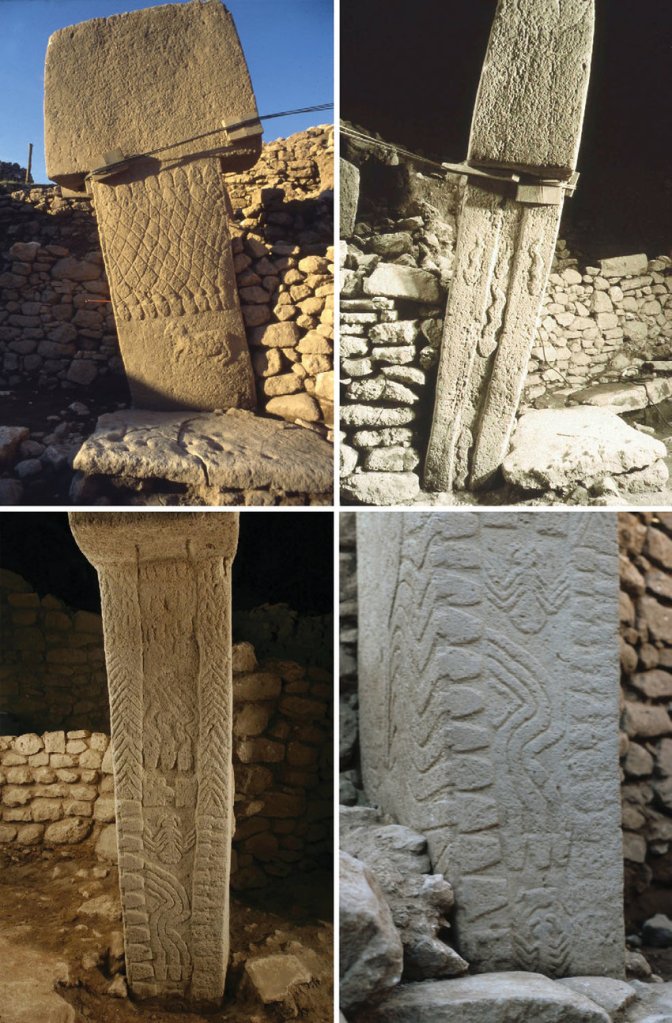
Klaus Schmidt (2010), who first excavated the site, proposed that the T-pillars represent divine beings. Each pillar bears stylized arms folding above a belt, suggesting anthropomorphic figures. Schmidt and others identified them as male, citing parallels at Nevali Çori — a slightly later site whose anthropomorphic statues feature belts, robes, and loincloths. Additional evidence, such as ithyphallic statues and the “Phallic Man” of Karahan Tepe, appears to support this masculine association (Black, 2024; Verit & Verit, 2020).
However, such conclusions may be incomplete when the site is considered as a whole.
Male and Female Divinity
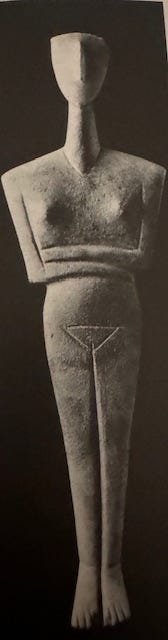
Viewed holistically, Göbekli Tepe and related sites evoke a more complex cosmology. The T-pillars bear striking resemblance to the so-called “stiff nudes” — columnar goddess figurines found throughout the Paleolithic and Neolithic periods. These elongated female forms, characterized by fused legs, stylized arms, and diadem-like headdresses, become especially prominent in the late Neolithic (Gimbutas, 1989; Lbova, 2021; Nishiaki et al., 2025).
The parallels between these figurines and pillars in Enclosure D are too pronounced to ignore. Since such figurines predate and postdate Göbekli Tepe, they suggest continuity in goddess symbolism rather than its replacement.
Nevali Çori provides further evidence. One totem from the site depicts a vulture atop two female figures flanked by vultures below — a clear echo of goddess and death symbology seen in both Paleolithic and Neolithic art. The female figures mirror the form of Göbekli Tepe’s pillars, complete with diadem-like crowns. Additional finds, including bird-headed human figures, recall the archetype of the bird goddess — a symbol of transformation and renewal (Schmidt, 2010).
Excavations at Nevali Çori also uncovered roughly 700 figurines, 90% of which are anthropomorphic. According to Schmidt (2010), male and female figurines appear in nearly equal number, marking an emerging balance between masculine and feminine religious representation. Given the temporal proximity of the two sites, it is plausible that Nevali Çori carried forward the ritual traditions of Göbekli Tepe.
Symbols of vultures, boars, bulls, snakes, and diadems found at Göbekli Tepe are all linked to the goddess tradition (Gimbutas, 1989; Dietrich et al., 2014). These motifs persist into the Copper and Bronze Ages, reflecting a deep continuity of sacred feminine imagery across millennia.
Göbekli Tepe thus represents not the end of matriarchal worship, but its transformation — the point where the masculine first emerges alongside the feminine, not in opposition but in complementarity. This synthesis marks the beginning of a new psychological era — the dawn of rational, structured consciousness.
The Emergence of the First Parents
The shift in consciousness embodied by Göbekli Tepe can be interpreted through a depth-psychological lens. Jung (1956) described early humanity as living in a dream-like participation with nature, immersed in the collective unconscious. As awareness evolved, symbols once lived became symbols reflected upon. Consciousness differentiated, giving rise to what Jung called the ego — the center of individuality.
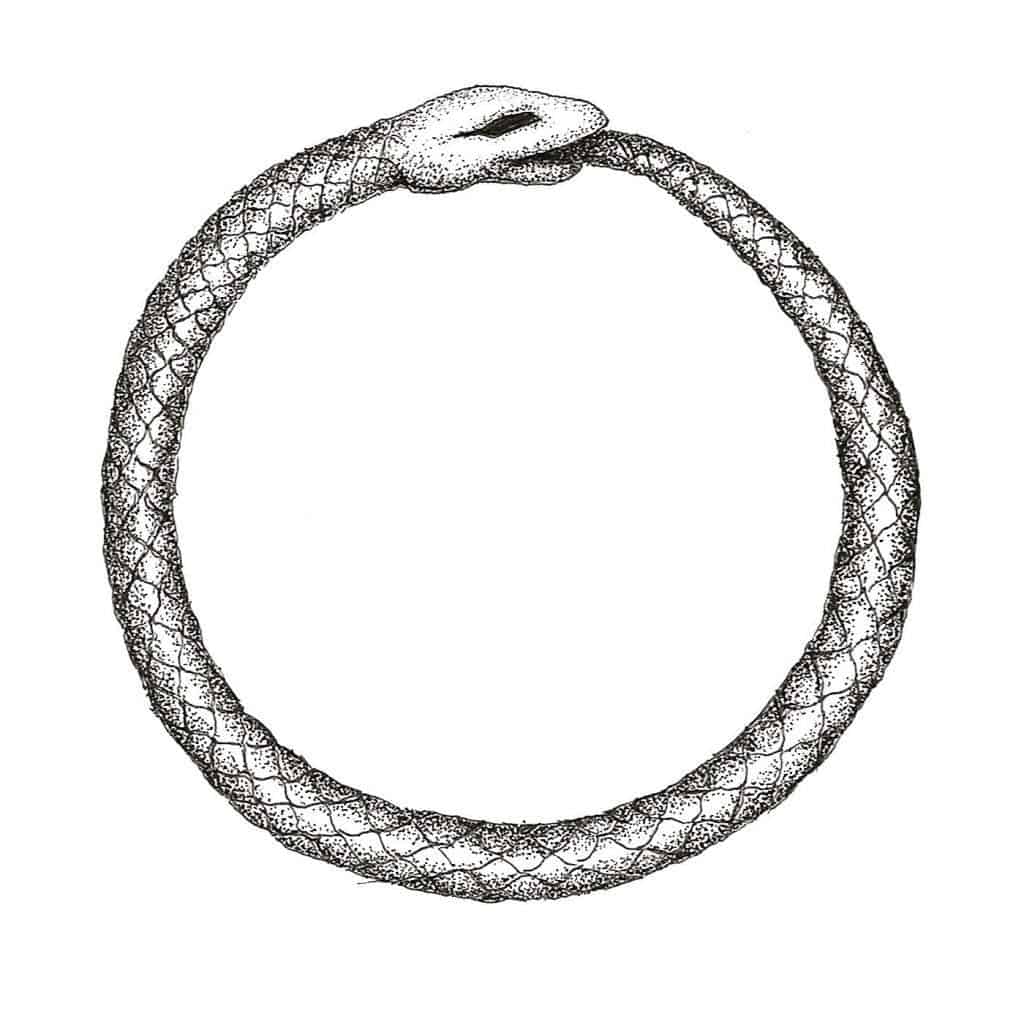
This differentiation, symbolized by the mythic separation from the “first parents,” marks the beginning of self-awareness. In mythic language, the ouroboros — the eternal feminine that contains both creation and destruction — gives birth to duality. From this unity arise the first masculine and feminine forms — the primordial parents of myth (Jung, 1956; Neumann, 1954).
Within this framework, Göbekli Tepe represents the emergence of the collective ego from the collective unconscious. The circular enclosures function as symbolic wombs, while the upright T-pillars embody consciousness rising from the undifferentiated whole. Through these forms, humanity began to recognize itself — to separate subject from object, self from nature.
No longer confined to the cave walls of symbolic dream, humankind stood upright and inscribed its reflection in stone.
Conclusion
Humanity’s story is one of adaptation and awakening. Across climatic and existential thresholds, our species has repeatedly reinvented itself — not only biologically, but symbolically.
Around 50,000 years ago, Homo sapiens emerged as the sole hominid species on Earth, ushering in a creative explosion of art and myth (Srivastava, 2020). Yet it was not until the end of the Younger Dryas, nearly 12,000 years ago, that humanity achieved a new threshold — the conscious construction of meaning in stone (Munro, 2003; Schmidt, 2010).
Göbekli Tepe stands as a monument to this emergence: circular sanctuaries like wombs encasing pillars that reach skyward — the first architecture of awareness. In its synthesis of feminine and masculine symbolism, we glimpse the birth of self-reflective consciousness: the moment when humanity, for the first time, began to see itself seeing.
Closing Note:
Göbekli Tepe stands as both monument and mirror — a reflection of humanity’s earliest attempt to give shape to the ineffable mystery of being. Within its circular enclosures, consciousness began to divide and reflect upon itself — the first glimmer of the masculine and feminine as distinct yet interdependent forces.
In the next installment, I’ll explore how this differentiation gave rise to the archetypes of the Great Mother and Great Father throughout the Neolithic and Bronze Age imagination.
References:
Black, M. (2018). The Shaman Phallus. The_Shaman_Phallus.pdf
Gimbutas, M. (1989). The language of the goddess. Harper San Francisco.
Judkins, D. A. Göbekli Tepe in Early Civilization Development: A Reassessment of Neolithic Origins.
Jung, C. (1956). Symbols of transformation. Princeton University Press.
Lbova L. (2021). The Siberian Paleolithic site of Mal’ta: a unique source for the study of childhood archaeology. Evolutionary human sciences, 3, e9. https://doi.org/10.1017/ehs.2021.5
Libedinsky, I., Wei, Y., de Leeuw, C., Rilling, J. K., Posthuma, D., & van den Heuvel, M. P. (2025). The emergence of genetic variants linked to brain and cognitive traits in human evolution. Cerebral cortex (New York, N.Y. : 1991), 35(8), bhaf127. https://doi.org/10.1093/cercor/bhaf127
Munro, N. D. (2003). Small game, the Younger Dryas, and the transition to agriculture in the Southern Levant. Mitteilungen der Gesellschaft für Urgeschichte, 12, 47–72.
Neumann, E. (1954). The origins and history of consciousness. Princeton University Press.
Nishiaki, Y., Safarova, U., Ikeyama, F., Satake, W., & Mammadov, Y. (2025). Human figurines in the Mesolithic-Neolithic transition of the South Caucasus: New evidence from the Damjili cave, Azerbaijan, Archaeological Research in Asia, 42, https://doi.org/10.1016/j.ara.2025.100611.
Sánchez Goñi, M. F. (2020). Regional impacts of climate change and its relevance to human evolution. Evolutionary Human Sciences, 2, e55. https://doi.org/10.1017/ehs.2020.56
Schmidt, K. (2010). Göbekli Tepe — the Stone Age Sanctuaries. New results of ongoing excavations with a special focus on sculptures and high reliefs. Documenta Praehistorica, 37, 239–256. https://doi.org/10.4312/dp.37.21
Verit, A., & Verit, F. F. (2021). The phallus of the greatest archeological finding of the new millenia: an untold story of Gobeklitepe dated back 12 milleniums. International journal of impotence research, 33(5), 504–507. https://doi.org/10.1038/s41443-020-0300-2
Wrangham, R. (2009). Catching fire: How cooking made us human. Basic Books.
Tracing the origins of human self-awareness through the symbols of fertility, death, and rebirth in Paleolithic art.
By Michael Thacker — Part I of “From Venus to Marduk: The Evolution of Sacred Consciousness” Research Series
Author’s Note: This essay marks the beginning of a four-part exploration tracing the evolution of human consciousness through its earliest symbolic expressions — from the Venus figurines of the Upper Paleolithic to the myth of Marduk and Tiamat. Each stage reflects a new step in the differentiation of the human psyche from the primordial whole.
Introduction
The mysteries of consciousness and its emergence within the human brain has captivated scholars for centuries, and yet after decades of research, little is understood about this phenomenon. From Australopithecus to Homo Erectus (≈2 million years ago), dramatic physiological and neurological anatomical changes have been observed such as taller erect bodies and larger brain size — in fact, brain size nearly doubled during this transitory period. Another leap in cognition was observed approximately 700,000–500,000 years ago with the emergences of Homo Heidelbergensis and the subsequent divergence of Homo Sapiens and Neanderthals (Libedinsky et al., 2025).
Evolution of hominid cranial capacity
Most of these changes have been due to adaptative strategies in contending with novel environments through either migration or climate change. Adapting to these environments necessitated novel strategies such as fire use, advanced tool making and hunting methods. Recent research by Libedinsky et al. (2025) found that these adaptive strategies and their resulting innovations were due to the emergence of underlying genomic variations. Over time, these genomic variations led to increases in fluid intelligence.
Beginning approximately 40,000 years ago, intelligence in primitive humans experienced another dramatic increase (Libedinsky et al., 2025). At this time, humans began to articulate conscious thought through in a novel way — by etching symbols on cave walls and creating elaborately designed figurines. For the first time, human consciousness elevated to a level beyond simple tool making and fire building to a stage of abstraction. Symbols imbued with meaning became physically present; narratives were sketched for the eyes to behold (Aubert et al., 2019).
These symbols were not for simple entertainment purposes but were a means of communicating something that primitive humans did not understand — something deeply embedded in the collective unconscious. In this collective unconscious domain lay the necessary building blocks for the full emergence of the individual consciousness — the ego. The symbols created by these early humans were the first attempt at differentiating the ego from the collective unconscious with the earliest representation being anthropomorphic designs and Venus figurines (Neumann, 1954).
The Venus Figurines — The Feminine Ouroboros:
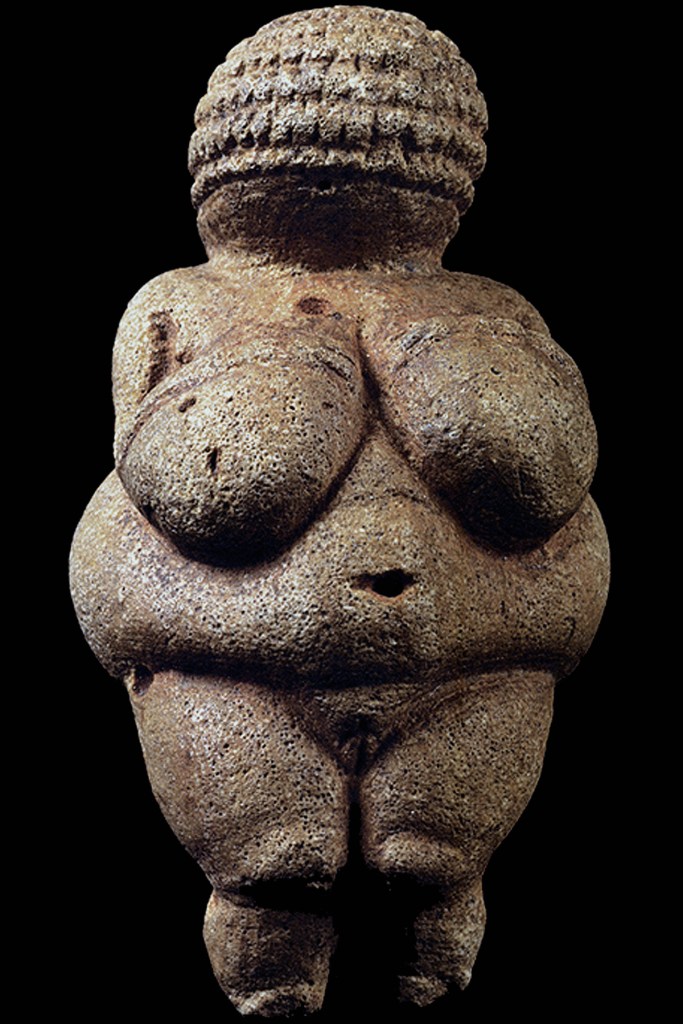
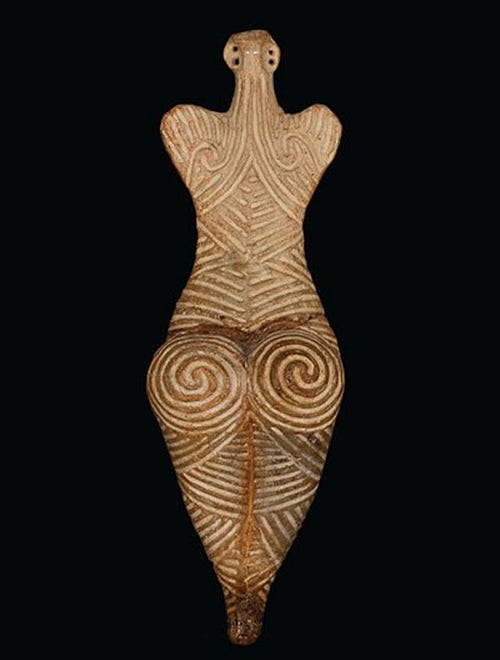
Beginning in the Upper Paleolithic (≈40,000 years ago), humans created intricately designed anthropomorphic artwork and figurines. Among these designs were the Venus figures — female depicted as either obese or pregnant (Vandewettering, 2015). Early human artists emphasized the buttocks and breasts of these figurines which symbolized the nurturance provided by the Goddess. Other distinctive features included an enlarged vagina, indicating pregnancy. After thorough investigations, Gimbutas (1991) interpreted these figurines as fertility Goddesses that were created with the intent of reverence and worship. Venuses symbolized the death and rebirth of life that was commonly observed by hunter-gatherers — a process that was later symbolized in the ouroboros. Other primitive symbols that relate to the divine feminine ouroboros include spirals, discs, and snakes. This ouroboric phase of death and rebirth represented in the Venus figurines was not merely a creative aspect of cognition, but an articulation of unconscious elements.
Through a Jungian lens, the ouroboric state was the most primitive stage of consciousness. This stage represented a full immersion in the collective unconscious wherein the individual consciousness was undifferentiated from the whole (Neumann, 1954). In parallel, Jung (1956) noted that this state of conscious awareness was akin to that of a young child who existed in the realm of dreams. Just as a child is one with the parents, so too was the primitive consciousness one with the parental essence of the tribe of which they were a part of.
Paleolithic Spirals and Venus Figurine with Spirals
At this stage of development, differentiation through the process of individuation is crucial. Individuation requires that the individual (or the collective during primitive times) acquire novel information that is often achieved through struggles that transform the individual. Transformation is equated with ego development — a differentiation from the collective (Neumann, 1954).
The first stage of individuation is symbolized through the fight with the first parents that exist within the ouroboric state. These first parents are symbolized as the feminine and masculine aspect of the ouroboros. Thus, the Venus figurines and related symbols are an encounter with the feminine aspect of the ouroboros. As humanity progressed in consciousness over the next several millennia, they encountered struggles that demanded innovative adaptive strategies to overcome. This newly acquired information helped differentiate the collective from the feminine stage of the ouroboros to the masculine — the final touchstone stage of struggle and knowledge acquisition transpiring during the Younger Dryas period (≈12,900–11,600 years ago) (Munro, 2003; Schmidt, 2010).
Aubert, M., Lebe, R., Oktaviana, A. A., Tang, M., Burhan, B., Hamrullah, Jusdi, A., Abdullah, Hakim, B., Zhao, J. X., Geria, I. M., Sulistyarto, P. H., Sardi, R., & Brumm, A. (2019). Earliest hunting scene in prehistoric art. Nature, 576(7787), 442–445. https://doi.org/10.1038/s41586-019-1806-y
Gimbutas, M. (1991). The language of the goddess. Harper San Francisco.
Jung, C. (1956). Symbols of transformation. Princeton University Press.
Libedinsky, I., Wei, Y., de Leeuw, C., Rilling, J. K., Posthuma, D., & van den Heuvel, M. P. (2025). The emergence of genetic variants linked to brain and cognitive traits in human evolution. Cerebral cortex (New York, N.Y. : 1991), 35(8), bhaf127. https://doi.org/10.1093/cercor/bhaf127
Munro, N. D. (2003). Small game, the Younger Dryas, and the transition to agriculture in the Southern Levant. Mitteilungen der Gesellschaft für Urgeschichte, 12, 47–72.
Neumann, E. (1954). The origins and history of consciousness. Princeton University Press.
Schmidt, K. (2010). Göbekli Tepe — the Stone Age Sanctuaries. New results of ongoing excavations with a special focus on sculptures and high reliefs. Documenta Praehistorica, 37, 239–256. https://doi.org/10.4312/dp.37.21
Vandewettering, Kaylea R. (2015) “Upper Paleolithic Venus figurines and interpretations of prehistoric gender representations. PURE Insights: Vol. 4 , Article 7. https://digitalcommons.wou.edu/pure/vol4/iss1/7
A few weeks ago, I graduated from the Psychology Bachelor’s program at Capella University, and today I received my diploma in the mail—a small piece of paper that carries two years of intense study, late nights, and the continual balance of family, work, and self-discipline.
For me, it’s more than an academic milestone; it’s a symbol of transformation. I’ve moved from the chaos of addiction toward clarity, meaning, and responsibility. The journey is far from over, but this moment reminds me how far order can rise from disorder when purpose guides the process.
I’m deeply grateful to everyone who supported me along the way—your encouragement and feedback made a lasting impact. I especially want to thank my wife, who has been both my greatest cheerleader and my sergeant—encouraging me when I needed strength and reigniting my intrinsic passion when I lost sight of it.
I now look forward to continuing my work, both within and beyond the academic world—through my upcoming peer-reviewed paper and graduate studies. As Jung wrote, the privilege of a lifetime is to become who you truly are—cheers to the lifelong work of becoming.
Complex concepts or issues require a holistic mode of analysis—one achieved not by dismantling the structure under study, but by perceiving its many layers through a lens of comprehensive integration.
Such structures are, in a sense, alive. They consist of multiple interconnected parts whose relationships sustain the whole. Each part offers valuable insight into the system’s function, yet the parts themselves are not the living essence; they are the mechanisms through which the structure emerges into being.
To truly comprehend a complex structure, perceiving only the parts will accomplish little. The parts yield knowledge, but not understanding. Only when we grasp both the parts and their intricate interconnections does a coherent framework of meaning begin to appear.
This kind of perception arises from a dynamic, bidirectional process—moving between the proximal and the distal, between the detail and the whole. It is not linear, as if one could first analyze the parts and then simply reassemble them. Complexity demands a more fluid rhythm of inquiry: from part to whole and back again, each movement revealing new patterns of relation and purpose.
Ultimately, this rhythm of perception leads toward a holistic apprehension of the structure—not merely as an isolated phenomenon, but as something woven into the fabric of being itself. In recognizing that connection—to the individual, the collective, and the continuum of space and time—one experiences revelation. And from that revelation arises either rejection or reverence, depending on how deeply the structure aligns with the wholeness of being.
“When the ego is pierced by another’s light, it is not an offense but a summons — a call to grow toward what the soul already knows it can become.”
Personal offenses are often—though not always—unconscious convictions that penetrate a fragile ego. These convictions manifest in many forms, yet the most common arise during encounters with individuals who possess exceptional traits.
Experienced as feelings of inferiority or guilt, the individual diverts energy away from these uncomfortable emotions by allowing the fragile ego either to dismiss such traits or to adopt the posture of a victim—or both. Yet these very reactions preserve the ego’s immaturity, preventing its necessary development.
The proper approach to such encounters is acknowledgment rooted in grace, leading to the progression of the ego. This process begins by recognizing exceptional traits not as personal affronts, but as convictions of the spirit of the unconscious. When depersonalized in this way, resentment toward the individual who possesses these traits dissolves. What remains is the task of understanding the conviction itself and discerning how it might be assimilated into one’s own being.
Once acknowledgment has taken place, grace follows naturally. This element of the Great Mother is essential, helping the individual avoid being overwhelmed by new and transformative insight. Grace allows one to understand that the absence of a given trait is not a weakness, but an untapped potential within the unconscious—something that awaits integration through the ongoing evolution of the ego.
From this graceful understanding, development can proceed. Through patient trial and error, the individual begins to assimilate the once-foreign trait into a personal form of expression. The process demands both time and energy, but through persistence, the ego grows stronger and more independent. Confidence rises; assurance befriends the ego—until the next convicting encounter appears, calling once more for transformation.
In that moment, the dragon of potential reemerges, demanding confrontation and courage. Only through such recurring trials can one bring habitable order into the space of the psyche, transforming unconscious conviction into conscious strength.
How an Ice Age catastrophe shaped the first awakening of human consciousness and left its mark in stone at Göbekli Tepe.
By Michael Thacker — Part II of “From Venus to Marduk: The Evolution of Sacred Consciousness” Research Series
Editor’s note (Oct 2025): This essay now appears as Part II in the ongoing “From Venus to Marduk” series, following Part I on the Venus figurines and the feminine ouroboros.
Author’s Note:
This essay marks the beginning of an ongoing research series exploring the symbolic and evolutionary bridge from the Paleolithic Venus figurines to the megalithic temples of Göbekli Tepe. Each installment examines how environmental change, cognitive evolution, and mythic imagination converged to shape the dawn of civilization and the birth of human self-awareness.
Introduction
From 12,900 to 11,600 years ago, the world plunged into a deep freeze — an event called the Younger Dryas (Cheng et al., 2020). Following the end of the Last Glacial Maximum (≈14,500 BP), this event brought an abrupt shift in climate that caused global temperatures to plummet and conditions to grow markedly drier (Clark et al., . Regional fauna and plant life declined, forcing human populations to adapt through novel hunting and gathering strategies (Emra et al., 2022; Sánchez Goñi, 2020). As with earlier climatic disruptions that shaped human evolution, the Younger Dryas acted as a selection pressure that — through differentiation — helped humans ascend in consciousness (Munro, 2003; Neumann, 1954). Evidence of this ascent appears at the Neolithic site of Göbekli Tepe, which emerged directly after the Younger Dryas (Schmidt, 2010).
Younger Dryas and Adaptability
The Younger Dryas brought severe climatic instability — colder, drier conditions across much of the Levant and Europe. Before this shift, many prehistoric tribes in the Levant had begun to form stable communities during the early Natufian period (14,500 BP to 12,800 BP). Though still hunter-gatherers, these groups collected wild cereals that supported a semi-sedentary lifestyle (Munro, 2003).
The abrupt cooling reversed this progress. As regional fauna and vegetation declined, early Natufian settlements gave way to the late (12,800–11,500 BP), marked by renewed mobility and a return to foraging. Architectural remains shrink in size and number, reflecting the need for movement rather than permanence. Cultural innovation waned, and increases in secondary burials suggest the loss of stable, long-term settlements (Munro, 2003).
Psychologically, the transition mirrors the first stage of the Jungian process of individuation — when comfort gives way to struggle, and through that struggle the ego is forged. Humanity, like the individual, moved from a period of relative ease into hardship, developing a collective personality and ego through adversity. Just as ice and drought fragmented the land, they also fractured the human psyche, compelling consciousness to differentiate from its primordial (Neumann, 1954).
Adaptation and Cognitive Leap
Climate change has redirected the human evolutionary path more than once — beginning with the transitions from Australopithecus to Homo Habilis to Homo Erectus around 2 million years ago. Each leap demanded cooperation and innovation, rewarded by expanding brain capacity and cultural sophistication (Sánchez Goñi, 2020).
Likewise, the movement from late Natufian to Pre-Pottery Neolithic culture signaled a comparable cognitive surge. As the Younger Dryas ended, the climate shifted from cold and dry to warm and wet, restoring plant and animal abundance. Domestication of grains and livestock followed (Munro, 2003).
Archaeological sites such as WF16 and Jericho in the Levant reveal increasing architectural complexity and symbolic expression — clear signs of new cognitive flexibility born of the Younger Dryas crucible (Finlayson et al., 2011; Munro, 2003).
Göbekli Tepe and the Differentiation of the Collective
These innovations cultural extended northward to what is now southeastern Turkey, culminating in the megalithic wonder of Göbekli Tepe. Occupied from the 10th to the 8th millennium BCE, this site features vast circular enclosures built from T-shaped limestone pillars — some over five meters tall and weighing up to 20 tons — adorned with carvings of animal symbols, and abstract reliefs. Constructed six thousand years before Stonehenge, it stands as the earliest known monumental architecture (Schmidt, 2010).
Viewed through a Jungian lens, Göbekli Tepe represents humanity’s first collective effort to impose order and meaning upon the chaos of the unconscious — the emergence of ego consciousness from the ouroboric whole. The circular enclosures may be read as an “artificial womb,” while the erect T-pillars evoke the phallic ascent of the conscious ego (Judkins, 2025). Other explicitly phallic imagery, such as the Phallic Man statue, reinforces this symbolism.
The site also encodes a dialogue between masculine and feminine forces. Boars, bulls, and solar discs carry masculine resonance; vultures, the crescent moon, and the birthing woman on Pillar 18 embody the feminine. Together they express the dual nature of the ouroboros — the tension of opposites through which consciousness is born (Judkins, 2025). Göbekli Tepe, then, can be seen as the collective ego’s first architectural gesture of differentiation.
Conclusion
Over fourteen thousand years ago, Earth’s sudden climatic upheaval forced humanity to adapt, not only physically but psychically. Through hardship, the species emerged from the complacency of the unconscious into the awakening of ego consciousness. The Younger Dryas forged a collective personality capable of perceiving order within chaos.
Göbekli Tepe embodies this breakthrough. Through traces of the ouroboros remain, the T-pillars rise as emblems of a new awareness — humanity’s first conscious architecture. From this symbolic womb of stone, the pattern spread across continents, echoing the same impulse: to lift mind from matter and shape meaning from mystery. The pillars of Göbekli Tepe mark the ascent of consciousness—but the spark that led there was already forming in the ancient figurines of the Great Mother. That is where our journey continues.
References:
Cheng, H., Zhang, H., Spötl, C., Baker, J., Sinha, A., Li, H., Bartolomé, M., Moreno, A., Kathayat, G., Zhao, J., Dong, X., Li, Y., Ning, Y., Jia, X., Zong, B., Ait Brahim, Y., Pérez-Mejías, C., Cai, Y., Novello, V. F., Cruz, F. W., … Edwards, R. L. (2020). Timing and structure of the Younger Dryas event and its underlying climate dynamics. Proceedings of the National Academy of Sciences of the United States of America, 117(38), 23408–23417. https://doi.org/10.1073/pnas.2007869117
Clark, P. U., Dyke, A. S., Shakun, J. D., Carlson, A. E., Clark, J., Wohlfarth, B., Mitrovica, J. X., Hostetler, S. W., & McCabe, A. M. (2009). The Last Glacial Maximum. Science (New York, N.Y.), 325(5941), 710–714. https://doi.org/10.1126/science.1172873
Emra, S., Benz, M., Siddiq, A. B., & Özkaya, V. (2022). Adaptions in subsistence strategy to environment changes across the Younger Dryas — Early Holocene boundary at Körtiktepe, Southeastern Turkey. The Holocene, 32(5), 390–413. https://doi.org/10.1177/09596836221074030
Finlayson, B., Mithen, S. J., Najjar, M., Smith, S., Maričević, D., Pankhurst, N., & Yeomans, L. (2011). Architecture, sedentism, and social complexity at Pre-Pottery Neolithic A WF16, Southern Jordan. Proceedings of the National Academy of Sciences of the United States of America, 108(20), 8183–8188. https://doi.org/10.1073/pnas.1017642108
Judkins, D. A. Göbekli Tepe in Early Civilization Development: A Reassessment of Neolithic Origins.
Munro, N. D. (2003). Small game, the Younger Dryas, and the transition to agriculture in the Southern Levant. Mitteilungen der Gesellschaft für Urgeschichte, 12, 47–72.
Neumann, E. (1954). The origins and history of consciousness. Princeton University Press.
Sánchez Goñi, M. F. (2020). Regional impacts of climate change and its relevance to human evolution. Evolutionary Human Sciences, 2, e55. https://doi.org/10.1017/ehs.2020.56
Schmidt, K. (2010). Göbekli Tepe — the Stone Age Sanctuaries. New results of ongoing excavations with a special focus on sculptures and high reliefs. Documenta Praehistorica, 37, 239–256. https://doi.org/10.4312/dp.37.21
I had the privilege of joining the Control + Delete = Heal podcast to discuss the urgent issue of suicide. In this episode, I explored the problem through an evolutionary and Jungian psychological lens—highlighting how modernity and the dismantling of value structures contribute to despair. I also proposed pathways forward, including reconnecting with our evolutionary roots and engaging the transformative process of individuation.