Women’s Hunting, Male Predominance, and Variation Across Foraging Societies
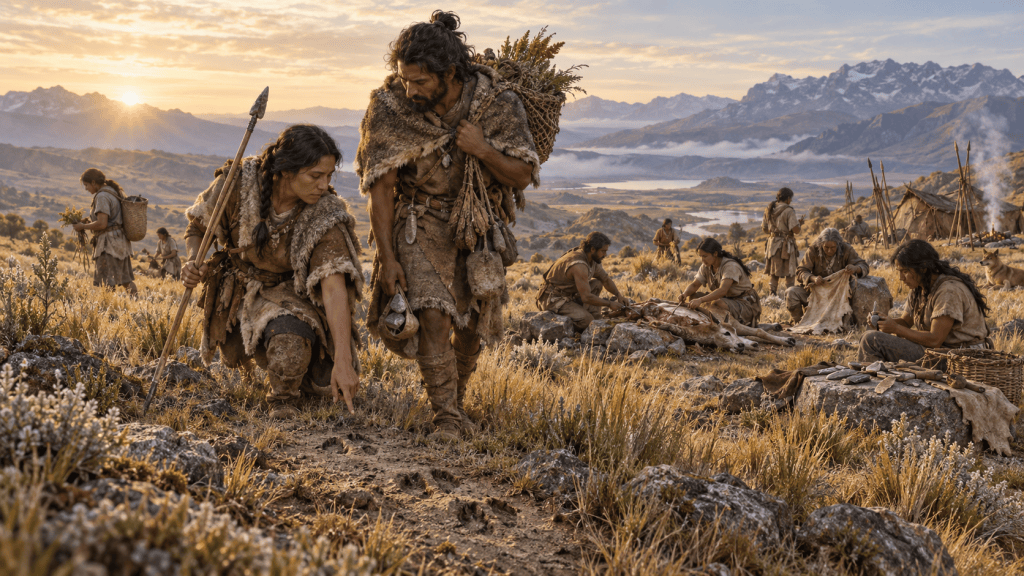
Recent archaeological and ethnographic evidence has renewed debate over women’s participation in hunting among prehistoric and recent foraging societies. The frequency of women’s hunting, the prey they pursued, and its economic contribution remain contested. In 2023, Anderson and colleagues sought to reframe the debate through their widely publicized and subsequently contested paper, The Myth of Man the Hunter: Women’s Contribution to the Hunt Across Ethnographic Contexts. After analyzing 63 foraging societies from around the world, the authors argued that women’s hunting was sufficiently widespread to challenge the conventional portrayal of hunting as an almost exclusively male activity.
The authors described their sample as beginning with a D-PLACE-derived pool that was later reduced to 63 societies with explicit descriptions of hunting. Fifty of these societies contained reports of women hunting. Among the sampled societies in which hunting was considered the most important subsistence activity, women reportedly participated in hunting in every case. Female hunters pursued prey ranging from small to large animals (Anderson et al., 2023).
Although Anderson and colleagues acknowledged that their evidence did not measure hunting frequency or caloric contribution, their findings challenge the binary “men hunt, women gather” stereotype. Some popular coverage interpreted the study as evidence of broad parity between women’s and men’s hunting, even though the study did not measure their relative frequency or economic contributions. To clarify the issue, this post examines how frequently women hunted, the types of prey they pursued, and whether their participation undermines evidence for a broader sexual division of labor.
History of the Issue
Although debate over whether men hunted while women gathered extends back several centuries, its modern form has roots in the 1966 Man the Hunter conference and the resulting volume published in 1968. The title itself prompted criticism from feminist scholars and others who considered it exclusionary, even though many contributors used “man” to represent humanity rather than biological males. The conference and its reception intensified debate over divisions of labor in prehistory (Lee & DeVore, 1968; Venkataraman et al., 2026).
Researchers both during and after the conference presented evidence challenging a simple male-hunter/female-gatherer model. The more rigid popular image also drew upon earlier work by Raymond Dart, whose Killer Ape Theory portrayed the drive to hunt and kill as intrinsic to human nature, particularly among males. Although many researchers rejected Dart’s theory, playwright and screenwriter Robert Ardrey popularized related ideas in several books published during the 1960s and 1970s. Comparable imagery also entered popular culture through films such as 2001: A Space Odyssey (Venkataraman et al., 2026).
Modern Dilemma
The simplified male-hunter/female-gatherer narrative popularly associated with Man the Hunter remains influential in popular representations and some universalizing accounts of human evolution. These depictions frequently portray men as strong, active hunters and women as comparatively passive gatherers. Conversely, Lacy and Ocobock (2024) argue that a strict Paleolithic sexual division of labor has often been assumed despite limited direct archaeological evidence.
The Evolution of Sexual Dimorphism
One possible biological foundation of the sexual division of labor lies in sexually dimorphic characteristics, including stature, lean muscle mass, and strength. Reconstructions generally suggest that sexual dimorphism was more pronounced in several earlier hominins than in modern humans, although estimates vary across species and fossil samples. Several australopithecine species appear to have exhibited substantial differences in male and female stature and robusticity. Chimpanzees, our closest living relatives alongside bonobos, also exhibit marked sexual dimorphism (Lassek & Gaulin, 2022).
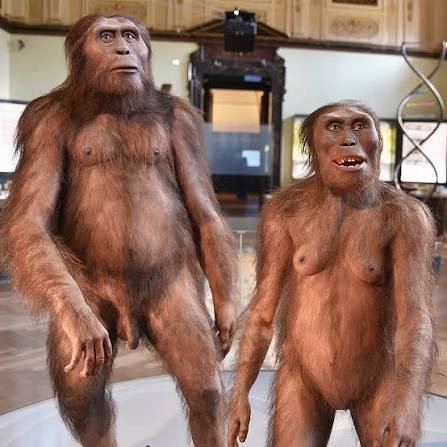
Sexual size dimorphism appears to have declined during the transition into early Homo. By the emergence of Homo erectus approximately two million years ago, hominin bodies had undergone substantial changes in stature and proportion. Both sexes became taller than many earlier hominins, but the proportionally greater increase reconstructed for females may have reduced stature dimorphism. Relatively modest stature differences remain characteristic of modern humans (Lassek & Gaulin, 2022).
Lassek and Gaulin (2022) propose that the increase in female stature partly reflected selection associated with delivering larger-brained infants. Encephalization accelerated within early Homo: average cranial capacity increased from roughly 440 cubic centimeters among australopithecines to approximately 900 cubic centimeters in Homo erectus. Under their hypothesis, greater female stature supported pelvic dimensions that reduced some of the obstetric costs associated with larger neonatal heads.
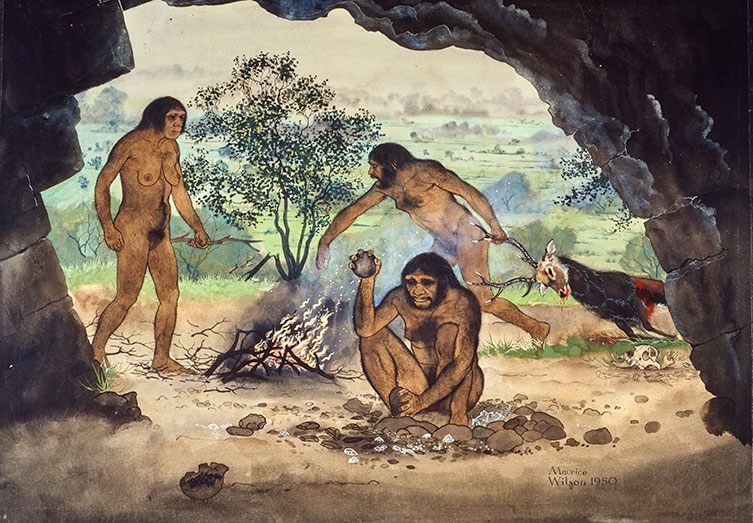
Although stature dimorphism declined, substantial average differences in lean muscle mass and strength remain. Across the samples reviewed by Lassek and Gaulin (2022), men averaged approximately 30–42% more lean body mass than women. Representative studies also found roughly twice the upper-body strength and 66% greater leg strength among men. These average differences may have conferred male comparative advantages in hunting tasks involving forceful projectile use, load carriage, or close engagement with large animals. They do not determine hunting participation, which also depends upon endurance, technology, ecological knowledge, accuracy, cooperation, childcare arrangements, and culturally transmitted expectations.
Archaeological Evidence
Archaeological evidence is exceptionally informative, but it remains scarce when the question is the sexual division of labor. An examination of the upper limbs of 37 European Upper Paleolithic and Mesolithic individuals by Villotte et al. (2010) identified enthesopathies consistent with repetitive throwing in four males but no females. The authors interpreted this pattern as possible evidence of a sexual division of labor, although the small sample and uncertain relationship between skeletal markers and particular activities require caution. Similarly, de Beaune (2019) found evidence of differentiated activities and emerging social organization among European Upper Paleolithic populations but concluded that the available evidence was insufficient to determine whether these activities were consistently organized by sex.
Evidence from other regions further complicates the picture. Using cross-cultural ethnographic patterns to model Early Paleoindian organization, Waguespack (2005) proposed a male emphasis on hunting alongside extensive female technological production and procurement of lower-risk animal and plant resources. In contrast, Haas et al. (2020) identified an early-Holocene adult female at Wilamaya Patjxa in Peru who was buried with a toolkit interpreted as related to large-game hunting. Their broader analysis included 27 sex-estimated Late Pleistocene–early Holocene burials associated with big-game implements, from which they inferred substantial female participation in large-game hunting. Nevertheless, hunting implements in a grave do not automatically establish the individual’s habitual occupation, and burial samples cannot independently determine population-wide hunting frequencies.
Evidence from Recent Foraging Societies
Recent foraging societies are not “living fossils” of prehistoric Homo sapiens. Ethnographic evidence can nevertheless help researchers construct hypotheses about relationships among ecology, technology, childcare, social norms, and labor. Documented foraging societies commonly exhibit gendered differentiation in subsistence activities, although the degree of specialization, the permeability of task boundaries, and the participation of particular individuals vary substantially (Gurven & Hill, 2009). Examples include the Hadza in Tanzania, the !Kung in Botswana and Namibia, and the Pumé in Venezuela, among many others (Venkataraman et al., 2024).
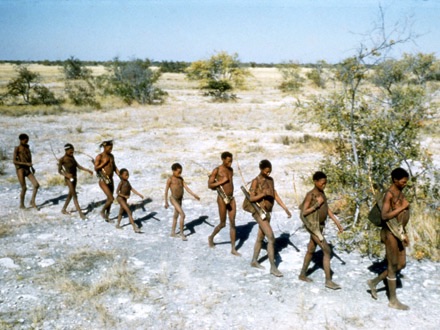
According to Apicella (2014), natural and sexual selection may both have contributed to this differentiation. Among Hadza men, upper-body strength predicted hunting reputation and was associated with greater reproductive success. Apicella also noted comparable associations between hunting ability and reproductive success among the Aché of Paraguay and the !Kung. These findings are compatible with both natural- and sexual-selection explanations, although they do not independently demonstrate that female mate choice caused the observed associations.
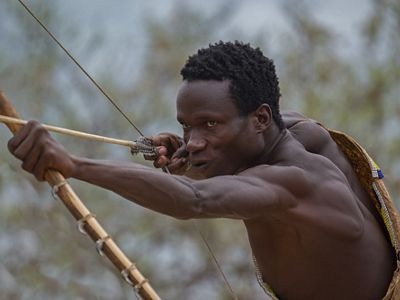
Martin et al. (2024) further emphasized the reproductive and skill-development trade-offs that may contribute to a division of labor. Women’s peak reproductive and childcare years may involve repeated periods of gestation, birth, lactation, and dependent care. These demands can create opportunity costs when hunting requires prolonged travel, high energetic expenditure, or years of specialized skill development. Because both hunting and gathering require substantial knowledge and practice, greater investment in one domain may reduce the time available to develop expertise in another. Under some ecological and social conditions, reliable resources obtained closer to camp may be more compatible with pregnancy and childcare than distant or prolonged large-game hunting.
Women Hunters and the Ethnographic Evidence
Does this evidence imply that women did not hunt, or that Anderson et al. (2023) were simply wrong? The answer is more complex. Venkataraman et al. (2024) reanalyzed Anderson and colleagues’ methods and identified possible sample-selection bias, coding errors, and insufficient attention to hunting frequency, prey characteristics, and subsistence returns. They reported that approximately 35% of Anderson’s 63 societies could not be located in D-PLACE. They also identified 18 D-PLACE societies that Anderson and colleagues omitted despite the availability of explicit hunting descriptions, including cases containing no evidence of women hunting.
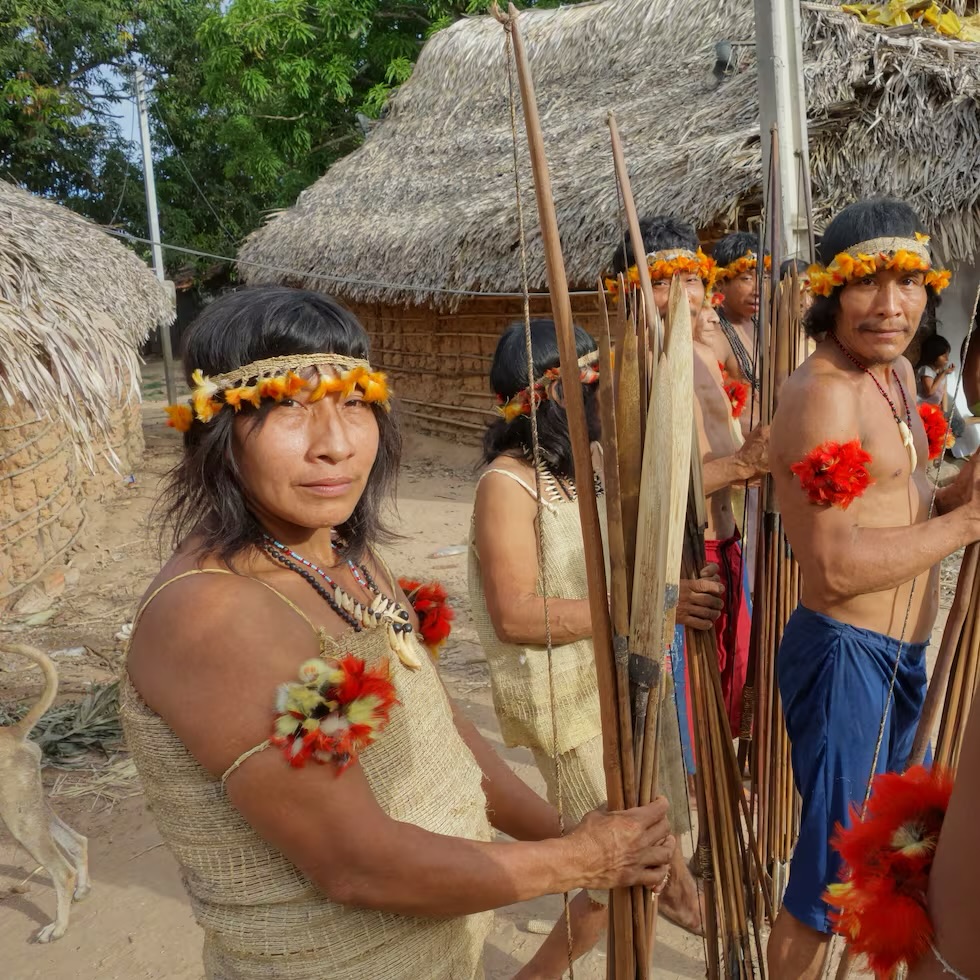
Venkataraman et al. (2024) also recoded the available evidence for the frequency and prey size of women’s hunting. Under their coding scheme, women hunted large game sometimes or frequently in only 9 of the 63 societies (14%). Frequent female participation in large-game hunting appeared in only 3 societies (5%). Anderson et al. published a correction in 2024 that added references and clarifications, but it did not provide systematic measures of women’s hunting frequency relative to men or their comparative caloric contributions (Anderson et al., 2024).
Discussion
Taken together, the ethnographic evidence demonstrates that women hunt across diverse societies and that their hunting can sometimes be regular and economically important. Nevertheless, the broader comparative evidence indicates recurrent male predominance, especially in frequent medium- and large-game hunting. Archaeological evidence invalidates the automatic attribution of hunting-related remains to males, but it cannot yet estimate female and male hunting frequencies across Paleolithic populations. The most defensible interpretation is therefore neither a universal male-only model nor general parity, but variable and often gender-differentiated participation.
These findings also raise a broader possibility: Paleolithic populations may have differed substantially in their normative organization. Popular narratives and some universalizing models have sometimes represented Paleolithic foragers as more behaviorally homogeneous than the evidence warrants. Recent foraging societies instead demonstrate that gendered occupational patterns can differ across communities and change over time. The !Kung, for example, have generally exhibited a marked gender division of subsistence labor, with women emphasizing gathering and men emphasizing hunting (Venkataraman et al., 2024). Among some Agta communities, women have participated extensively in hunting, both individually and in groups. Their participation has varied with age, childcare, community, technology, and changing socioeconomic conditions (Goodman et al., 1985).
Future Research
Future research could examine whether Paleolithic populations varied along two partially independent dimensions: the extent to which subsistence roles were differentiated by sex and the extent to which communities permitted individuals to depart from those expectations. Some groups may have maintained strongly differentiated roles, whereas others permitted substantial occupational overlap. In either case, norms could have been enforced rigidly or flexibly. This framework distinguishes the content of a norm from the strength with which it was maintained.
Resource availability may have influenced these arrangements. Comparative ethnographic research could assess foraging societies across measures such as resource abundance, predictability, seasonality, spatial distribution, prey type, mobility, technology, childcare arrangements, and market integration. These comparisons could generate hypotheses for cautious evaluation against archaeological evidence. Recent societies would serve as sources of possible mechanisms rather than direct analogues for Paleolithic populations.
A second line of inquiry would examine whether symbolic and ideological systems reinforced or complicated gendered divisions of labor. Ethnographic comparison could evaluate how origin narratives, initiation practices, supernatural sanctions, kinship systems, concepts of personhood, and the treatment of exceptional individuals legitimize or permit movement across gendered roles. Archaeological investigation would necessarily be more cautious, drawing upon converging patterns in mortuary treatment, grave-good associations, personal ornamentation, figurative representation, ritual spaces, and activity-related skeletal evidence. None of these indicators independently reconstructs a Paleolithic belief system, but recurring associations across multiple forms of evidence may support constrained comparisons among different normative systems.
The aim would not be to assign modern political categories to Paleolithic communities, but to determine whether sex-based roles varied in content, permeability, and enforcement—and how ecological constraints and symbolic culture may have interacted in producing that variation.
References
Anderson, A., Chilczuk, S., Nelson, K., Ruther, R., & Wall-Scheffler, C. (2023). The myth of man the hunter: Women’s contribution to the hunt across ethnographic contexts. PLOS ONE, 18(6), e0287101. https://doi.org/10.1371/journal.pone.0287101
Anderson, A., Chilczuk, S., Nelson, K., Ruther, R., & Wall-Scheffler, C. (2024). Correction: The myth of man the hunter: Women’s contribution to the hunt across ethnographic contexts. PLOS ONE, 19(8), e0309543. https://doi.org/10.1371/journal.pone.0309543
Apicella, C. L. (2014). Upper-body strength predicts hunting reputation and reproductive success in Hadza hunter-gatherers. Evolution and Human Behavior, 35(6), 508–518. https://doi.org/10.1016/j.evolhumbehav.2014.07.001
de Beaune, S. A. (2019). A critical analysis of the evidence for sexual division of tasks in the European Upper Paleolithic. In K. A. Overmann & F. L. Coolidge (Eds.), Squeezing minds from stones: Cognitive archaeology and the evolution of the human mind (pp. 376–405). Oxford University Press.
Goodman, M. J., Griffin, P. B., Estioko-Griffin, A. A., & Grove, J. S. (1985). The compatibility of hunting and mothering among the Agta hunter-gatherers of the Philippines. Sex Roles, 12, 1199–1209. https://doi.org/10.1007/BF00287829
Gurven, M., & Hill, K. (2009). Why do men hunt? A reevaluation of “Man the Hunter” and the sexual division of labor. Current Anthropology, 50(1), 51–74. https://doi.org/10.1086/595620
Haas, R., Watson, J., Buonasera, T., Southon, J., Chen, J. C., Noe, S., Smith, K., Viviano Llave, C., Eerkens, J., & Parker, G. (2020). Female hunters of the early Americas. Science Advances, 6(45), eabd0310. https://doi.org/10.1126/sciadv.abd0310
Lacy, S., & Ocobock, C. (2024). Woman the hunter: The archaeological evidence. American Anthropologist, 126(1), 19–31. https://doi.org/10.1111/aman.13914
Lassek, W. D., & Gaulin, S. J. C. (2022). Substantial but misunderstood human sexual dimorphism results mainly from sexual selection on males and natural selection on females. Frontiers in Psychology, 13, 859931. https://doi.org/10.3389/fpsyg.2022.859931
Lee, R. B., & DeVore, I. (Eds.). (1968). Man the hunter. Aldine.
Martin, M., Núñez de la Mora, A., Valeggia, C., & Veile, A. (2024). Can women hunt? Yes. Did women contribute much to human evolution through endurance hunting? Probably not. American Anthropologist, 126(2), 365–369. https://doi.org/10.1111/aman.13970
Venkataraman, V. V., Hoffman, J., Farquharson, K., Davis, H. E., Hagen, E. H., Hames, R. B., Hewlett, B. S., Glowacki, L., Jang, H., Kelly, R., Kramer, K., Lew-Levy, S., Starkweather, K., Syme, K., & Stibbard-Hawkes, D. N. E. (2024). Female foragers sometimes hunt, yet gendered divisions of labor are real: A comment on Anderson et al. (2023) The myth of man the hunter. Evolution and Human Behavior, 45, 106586. https://doi.org/10.1016/j.evolhumbehav.2024.04.014
Venkataraman, V. V., Hagen, E. H., Stibbard-Hawkes, D. N. E., Hames, R., & Lew-Levy, S. (2026). The meanings and dividends of Man the Hunter. Evolution and Human Behavior, 47(3), 106840. https://doi.org/10.1016/j.evolhumbehav.2026.106840
Villotte, S., Churchill, S. E., Dutour, O. J., & Henry-Gambier, D. (2010). Subsistence activities and the sexual division of labor in the European Upper Paleolithic and Mesolithic: Evidence from upper limb enthesopathies. Journal of Human Evolution, 59(1), 35–43. https://doi.org/10.1016/j.jhevol.2010.02.001
Waguespack, N. M. (2005). The organization of male and female labor in foraging societies: Implications for Early Paleoindian archaeology. American Anthropologist, 107(4), 666–676. https://doi.org/10.1525/aa.2005.107.4.666

