“Individuation and the Challenge of Integration in the Age of Distraction”
Human cognition is a complex mechanism by which one is able to develop conceptual systems that provide coherent perceptions of the world around them. It is within these conceptual systems that meaning structures develop throughout life, acquired through our interactions with the world. It is a bidirectional process wherein we use our current systems to navigate the world, while at the same time updating those systems with novel information we encounter along our way. Additionally, these systems are not only used in navigating physical reality but conceptual spaces such as books and lectures.
As we encounter such novelty, we process it through our current perceptual models that filter information that is relevant to our preexisting structure. Useful information is assimilated into that structure while contradictory or ambiguous information is either manipulated to fit one’s preexisting structure or ignored. Only through practice can one develop skills to acknowledge and then critically think on that information to see how to accommodate it into their current structure. This is often accomplished by reconfiguring the structure to fit the information which, depending on the degree of reconfiguration, reorganizes one’s perception in a dramatic manner.
The process of accommodation is an adaptive process, and it appears to be the means that helped the human species excel so rapidly in our evolutionary history. Since the emergence of Homo sapiens some 200,000 years ago, we have adapted to all types of environments, invented language and art, developed religious ideas, constructed monumental structures of symbolic significance (Tattersall, 2013; Donald, 1991).
All these adaptable achievements have significantly improved our survivability as a species, and they have led us to the convenient society that we currently inhabit. Despite these adaptable achievements, modernity has provided conveniences that appear to have limited our adaptability trait. We have now become more reliant on the achievements of humanity rather than on the intrinsic drive that helped lead us to such achievements.
It is here that much of humanity has traded innovation and discovery for novelty seeking and satiation. Consequently, a fragmentation of the psyche has plagued many as is evidenced in attentional diffusion, identity polarization, and reduced ambiguity tolerance, while a narrowing of perceptual value that prioritizes stimulation emerges as the meaning-making medium. Thus, modern digital environments disproportionately reward rapid salience detection over sustained integrative reasoning, potentially complicating the process of individuation and adaptive meaning-making.
Something went wrong. Please refresh the page and/or try again.
Into the Depths of the Unconscious
Regarding the significance of accommodation of novel information, Jung went further with this concept into the depths of the unconscious. He believed that an encounter with novel information was not just strictly a need for perceptual reconfiguration through accommodation, but rather it was something more profound than that. Wrestling with novel information was a journey into both the individual and collective unconscious wherein the individual contends with concealed and unknown parts of the Self. In mythology, this is symbolized as the hero’s descent into the unknown where they confront and overcome the dragon of chaos in hopes of transforming both themselves and society and restoring order in due process (Jung, 1968).
Jung thought this process to be imperative for the individual to pursue throughout their life, especially as they matured into old age. In fact, he believed individuation to be the very essence of maturation. It is a cyclical endeavor where an individual encounters novel information, contends, integrates, and reconfigures their psyche, which is then pursued once again until unification is achieved. As one contends with new information/unconscious forces, over time they gradually unify their psyche into a coherent and stable structure, thus mimicking, to a degree, the process of human evolution itself on a micro scale. Consequently, if one does not participate in such experiences, fragmentation and confusion results (Jung, 1968).
Modernity and Meaning-Making:
Modernity presents an issue for many regarding the process of individuation as it presents an overwhelming amount of information while also providing too many distractions. Information overload — both quantity and quality — exhaust the process of individuation as the information becomes a dragon too large and diverse to contend with. Similarly, the vast amounts of distractions in the forms of smart phones, social media, gaming, and other forms of entertainment, beckon for one’s attention and thus diversify and reduce cognitive resources (Korte, 2020).
With the induction of smart phones with their portability and instant access to a wealth of information and entertainment, habitual patterns of cognitive engagement may be shifting (Korte, 2020). Social media and their algorithmic configurations that develop in accordance with an individual’s salience and emotional vulnerabilities have been associated with reduced sustained engagement in effortful material in some individuals (Turel et al., 2014; Montag & Diefenbach, 2018). Instant access to content that is stimulating and novel and requires short attentional effort has further compounded the issue (Alter, 2017; Leroy, 2009; Ophir et al., 2009). What were designed to be utilized as tools to help stimulate the curiosity of the human mind has now become the pacifier of the weary (Orben & Przybylski, 2019). Convenience and entertainment have blunted the intrinsic drive of innovation and curiosity.
Sustained attention is essential in the engagement and completion of any complex and meaningful task. However, technology has significantly reduced our ability to sustain attention by increasing attentional volatility through persistent task switching common among avid smart phone users (Leroy, 2009; Castelo et al., 2023). Skowronek et al. (2023) have found that even the mere presence of a smart phone can reduce attentional performance.
Comparatively, reading skills have also experienced a significant decline since the inception of smart phones. Wolf (2018) found a reduction in inferential processing when using digital platforms compared to tangible prints for reading. Similarly, Delgado et al. (2018) conducted a meta-analysis on the effects of digital vs printed reading on contextual comprehension and found print outperformed digital. The Programme for International Student Assessment (PISA, 2022) revealed a decline in reading performance across several industrialized nations. Good reading skills are essential in acquiring and contending with novel information, especially as the complexity of what is being read increases.
Both attention and reading skills are essential in attending to and acquiring novel information that can be evaluated, contended with, and integrated. Thus, without such attributes and skills, the process of individuation becomes exceptionally difficult. Additionally, the amount and diversity of information that has resulted from increased internet access and globalization has only compounded this issue (Alsaleh, 2024). The modern person is thus overwhelmed and overextended to the point of exhaustion.
Unifying Attention and Developing Reading Skills
To properly attend to anything in life, one must set their complete attention to whatever it maybe they are desiring to attend to. By narrowing down on the substance or experience at hand, the vital information contained within can then emerge. Jung revealed this as vital concealed information as the “treasure” that was protected by the dragon depicted in classic mythology and fairy tales. Only by attending to the treasure can one retrieve what is essential for integration. For example, when Moses in the story of Exodus encounters the burning bush, he turns his attention to it and it was this attention that allowed for the disclosure of vital information to manifest out of it. In cognitive terms, sustained attention enables the extraction of latent complexity from stimuli that would otherwise remain perceptually inert.
Similarly, by developing good reading skills by engaging with books that pushes one’s current skill level, that development can occur. Not only does reading development transpire, but concealed information hidden within the complexity emerges during engagement that can help develop the Self as well. This, of course, often requires disciplined and focused reading that may also necessitate pauses for contemplation on particular passages or retreat to a dictionary for improved comprehension of difficult words. However, it is here that one’s comprehension of both the Self and reality can improve that leads to wholeness and greater well-being.
Developed and Unified Self in the Modern World
Modernity is not in and of itself a root cause of the fragmentation of attention or decline in reading ability, nor is it the impediment of the individual drive towards innovation and transformation. Rather, the fundamental issue is both the collective’s and individual’s propensity to allow the commodities of modernity to overwhelm and suppress the intrinsic human capacity for adaptive integration. What is needed is not a rejection of modernity but a regulation of one’s own attention and resource allocation. How and where, one directs one’s attention and resources will determine what resourceful treasures they may discover.
By reducing unnecessary distractions while narrowing one’s attention on the essentials, they can then begin to increase efficiency in everyday life. However, even more importantly, they can then devote their extra time that was previously invested in a variety of overwhelming stimulus into investigating the more profound parts of reality and their Self. Investing resources and attention towards challenging information where one can wrestle with the unconscious elements of both the collective past and the Self. Therein is where concealed “truths” can be made manifest that will allow for integration and reconfiguration. It is this reconfiguration that transforms what was unknown into the useful known that is unified, innovative, and more aware than before.
Alter, A. (2017). Irresistible: The rise of addictive technology and the business of keeping us hooked. Penguin Press.
Castelo, N., Bos, M. W., & Lehmann, D. R. (2023). Task switching and attentional fragmentation in digital environments. Journal of Experimental Psychology: General, 152(4), 1023 — 1041.
Delgado, P., Vargas, C., Ackerman, R., & Salmerón, L. (2018). Don’t throw away your printed books: A meta-analysis on the effects of reading media on reading comprehension. Educational Research Review, 25, 23 — 38. https://doi.org/10.1016/j.edurev.2018.09.003
Donald, M. (1991). Origins of the modern mind: Three stages in the evolution of culture and cognition. Harvard University Press.
Jung, C. G. (1968). The archetypes and the collective unconscious (R. F. C. Hull, Trans.). Princeton University Press. (Original work published 1959)
Korte, M. (2020). The impact of the digital revolution on human brain and behavior: Where do we stand? Dialogues in Clinical Neuroscience, 22(2), 101 — 111. https://doi.org/10.31887/DCNS.2020.22.2/mkorte
Leroy, S. (2009). Why is it so hard to do my work? The challenge of attention residue when switching between work tasks. Organizational Behavior and Human Decision Processes, 109(2), 168 — 181. https://doi.org/10.1016/j.obhdp.2009.04.002
Montag, C., & Diefenbach, S. (2018). Towards Homo digitalis: Important research issues for psychology and the neurosciences at the dawn of the Internet of Things and the digital society. Sustainability, 10(2), 415. https://doi.org/10.3390/su10020415
Ophir, E., Nass, C., & Wagner, A. D. (2009). Cognitive control in media multitaskers. Proceedings of the National Academy of Sciences, 106(37), 15583 — 15587. https://doi.org/10.1073/pnas.0903620106
Orben, A., & Przybylski, A. K. (2019). The association between adolescent well-being and digital technology use. Nature Human Behaviour, 3, 173 — 182. https://doi.org/10.1038/s41562-018-0506-1
Skowronek, J., Seifert, A., & Keller, S. (2023). The mere presence of smartphones reduces cognitive performance: A meta-analytic review. Computers in Human Behavior, 139, 107537.
Tattersall, I. (2013). Masters of the planet: The search for our human origins. Palgrave Macmillan.
Turel, O., He, Q., Xue, G., Xiao, L., & Bechara, A. (2014). Examination of neural systems sub-serving Facebook “addiction.” Psychological Reports, 115(3), 675 — 695. https://doi.org/10.2466/18.PR0.115c31z8
Wolf, M. (2018). Reader, come home: The reading brain in a digital world. Harper.
This video examines ideological possession through the lens of epistemic structure, cognitive schema formation, and developmental psychology. Rather than framing polarization as merely political or moral disagreement, I analyze it as a structural rigidity within the architecture of belief formation itself.
Drawing from depth psychology (Jung, Neumann), hemispheric lateralization theory (McGilchrist), evolutionary anthropology, and philosophy of knowledge, I argue that both religious fundamentalism and strict naturalistic materialism can exhibit identical epistemic closure despite divergent axioms. The issue, therefore, is not the content of belief, but the rigidity of the structure through which belief is processed and defended.
Using the problem of suffering as a case study, I explore how metaphysical claims are frequently critiqued outside of their own narrative and ontological frameworks, resulting in cross-structural misinterpretation rather than substantive engagement.
In response, I propose what I term oscillatory epistemology — a disciplined movement between stability and revision, tradition and progress, acquisition and integration. This model does not advocate relativism. Rather, it argues that coherent development requires grounded axioms alongside interpretive adaptability.
The capacity to revise interpretive schemas without dissolving foundational structure may be essential for both individual psychological integration and collective civilizational stability.
The aim of this discussion is not to defend a single ideological position, but to examine the mechanisms by which positions become rigid — and to propose a developmental pathway beyond that rigidity.
“Understanding left — right polarization as a developmental problem, not a partisan one”
Political upheaval has become a part of everyday life in America with news stations broadcasting radicalized events such as ICE deportations and protests. Social media, too, is a digital space wherein one can witness the vile exchanges between adherents of the right and left. Both sides of the political spectrum claim to reside on the correct end while exalting a sense of moral superiority.
This phenomenon is nothing new to humanity with similar divides being witnessed throughout civilized society since its emergence approximately 5,000 years ago in both Sumer and Egypt. Whether it be the collapse of Rome during the 4th century AD or the English Civil War of the 17th century — all portray a similar fundamental issue and that is the divide.
Over the past several decades, the divide between left and right political issues have gradually enlarged. This increasing gap between the two parties has now reached a point of incommunicative salience and aggressive defensiveness. Both sides have pressured each other into reclusive reactive aggression that seeks to protect their ideological framework at all costs.
Of course, these frameworks did not develop overnight nor were they pieced together in recent decades. These systems of thought and perception are a result of millions of years of human evolution — and this evolutionary perceptual and contemplative construct has only increased in both vigor and precision since the Neolithic Revolution some 12,000 years ago.
What America is witnessing is a divide of human consciousness; it is a fragmentation of the collective human psyche. With that said, it is this evolutionary trend that could determine the future evolutionary pathway of humanity. The fundamental issue appears to be that both sides are both right and wrong in what they are articulating — and the answer is not found on either side but rather a unique synthesis of the two.
The Evolution of Coherence
Six million years have passed since humans last shared a common ancestor with chimpanzees. It was at this divergence that the same set of species evolved in two different ways that resulted in two distinct forms of existence. The chimpanzees remained forest dwellers with little to no cultural and cognitive development occurring, while humans went on to evolve into a more symbolically and culturally complex species that have built megastructures and effectively shaped the world (Tattersall, 2013).
This distinction could perhaps be due to mere chance; however, the universe appears to be anything but mere chance. Rather, what occurred must have been — at least in the more primitive sense — a deliberate attempt at coherence that led to exploration outside of the trees. Of course, this “deliberate attempt” was not the same as conscious choice towards coherence, but rather an attempt at survival nested in a bold sense of curiosity.
Around four million years ago, we were called Australopithecines, and our home and food were found in both the forest and savannah. However, something else occurred at that time that was quite remarkable, something different than our predecessors or our relatives the chimpanzees — we began to live in large communities wherein cooperation became imperative for survival (Donald, 1991).
At approximately the same time around 3.4 million years ago, Australopithecus began to use stone tools to butcher meat which gradually helped us develop enhanced eye-hand coordination skills (Kunze et al., 2024; McPherron et al., 2010). Over time, this novel skill acquisition morphed our hands in a manner that increased our manipulative abilities. This adaptive feature not only helped us better manipulate objects but may have also increased our ability to analyze the material being manipulated (Kivell, 2015).
The Increased newfound ability to analyze becomes even more apparent with the invention of more sophisticated tools found among later Homo erectus remains. These tools required precision and planning to form properly. If the material was faulty or fashioned incorrectly, the tool would be useless, which is of crucial importance when surviving in the wilderness (Tattersall, 2013).
Stone tool use in conjunction with bipedalism, fire use and cooking, and increased group size and cooperation, all helped our species evolve into the next genus Homo. With the emergence of Homo erectus around 2 million years ago, came larger brains and taller, more human-like anatomy. It is with this dramatic shift that we begin to witness a gradual development of culture that becomes increasingly evident with each new subspecies. Moreover, Homo erectus were the first to hunt for their food, construct sophisticated tools and weapons, and migrate out of Africa into far off regions such as Asia (Tattersall, 2013; Wrangham, 2009).
Each subsequent species of Homo progressively evolved into more sophisticated creatures. Both Homo heidelbergensis and Neanderthalensis were highly adaptable while being the first to dominate the European continent. They, too, furthered the advancement of tools and weaponry that increased precision and efficiency while hunting and construction. These species were also able to successfully hunt extraordinarily large prehistoric animals such as the wholly mammoth and saber tooth tiger. Their culture became quite advanced compared to their predecessors with the invention of ovens, construction of living quarters, and the first to use colorful ochre that may have had an aesthetic value (Tattersall, 2013).
However, despite all the progress that previous species of Homo were able to accomplish, none even remotely compared to the arrival of Homo sapiens 200,000 years ago. In this new subspecies, we find an explosion of innovation that both gradually and rapidly develops, becoming abundantly apparent beginning around 50,000 years ago. Homo sapiens overwhelmingly advanced tools, weaponry, art and territory. Religion, too, began to take precedence in the form of carvings within cave walls and female fertility figurines that appeared to have symbolized death and rebirth (Gimbutas, 1991).
At the beginning of the Neolithic period 12,000 years ago, Homo sapiens experienced another shift of innovation that has only accelerated even to this day. It was at this time that the emergence of agriculture — followed by the later domestication of wild animals — transpired. At the same time, cultural complexity expanded with religious ideas and aesthetics becoming more prominent than before. Megalithic structures such as Gobekli Tepe emerged partly as a consequence of this religious axiom (Cauvin, 2000; Schmidt, 2010).
The goddess of fertility still held sway over the collective, although she developed more intricate and precise features, and she was now accompanied by a bull symbolized in the form of the bucranium. This new mythic entity has been identified as the first male deity that would later around 7,000 years ago develop into an actual male human figure (Cauvin, 2000).
These religious ideas provided collective coherence as they sought to explain the variety of complexities found throughout nature. Consequently, and quite unknowningly to the collective creators of such ideas, psychological components were embedded within these religious narratives that provided insight into the both the workings of the psyche and the evolution of consciousness. Of course, this did not become apparent until later after the emergence of civilization their systems of writing. These novel systems provided the developers of religion to articulate the ideas in precise and intricate detail.
As these religious narratives developed throughout the centuries, elements within began to gradually attain coherence and unification. First evidenced in Egypt in the story of the death and resurrection of Osiris and his amalgamation with his son Horus and then witnessed a little later in the Babylonian myth of Marduk and his defeat of Tiamat that enabled him to unify the gods and create order (Eliade, 1981; Neumann, 1954). The implicit psychological fundamental axiom presented here is the unification of the psyche and the increased coherence of consciousness.
It was in the first millennium BC in both Mesopotamia and Israel that we witness the beginning of a novel idea emerge within religious thought — that is the full articulation of a unified deity. Both Ahura Mazda in Zoroastrianism and Yahweh in Judaism presented a single deity that was Omnipotent and Omniscience. There were no other gods to be compared to them, and a matter of fact there were no gods at all besides them. All other deities were simply created entities by the supreme gods themselves (Eliade, 1981).
Aside from their religious connotation, the psychological significance of this development is of crucial importance. For the first time, humanity had unified the various forces of both nature and the psyche into a unified and coherent system of thought. This phenomenon was further developed with the emergence of Christianity during the first century AD. In this religious narrative, humanity manifested this unified and coherent concept of divinity into human form. Additionally, they articulated the narrative in a manner that represented the fundamental essence of human existence. Through the death and rebirth of the human psyche, an individual can develop into an increasingly coherent and unified entity that appears messianic. Across these developments, a consistent pattern emerges: increasing differentiation of perception and behavior followed by the necessity of symbolic reintegration to maintain coherence.
The Fragmentation of Modernity
From prehistoric times where the divine was symbolized through the fertility goddess, to the addition of a male cohort in Neolithic times, to the written narratives of ancient Egypt and Babylon, all of which are developing articulated components of the psyche. The plethora of deities found in the latter of these narratives were later developed into unified and coherent deities. However, it was not until the time of Christ that we witness the full manifestation of a coherent and unified structure emerge into human form that was then placed within a narrative that represented both human existence and psychic transformation.
These foundational narratives of the collective helped provide meaning and stability to society, at least as much was possible with what technology and level of intelligence was available at the time. It was not until the time of the enlightenment that these fundamental axioms began to disintegrate under the influence of scientific discovery. Gradually, society transformed itself through innovation and scientific theory. Though these were beneficial in many regards, as well as necessary evolutionary components that resulted from the consequence of the development of human consciousness, the complete dismantling influence of religion does not come without its own consequences.
As modernity grew in its influential prowess with technology and its consequential convenience, along with the spread of global and rationalistic ideals, so too did the fragmentation of the collective order and thus the human psyche. The latter of these is evident in the dramatic increase in mental illnesses of all sorts affecting the global populace, but especially in western society where this modern influence has been the most impactful. Additionally, the political front has now become the fundamental axiomatic structure of many in America that orients their perception and behavior, even among those that claim to be strong adherents to religious beliefs.
With that said, this is not to say that modernity is somehow inherently evil or that religion is the answer per se. However, if humanity persists in this direction, further fragmentation along with a potential collapse is highly plausible. Thus, something must be done to impede the progress of social decay that is not found in solely one political party as many hope, whether that be conservative or liberal. What modernity reveals, then, is not the failure of progress itself, but the consequences of differentiation without sufficient mechanisms for psychological and symbolic reintegration.
Oscillatory Unification
One fundamental issue regarding the dialogue between conservatives and liberals is not simply a mismatch of language, but rather an incongruence of fundamental axiomatic presuppositions. Conservatives collectively conceptualize the ideal as a traditional mechanism that preserves order, even if that order risks stagnation or tyranny. In contrast, liberals collectively conceptualize the ideal as a mechanism of progress that helps transform the order, even if the resulting progress is disorganized. Unfortunately, both sides lead to polar opposite solutions of extreme proportions — the right towards stagnation while the left towards chaotic dissemination.
American society has clung unto a political identity that is nested in a dichotic mode of perception, thus gradually pushing either side further away through right and left rhetoric. This has fueled the polarization we see today, and the radicalized attachment to these opposite ideals has only increased the damage. Identification with the political parties and their leaders is just as dangerous as stark adherents of radical religious organizations.
For society to regain coherence and unification, the process must begin at the individual level. With that said, the alleviation of political identification is found in adaptability. Just as modern human success was the result of millions of years of adaptation, so too must the individual develop their own sense of independent identity through successful adaptation. At this level of analysis, the process of adaptation is accomplished through the acquisition, evaluation, and integration of information that is either acquired through experience or research.
As each individual alleviates the restraints of political identification, they then can begin developing an independent sense of Self that is both adaptable and coherent. Jung spoke of this very process as the process of individuation, wherein an individual cycles, or oscillates through knowledge acquisition and deep contemplation and synthetizing, followed by psychic integration. This process transforms the individual into a stable and independent structure that can think for themselves while remaining open. Consequently, dialogue can reopen in a manner that is both developmental and resolving (Jung, 1956; Neumann, 1954).
As adaptive dialogue is engaged, resolutions between the ideals of both tradition and progress can emerge. This is not to say that the resolution between these two systems is the simple synthesizing of components found within both, but rather it is to be discovered through creative, oscillatory dialogue that synthesizes those components with novel information.
In Buddhistic terms, it is not simply the middle way that produces solutions but a developmental dialogue between the two systems in addition to information found outside them such as religion and science that helps manifest the resolution. Only through these means of adaptive dialogue and information integration and synthesis can the collective transcend political and ideological identification and thus produce a resolution that unifies humanity in a coherent fashion.
References
Cauvin, J. (2000). The birth of the gods and the origins of agriculture. Cambridge University Press.
Donald, M. (1991). Origins of the modern mind: Three stages in the evolution of culture and cognition. Harvard University Press.
Eliade, M. (1981). A history of religious ideas, Volume 1: From the Stone Age to the Eleusinian Mysteries. University of Chicago Press.
Gimbutas, M. (1991). The civilization of the goddess: The world of Old Europe. HarperCollins.
Jung, C. G. (1956). Symbols of transformation (R. F. C. Hull, Trans.). Princeton University Press. (Original work published 1912)
Kivell, T. L. (2015). Evidence in hand: Recent discoveries and the evolution of human manual manipulation. Philosophical Transactions of the Royal Society B, 370(1682), 20150105. https://doi.org/10.1098/rstb.2015.0105
Kunze, C., et al. (2024). Early stone tool use and its implications for cognitive and motor development. Journal of Human Evolution, 185, 103523.
McPherron, S. P., Alemseged, Z., Marean, C. W., et al. (2010). Evidence for stone-tool-assisted consumption of animal tissues before 3.39 million years ago at Dikika, Ethiopia. Nature, 466(7308), 857–860. https://doi.org/10.1038/nature09248
Neumann, E. (1954). The origins and history of consciousness. Princeton University Press.
Schmidt, K. (2010). Göbekli Tepe — the Stone Age sanctuaries: New results of ongoing excavations with a special focus on sculptures and high reliefs. Documenta Praehistorica, 37, 239–256. https://doi.org/10.4312/dp.37.21
Tattersall, I. (2013). Masters of the planet: The search for our human origins. Palgrave Macmillan.
Wrangham, R. (2009). Catching fire: How cooking made us human. Basic Books.
Public debates about God, suffering, and morality often generate more heat than clarity. This is especially true when critiques of Christianity are made outside the internal logic of the biblical narrative itself.
Recently, I watched a short exchange in which Alex O’Connor challenges the Christian conception of God—particularly the idea that a good God could permit suffering. Rather than responding with a quick rebuttal or isolated counter-argument, I felt it was worth slowing the discussion down and approaching it more carefully.
In the video linked below, I offer a structured response organized around three foundational questions:
The goodness of God The nature of suffering The nature of reality
My central claim is not that Christianity should be accepted uncritically, but that meaningful critique requires engaging a worldview on its own terms. When arguments are removed from the theological and metaphysical framework they are critiquing, logical coherence often collapses—not because the questions are illegitimate, but because the structure being examined has been misunderstood.
This response draws from theology, philosophy, psychology, and evolutionary perspectives to clarify where many modern debates about God go astray. It is not intended as a polemic, but as an attempt to restore conceptual coherence to a discussion that is frequently reduced to abstractions or category errors.
If you’re interested in a more careful examination of these issues, you can watch the full video here:
“How increasing perceptual precision shaped human cognition, culture, and meaning.”
Since the emergence of Homo Sapiens onto the global scene approximately 200,000 years ago, precision in details has increased significantly. There is a variety of evidence to support this assumption, beginning with increased complexity in tool making abilities to sophisticated artistic expression to expansive narrative elaboration (Eliade, 1981; Tattersall, 2013). Each of these facets of increased precision are evident in an evolving progressive measure throughout the millennia. Among this evolving progressive trend are rapid “explosions” of creativity that occur. It is these moments that a collective elevation in conscious development appears to have taken place.
Tool making has increased in design and utility throughout both the Paleolithic and Neolithic period. Like art and architecture, tool making requires attention to details and excellent eye-hand coordination. Though this ability has been around at least since Homo habilis approximately 2.5 million years ago, it has evolved with each subsequent genus. By the time of Homo Sapiens, tool making had evolved from simple tool forms to a complex array of designs tailored for specific uses (Tattersall, 2013).
Agriculture began during the Neolithic period, and with it a variety of novel implements to help with this revolutionary means of sustenance (Cauvin, 2000). With the emergence of civilization around 5,000 years ago in both Egypt and Sumer, tool making and weapons design witnessed an incredible leap. What is most noticeable about this evolving development is precision and intricacy in design. Compared to the rudimentary forms of prehistoric times, tools at this time not only evolved in complexity, but also in substance with stones being replaced with precious metals such as copper, bronze, and iron.
Of course, this increased complexity in tool making has only accelerated since then with tools in present time not being restricted in the form of physical applications. We have now designed and built tools that are utilized in digital form to accomplish an ever-greater range of constructive and diagnostic measures. This increase can be narrowed down to an improvement in precision of perception. However, this increase may be bidirectional in that, over time of constructing and using tools, both primitive and modern humans have increasingly developed, not only an exceptional range of skills, but also increased neural activity and eye-hand coordination that has enhanced cognition (Gibson, 1991). With this enhancement came symbolic articulation.
Creative symbolic expression first appears in the form of decorative beads made of seashells over 100,000 years ago, and later these symbolic expressions expanded into deliberate etchings into rock with the oldest being approximately 77,000 years old from the Blombos caves located in southern Africa (Tattersall, 2013). Symbolic expression then took a dramatic leap in creativity following Homo Sapiens’ exodus from Africa with artwork appearing 68,000 years ago in Indonesia (Oktaviana et al., 2026). This leap in creativity resulted in a collective explosion at the beginning of the Paleolithic period approximately 50,000 years ago.
At this time, Homo Sapiens created elaborate and intricate designs featuring a variety of prehistoric animals, people, and abstract designs such as discs, wavy lines, and chevrons. Among these designs were also the first figurines that included a wealth of female designs called “Venus” figurines, and a one-off lion-man figurine (Gimbutas, 1989; Kövecses, 2023). However, these Venus figurines were ambiguous in nature, often depicting little to no facial features while possessing a “standard” obese figure, though sometimes they were also depicted in a slender manner. This ambiguity of figurines gradually developed into more elaborate articulations entering into the Neolithic era (Gimbutas, 1989; Cauvin, 2000).
In conjunction with the increased intricacy of the Venus figurines was the creation of a male counterpart that was symbolized through the bucranium, or bull’s skull. This depiction is found within the emergence of Neolithic culture around 12,000 years ago in the Middle East and later throughout Europe (Cauvin, 2000). Beginning around 7,000 years ago in Romania, a shift occurred wherein the bucranium was replaced by an actual male human figure. It was here that the Venus figurines and the new male figure sat side by side — eventually being separated into their own individual existences (Gimbutas, 1991).
During the emergence of the Neolithic period, humanity witnessed a shift in perceptual resolution and constructive ability. This shift is first evident 11,600 years ago at Gobeli Tepe located in modern-day Turkey wherein large limestone pillars stand erect in circular design. Each pillar weighs 20-50 tons while standing approximately 3.5 to 7 meters tall. These pillars exhibit carvings of various animals, symbols, and human-like features such as hands, belts, and robes (Schmidt, 2010). The elaboration of design found in the carvings and the structure itself present evidence of a sophisticated development of cognition from that found in the previous period.
As the Neolithic progressed, so too did the artistic and constructive abilities of the collective. For instance, at a site near Gobekli Tepe that is dated later at around 10,600 called Nevali Cori, there arose rectangular architecture and increased complexity of designs. It was this development in design that symbolizes a more linear, rationalistic manner of perceiving the world that had not been evident prior to. Other places throughout the Middle East like Çatalhöyük, Jericho, and Mureybet all exhibit these same rectangular architecture and intricate artwork (Cauvin, 2000; Hodder, 2007). This trend continued throughout the Neolithic period and later Bronze Age, Copper Age, and Iron Age up until modern times with increased sophistication.
With these developments of both tool making and symbolic expression came the emergence of written language. It is this revolutionary feat that provided humanity with the means of articulation that had not been available before. Prior to this time, narrative expression through the form of story telling was strictly oral which was transferred from generation to generation. However, this means of articulation has its limitations and is often less precise compared to written form. Thus, writing provided humanity with the ability to develop and articulate narratives with increased precision and coherence.
From the first written narratives of ancient Sumer and Egypt to those found centuries later in Babylon and Greece, an evolutionary trend of precision and coherence can be observed. However, regarding ancient mythology and religious ideas, the narrative found in both the Old Testament and New Testament provide the most precise and coherent formulation. It is here that humanity reached one of the most internally coherent formulations that still influences us today (Neumann, 1954). From this time, increased focus of human cognition was placed on rationalistic productions that became increasingly evident beginning at the time of the enlightenment.
The reason for this, as far as one can tell, is due to a collective psychological phenomenon. As human consciousness evolved, it developed greater precision and coherence which equates to a collective ego development. By “collective ego,” I refer not to a literal group mind, but to shared symbolic structures that increasingly differentiate subject, object, and meaning across cultures. Throughout the Paleolithic, ambiguity was a common articulation thus representing an emergence of collective unconscious symbolic representations. Over time, the collective ego developed through trial and error, contentions with climate change, and improvements in living conditions. This development became evident in the increased precision and coherence articulated through tool making, artwork, and developed ideals.
It is the latter of these that furthered its development through the narratives found throughout the ancient world. Consequently, a unification of the collective psyche resulted. This unification can be found in the latest of these highly integrated articulations — that is the person of Christ. Prior narratives of Zoroastrianism, Judaism, and Buddhism unified the various facets of the psyche that were represented in the religions of Sumer, Egypt, and Greece. However, within the Western symbolic lineage, Christianity represents one of the most psychologically coherent personifications of ego-Self integration, expressed through narrative rather than abstraction. Through the death and resurrection of the Self, one can become more precise and coherent.
This framework is presented as a psychological model of transformation rather than a theological claim. It is only by sacrificing the old perceptions through the encountered and acquisition of novel information that the process of precision and coherence can begin. From there, one wrestles with such information in efforts to create coherence in relation to one’s preconceptions. This process is not one of force as to manipulate the information to fit one’s current perceptual model, but rather a means of wrestling with one’s own Self in order to accommodate the novel information that generates increased coherence. Following this encounter and contentious experience, an individual can emerge out of the “tomb” of the unconscious in a resurrection and transformed form.
References:
Cauvin, J. (2000). The birth of the gods and the origins of agriculture. Cambridge University Press.
Eliade, M. (1981). A history of religious ideas, Volume 1: From the Stone Age to the Eleusinian Mysteries. University of Chicago Press.
Gibson, J. J. (1991). The ecological approach to visual perception. Lawrence Erlbaum Associates.
Gimbutas, M. (1989). The language of the goddess. Harper & Row.
Gimbutas, M. (1991). The civilization of the goddess. HarperSanFrancisco.
Hodder, I. (2007). The leopard’s tale: Revealing the mysteries of Çatalhöyük. Thames & Hudson.
Kövecses, Z. (2023). Meaning-making and the mind: Conceptual metaphor theory in cultural context. Oxford University Press.
Neumann, E. (1954). The origins and history of consciousness. Princeton University Press.
Oktaviana, A. A., et al. (2026). Narrative cave art in Indonesia and the emergence of symbolic storytelling. Journal of Archaeological Science.
Schmidt, K. (2010). Göbekli Tepe – the Stone Age sanctuaries. New Results, New Interpretations. Documenta Praehistorica, 37, 239–256.
Tattersall, I. (2013). Masters of the planet: The search for our human origins. Palgrave Macmillan.
A Depth Psychological Reflection on Meaning, Death, and Rebirth
Author’s Note:
This reflection was written in the aftermath of personal loss. It is not intended as a definitive account, but as a depth-psychological exploration of how death, reflection, and rebirth contribute to the development of meaning and coherence within the psyche.
Life and death are an inevitable part of being. It is through a relational interaction with the fundamental structure of reality that continuity of experience emerges. With this continuity, we discover meaning through sensory excitation and memory formation. This process allows for meaning to both emerge and form as a reflective process. Not only does this process provide a structure of meaning for experiences during the present and past but also provides sustenance for the future as well. It is here that we utilize the meaning of past experiences to discern the path of potential that lies ahead.
However, the fundamental essence of meaning is found in death — it is through the termination of an experience that allows for reflection and meaning formation. Without death, reflection — and thus significance — cannot fully mature. Psychologically, this is the death of the ego. Any given experience provides stimulation that is necessary for memory formation through sensory modalities that provide significance; however, the significance provided is premature at the moment of experience itself. Only through the process of death can the significance mature and become fully realized.
At the core of this process is the concept of rebirth — it is the experience being experienced in the light of reflective engagement. Rebirth is not simply a remembrance or a re-participatory act of the event itself, but rather it is a process of re-examination that provides novel information of both the experience and the self. It is a conscious attempt to discover what has been experienced in relation to the unconscious part of the self. Here, one is not simply investigating the experience in isolation but in relation to previous experiences of both the individual and the collective — the process of individuation.
Again, this process can only be accomplished through reflective engagement that is relational with the various parts of the self. These various parts of the conscious and unconscious self are often nested in a variety of other experiences that one has had, along with the deeper experiences of the ancestral past that are aggregated into the collective unconscious.
The initial strata of the unconscious are formed through the individual’s engagement with reality. Over time, memories are aggregated into a structure with significance often being the criteria of differentiation — the more significant an experience the easier it is to abstract out of the unconscious structure. With that said, it is due to this that emphasis is placed on reflective engagement with a given experience in relation to other experiences. It is often through the exercise of remembering an event that another experience emerges within the mind. And if this process is deliberate, the more relational experiences and their elements will emerge.
This process is also true of the lower strata of the unconscious where the collective experiences reside, though this level of analysis and relational engagement requires more energy to pursue. Even still, if one does manage to conjure up collective knowledge, it is often difficult to integrate with both the conscious and unconscious experiences of the self. Time, energy, and exceptional focus are necessitated to properly integrate this knowledge with the self into a coherent framework.
Compared to the unconsciousness of the self, the experiences of the collective unconscious manifest themselves in the form of archetypes. These archetypes of primordial images that reflect various parts of the collective human psyche. Each archetype possesses its own personality and history. They are personas of generalized facets of the human experience. For example, the archetype of intuition, or wisdom, is often manifested in the form of the good mother or good father that provides guidance and comfort.
When integrated properly, these archetypes provide an overarching framework by which elements of the self are organized. These categorical frames provide coherence that allow an individual to stabilize and orient themselves in a more conducive manner in the world. Only through the process of life experiences and the death thereof can the process of reflective engagement be initiated. As time elapses, this reflective engagement with the conscious and unconscious parts of the self, in conjunction with the collective unconscious, reveals the essential elements of conscious coherence. From there, these essential elements along with their primordial archetypal relational representations can be categorized into a functional unit that results in the rebirth of the self.
Of course, this resulting rebirth of the self is not some mystical experience — though it can very well be experienced in such a manner — rather it is a reorientation of one’s perception accomplished through a reconfiguration of the psyche. No longer can the world be perceived as it did prior to the rebirth as the alignment of psyche processes and elements are reconfigured in a manner that provides new sustenance to future experiences. A new stimulatory engagement emerges that puts to death the old mode of being, and it is with this new engagement that allows for another cycle of life, death, and rebirth to be experienced yet again.
Adaptive Engagement, Information Integration, and the Formation of Coherent Experience
What and how one perceives is the direct consequence of conscious awareness in relation to the dimensions of space-time. Perception is influenced by an array of various interacting biological, cognitive and environmental systems and elements. The plethora of hormones, neural activity, and subatomic arrangement help develop a contextual panorama that provides essence to experience. However, how do all of these facets of experience form into a coherent model wherein meaning and experiential sustenance persist? The fundamental relational dynamic between a constrained evolutionary perceptual system and the continuous flow of emerging potential appears to encourage such coherent model formation. This encouragement is informational provision to the one who possesses the model — and it is up to how they utilize this information that dictates how the model develops.
Human consciousness is a fundamental perceptual constraint that results from millions of years of adaptive behaviors and thought processes. Over time, this system has stabilized into a coherent structure that provides humans with a pathway of interactive potential. As one engages with the environment, each interaction is an unfolding of coherent potentiality. These unfolding events are a bidirectional relational dynamic between the coherent adapted structure of consciousness and the stable potential of existence. These forces produce both coherence and manifest potential.
Though humanity has evolved this relational coherence between consciousness and reality, there are variations on the individual level. These variations are predicated upon past generational developmental experiences and the learned experiential scaffolds of the individual. If previous generations engaged at an insignificant level with reality, then the consequential developmental of subsequent generations are that of lower coherence. The same applies on the individual level — less engagement results in lowered coherence. The reverse, however, can be said if the engagement of both previous and present conscious participants is sufficient.
Sufficient relational engagement is a process of information acquisition followed by either assimilation or accommodation. Which process occurs is determined by the level of relational congruence between the information obtained and the preexisting structure of consciousness. If the information acquired is at least partially congruent with one’s consciousness, then simple assimilation can be proceeded. Contrarily, if the information is largely incongruent with this structure, then a process of accommodation must be engaged.
Accommodation requires a reconfiguration of the preexisting conscious model in a way that accommodates the novel information without losing its essence. If one chooses to forego this process when novel information is encountered, they then risk increasing incoherence. The reason for this increased risk rather than a more neutralized stagnation of consciousness is that the information is now evident within the structure.
Even if the individual sought to consciously discard the information, it would only transfer to the unconscious. Since the unconscious is the primitive foundational substrate of consciousness itself, any information that resides within that contradicts the coherence of the latter emergent model of consciousness will only weaken its structure. And the more information of this sort is ignored, the greater the risk of incoherence to the point of delusion occurs.
Therefore, it is paramount that an individual — and the generations preceding and proceeding from them — do not ignore novel information. With that said, novel information is the interactional sustenance by which consciousness can mature its frame of reference that further enhances the relational dynamic with being. The more one acknowledges and seeks to integrate encountered information into their preexisting model through comprehension and accommodation, the greater the coherence of that model within itself and its relationship with reality.
Reintegrating Tradition, Progress, and Human Nature in an Age of Ideological Fragmentation
Author’s Note
This third and final part was the most challenging to write. Over the past few months, I’ve been wrestling with the tension between modernity, the psyche, and the evolutionary patterns that shape our lives. The more I follow the evidence, the more apparent it becomes that many of the crises we face today — identity fragmentation, polarization, and the collapse of coherent value systems — are not random. They are symptoms of an imbalance in the collective mind, a drift away from the oscillation that once kept tradition and progress in dialogue.
This essay reflects my ongoing attempt to articulate a balanced integration — one that honors the evolutionary past while navigating the demands of the modern world. My intention is not to criticize any group or ideology, but to understand the mechanisms that guide human behavior and to offer a path toward unity and genuine equality. I hope that these ideas provoke reflection, open dialogue, and contribute to the greater conversation about who we are becoming as a species.
Thank you for taking the time to read this final installment.
— Michael
Introduction
In the previous two parts of this series, I traced how evolutionary pressures shaped early gender roles and how the emergence of symbolism, religion, and hemispheric specialization helped construct the foundations of civilization. This final installment brings those threads into the modern era. Here, I examine how the dialogue between tradition and progress has broken down, how ideological possession emerges when this dialogue collapses, and why modernity intensifies these distortions through urbanization, technology, and shifts in sexual dimorphism. Finally, I propose that the restoration of genuine equality — not sameness, but balanced potential — depends upon an oscillating integration within the individual psyche and, through it, the collective. This part is therefore both diagnostic and prescriptive: it seeks to explain the present crisis while outlining a path toward reintegration.
An Oscillating Balance
The modern reluctance to accommodate new information dates back at least to the reign of the Roman Catholic Church in Europe, if not earlier. During the apprehensive power of Catholicism from the 4th century up to the 17th century, attempts to introduce novel information often resulted in exile or death on the charge of heresy. Heretical acts against the perceptual and interpretative framework of the ecclesial elite were strictly forbidden. A left-hemisphere dominance — a narrowed schema — persisted until the Reformation and Enlightenment.
Beginning in the 17th century, a new light of discovery dawned, and with it came a recalibration of the pre-existing collective perceptual model. Both the Reformation and the Enlightenment provided novel perceptual models through the process of accommodation. Yet, as with every functional system, the entropic process eventually led to regression back into left-hemispheric tyranny. For instance, although the Reformation provided freedom from Catholic oppression, its emphasis on purity consequently created another oppressive model of its own.
Similarly, the Enlightenment helped free the collective from a narrowed religious perception by emphasizing the discovery of “truth” through science. This worked for a time before the entropic process led many into a scientistic perception that dismissed all religious ideas as nonsensical. With that said, both tradition and progress function properly only when they remain in dialogue; severed from one another, each decays into its tyrannical extreme.
Entropy is a natural law embedded within the fabric of reality that governs all systems — and, as history has revealed, this includes cognitive systems as well. Entropy is the process by which the gradual decay of a given structure proceeds toward full deterioration, or death. It is this decay-and-death process that prompted humans to emphasize survival at all costs, including the preservation of their own cognitive — perceptual structures. As humans evolved, these structures evolved with them in ways that promoted survival. Thus, over the millennia, humans sought to retain psychic structures that worked.
One must acknowledge that, at least in part, this impulse is justified. Many throughout history have preserved traditional values not only because they provided feelings of safety, but because they often did work. Accommodation is experimentation, and sometimes — no matter how well intended — experiments fail.
As humans evolved, the unknown terrain that spread before them lay outside the confines of their perceptual framework. To venture into that unknown meant risking death through starvation or predators. Many likely attempted to expand both their physical and cognitive boundaries, but to no avail.
With the progression of human evolution — and the increasing apprehension of nature and development of safety structures — came a greater proclivity to expand the boundaries of human potential. Rightfully so, and this exploratory drive has yielded countless discoveries beneficial to humanity. However, there are also discoveries, both material and psychological, that have resulted in catastrophe. The atom bomb, plastics, and pollution are tangible examples; the deaths of millions under the Nazi and Communist regimes are psychological ones. Even as humanity reduced primitive physical threats, the expansion of the human psyche and its need for exploration has produced dangers just as real, if not greater.
So then, should humanity regress into simple obedience to traditional values? Only if we desire stagnation that leads to death. Is progress the answer, then? Progress — experimentation — has its limits as well. Excessive experimentation risks detaching humanity from the structures that enabled its survival for so long. The answer lies within the confines of an oscillating balance: the integration of traditional values with the progressive values of tomorrow.
For experimentation to work progressively, it must be grounded in a foundation. To neglect that foundation reveals arrogance and ignorance of value. A striking example is the scientific community’s tendency to dismiss religion as nonsensical or irrelevant. Religion was — and is — an evolutionary phenomenon we still understand very little of, an articulation of a developing consciousness. It remains a necessary integrative component in expanding our understanding of both the cosmos and ourselves. Moreover, science owes much of its own formation to religion.
Similarly, for tradition to remain foundational without collapsing under its own weight, it must acknowledge its limitations. When science emerged as a powerhouse in the 19th century, religion should have acknowledged and commended its work. At that moment, it could have formed a powerful alliance with science in understanding the “workings of God.” Instead, in seeking to preserve itself unchanged, it contributed to the dramatic decline we now observe in modern times.
As this historical oscillation continued to unfold, the same structural tendencies at the collective level gradually embedded themselves within the psyche of the individual. What emerges is a pattern repeating across scales: whenever a system — whether cultural or psychological — loses its capacity for reciprocal adjustment, perception collapses into rigidity. In the modern world, this collapse no longer appears primarily in the form of institutionalized religion, but rather through the rise of ideological frameworks that function psychologically in a nearly identical manner. It is here that the discussion must narrow from the collective movements of history to the mechanisms by which individuals begin to perceive through a constricted lens. In other words, ideology is simply the personal version of the same entropic process described above.
Ideology: A Narrowed Perception of Value
Mutual respect is the key to proper development between systems. When one seeks to rise above the other as the “authority,” inequality and chaos are the resulting outcomes. Cooperation and collaboration (oscillation) are necessary to ensure balance in power. Through the exchange of ideas in conjunction with perceived realism, systems can remain grounded while still reaching toward higher aims. Similarly, men and women can progress beyond the confines of traditionalism while remaining grounded in the traditional values that are functional and conducive for both the individual and society.
Within this concept of oscillating balance lies humility. Only through open dialogue among working ideas (progress), facts (realism), and pre-existing value systems (tradition) can an overarching framework evolve into a higher state of potentiality that benefits everyone. However, communication can easily be severed when ideological possession resists reality — a lived-out delusional fantasy that acknowledges others only as means to an end, a pattern characteristic of left-hemisphere dominance (McGilchrist, 2019).
To understand this more fully, one must understand how ideological possession operates. At its most fundamental level, it is the over-simplification of perceptual value. Thus, it is not merely a narrow perception at work, but a narrowed perception of value. What the ideological group values is arranged into a hierarchy of perception. Each category is regressively valued less from top to bottom. That which is valued least sits at the bottom of the hierarchy and is either dismissed or entirely refuted.
Although people naturally possess a hierarchy of values that helps orient them in the world, the difference between a healthy individual and an ideologically possessed one lies in the ability to adapt these values to the evidence of reality as it manifests. A healthy person adapts their hierarchy of values according to context: immediate needs, long-term goals, the needs of others, and changing circumstances.
By contrast, an ideologically possessed individual refuses to adapt values to circumstances and instead forces the desired value onto the circumstance. The result is that every situation is interpreted according to the preferred value, rather than matching values to the reality of the situation — an inversion of proper cognition.
When the term “ideological possession” is used, it is often applied to collective movements such as radical right- or left-wing groups. Although proponents of such groups are often possessed by the collective value system, most also possess a personal ideological orientation. At the root of possession are narcissistic tendencies toward exploitation and manipulation.
These qualities are not present only at the collective level but also in individual affairs. Just as ideological possession can dominate a group, it can dominate an individual. This is the delusional mode of living out one’s own fantasy, devised solely in the interest of the self. This differs from “living out your dreams,” which implies goals that benefit both the individual and the collective (e.g., becoming a doctor to help others).
Examples of individual ideological possession are commonly found among corporate executives, business owners, and politicians — occupations of power that grant an individual significant control. Embedded within this control is often the desire for personal gain regardless of the cost to others, who become merely means to an end.
The ideologically possessed seek to apprehend the world in a way that enables them to live out their fantasy. This delusional pattern is comparable, in structure, to what is observed in schizophrenia, wherein the individual becomes possessed by their schematic model of reality to such a degree that it fuses with the external world.
This collapse into self-referential fantasy has deep roots in depth psychology. For Jung, this orientation is akin to a symbolic castration of oneself to the Great Mother — a regression into the primitive instincts of the unconscious. It is here that demented instinctual desires take root. These instincts are emotionally driven, and to the possessed individual they become the sole source of meaning. With this emotional undertone, each instinct becomes a value that is categorized and prioritized according to the pleasurable experience it provides.
Using the corporate narcissist as an example, power and control appear to be the fundamental instincts at play. This individual derives pleasure from climbing the corporate ladder, each step granting greater ability to control and manipulate others. Regardless of the circumstances that arise, their value of self-authority and instinctual gratification positions them to always be “right” and in control. Corporate embezzlement cases often reveal this dynamic — the guilty executive exhibits little to no remorse, as their narrowed perception of value is always correct in their own mind, even when it is clearly contradicted by reality.
Yet ideological possession does not arise in a vacuum. It requires an ecosystem that rewards perceptual narrowing and punishes integrative thinking. Modernity, with its unprecedented environmental, technological, and social structures, functions precisely as such an ecosystem. What appears at first to be merely individual pathology is magnified — and in some cases even produced — by the conditions of contemporary life. Thus, to understand ideological possession today, one must move beyond internal psychological dynamics and examine the external forces that increasingly shape how perception itself is configured. Modernity does not simply host ideological possession; it accelerates it.
Modernity’s Effects on Perception
As mentioned previously, ideological possession is rooted in the left hemisphere’s attempt to apprehend reality through the categorizing of narrowed perceptual values. In Jungian terms, these values are derived from more fundamental primitive instincts that — instead of being channeled toward productive ends — become vaguely associated with pleasurable, individualistic goals. This pattern inevitably results from either an underdeveloped or overdeveloped ego — the psychic core of the Self.
Underdevelopment of the ego occurs when exposure to the world is limited and access to vital information is restricted. This process is associated with a loss of identity that often leads to a lack of direction, creating ideal conditions for undeveloped instincts to cause havoc.
Conversely, an overdeveloped ego emerges when an individual becomes hyper-oriented toward goals and productivity. Here, an ego develops, but in a manner that overdifferentiates itself from the collective unconscious. Consequently, the individual’s instincts are ignored through excess productivity, only later emerging through immoral or impulsive acts. Through this process of overdifferentiation, the creative potentials of the unconscious are neglected rather than integrated, leading to a narrowed perception of strict utility — again, a left-hemisphere specialty.
The left hemisphere’s tendency to ignore reality while simultaneously attempting to apprehend it can be observed clearly with the emergence of modernity. Modernity represents not only a novel approach to existence but an amplification of humanity’s propensity toward ideological possession — at both the individual and collective levels — thereby creating a bidirectional effect.
Such effects are especially evident in the drastic increase in urban living, wherein, consistent with left-hemisphere overreliance, the prevalence of schizophrenia is nearly 2.5 times higher compared to rural living (Vassos et al., 2012). A recent study by Bouter et al. (2023) similarly found that urban living is associated with significantly higher rates of psychotic events in adolescents, disproportionately male, compared to rural peers.
It is important to note that these findings pertain to diagnosable schizophrenia and psychotic events, both disproportionately higher in urban settings. This does not include the much larger population exhibiting traits associated with these disorders — such as delusional tendencies, perceptual narrowing, and emotional dysregulation.
In relation to urbanism’s effects, an increased fear and/or disgust for nature has consequently occurred — a term called biophobia. Jensen et al. (2025) have revealed that urbanization, and modernity itself, have contributed to this phenomenon. Translated into hemispheric differences, this increase in biophobia would be related to the left hemisphere’s desire for symmetry and familiarity. On the contrary, the right hemisphere appreciates qualities common in nature such as novelty and ambiguity.
Furthermore, technology has revealed its own detrimental effects on the psyche through its emphasis on materialism and fantasy. AI use has recently been associated with increased risks of psychosis in vulnerable populations (Yeung et al., 2025). The term vulnerable, however, is ambiguous and appears to apply to a much larger proportion of the population than previously assumed. Screen use itself may trigger a left-hemispheric orientation, given the necessity of visual acuity (precision) required to engage with such devices, further promoting reliance on left-hemisphere modes of processing.
On a final note, perfectionism is another hallmark of left-hemispheric functioning, derived from a desire for apprehending and symmetry. Urban living, the categorical utility of modern devices, and social media’s emphasis on physical and behavioral image all promote a symmetrical, idealized perception of how humans ought to function. Yet this is fantastical thinking — a form of paranoia rooted in excessive self-awareness of oneself and of others’ perceptions, resulting in behavior that is dictated by imagined standards.
Awareness of others and oneself is an essential function of consciousness and is plausibly one of the hallmark features in the evolution of morality through cooperation and cohesion (Wrangham, 2019). Humans monitored one another to ensure cohesive stability within the fabric of social structure — a practice later articulated in the form of written law, as discussed in Part 2 of this series. Though this awareness is necessary for individual consciousness and social order, when excessive, it leads to a tyrannical deterioration of both the psyche and society.
It does not take extensive research to recognize the effects of such paranoid orientation operating in the background of society today. As urban living and technology use have increased in recent decades, so too has the deterioration of the human psyche and social order. Depression and anxiety have risen dramatically (Hidaka, 2013; Udupa et al., 2023). Social deterioration is evident with loneliness, perfectionism, and polarization at all-time highs (Barjaková et al., 2023; Kish Bar-On et al., 2024; Nazari, 2022). These issues are strongly associated with modernity.
All of these modern issues can be traced back to the left hemisphere and its narrowed perception of value. What is presently valued is no longer human survival or flourishing, but the survival and propagation of ideological systems. These systems — whether oriented toward the left or right — are founded on fantastical ideals of symmetry and rationalistic perfection. Each system possesses its own perception of what constitutes balance, but the underlying axiom is the same: a linear, rationalistic conceptualization of reality. In such a schema, transgression is defined as moving beyond the confines of whatever symmetry is being promoted.
Regarding modern feminism, an example of transgression appears in the concept of toxic masculinity. Here, the claim is that if men express traditionally masculine behavior, they are deemed toxic — a principle not applied symmetrically to women. A strict ideal of behavioral symmetry is imposed on men, and deviation becomes a reprehensible act of disobedience.
Similarly, Anti-Feminist Masculinism asserts that women must adhere to a hyper-feminine role and that deviation from this ideal is a transgression. Independence is discouraged in women yet encouraged in men.
Both systems share the same fundamental axiom: a linear, rationalistic means of perceiving the world. Each promotes a narrowed perception of value that reduces the value of one group while elevating another. Both restrict adaptability, cooperation, and holistic cohesion — the very qualities necessary for societal flourishing.
These left-hemispheric distortions, once embedded into the cultural fabric, naturally extend into domains far beyond abstract ideology. They reach into the most fundamental biological and archetypal structures that have shaped human behavior for millions of years. Nowhere is this more evident than in the modern confusion surrounding sex differences and the erosion of archetypal patterns that once anchored both men and women in coherent developmental pathways. When perception becomes distorted at the cultural level, the repercussions inevitably manifest in how the sexes develop, relate, and orient themselves toward the future. Thus, the next step is to examine how these perceptual disruptions have contributed to the rapid destabilization of sexual dimorphism and the collapse of the male archetype.
Reductions in Sexual Dimorphism and the Collapse of the Male Archetype
Modernity has not only fueled perceptual narrowness but has further blurred the connection between perception and reality by creating ambiguity between the sexes. Sexual dimorphism is the evolutionary phenomenon by which differences between males and females are expressed. At the beginning of the human evolutionary journey, these differences were substantial. However, sexual dimorphism has decreased significantly over the millions of years of human evolution.
In the present era, these differences have diminished even more rapidly. Males have experienced a 40 — 50% reduction in testosterone in only five decades, while females have demonstrated increases in traits traditionally associated with masculinity, such as assertiveness, lean muscle mass, and independence. Although some of these changes are beneficial for women, the drastic decrease in male physiological and behavioral masculinity has begun to distort and blur the distinctions between male and female behavioral patterns.
Viewed from a modern feminist perspective, this trend is often celebrated as evidence that women are gradually becoming the dominant sex in cultural and social domains. However, the detrimental effects on the survival and propagation of the human species are evident. For example, 2024 marked the first time in American history in which death rates surpassed birth rates — a pattern increasingly observed across industrialized nations, particularly in East Asia. Although this shift may seem beneficial within the confines of certain ideological frameworks, such frameworks are limited not only in spatial perception but in temporal foresight. For those concerned with the long-term viability of humanity, the trend presents serious concerns. Here, reality contradicts ideological value; accommodation is essential.
Reductions in testosterone, however, are only part of the issue facing men today. A collapse of the male archetype — an archetype that historically fueled male orientation toward exploration, protection, survival, and civilizational stability — has occurred. This collapse is evident not only in the emphases of modern feminist theory within universities but also throughout modern culture at large.
One prominent example can be seen in modern animated films aimed at young children. It is easy to name popular animated films portraying strong, heroic female characters — Frozen, Brave, Moana, and many others. Yet it is far more difficult to name films from the last two to three decades that feature a strong, heroic male protagonist as the central archetype. Some may cite How to Train Your Dragon, but this film, too, does not portray the male lead as a robust heroic archetype; instead, his female companion embodies the traditional heroic traits.
In addition to shifts in cultural archetypes, numerous environmental and behavioral factors contribute to this collapse. In the evolutionary past, men spent the majority of their time engaged in exploratory behaviors such as hunting — a behavioral pattern at least 2.5 million years old (Tattersall, 2013). Men also engaged in physical labor such as construction, fire building, fishing, and sports, all of which took place outdoors in natural light. In contrast, boys and men today spend most, if not all, of their time indoors with minimal physical activity or sunlight exposure. Coupled with excessive screen time and the consumption of processed foods, these conditions exacerbate the physiological and psychological incongruence between modern life and evolved male patterns.
These detrimental effects are further compounded by the fact that, for many boys, the majority of mentors in their developmental years are female (Bozick & Wenger, 2025). If the situation were reversed — as it was roughly a century ago — modern feminism would rightly proclaim injustice. Why, then, is the same concern not raised today? The answer, again, is ideological possession and the narrowing of perceptual value. For many modern feminists, equality functions as a veneer for a deeper competitive impulse: one sex must dominate, and contemporary ideology presumes that sex should be female (Firestone, 1970; Hartmann, 1979). This, once again, reflects a left-hemispheric narrowing of what balance actually entails.
The left hemisphere does not perceive balance — only precision and symmetry (perfectionism). Those who are ideologically possessed therefore interpret the world not in terms of resolving injustices in a holistic manner but through the imposition of their perceptual value system. Such systems rarely aim for equality as an end goal but rather for a form of justice defined through their ideological schema.
This conception of justice aligns with the fundamental Marxist reversal of the oppressor/oppressed dichotomy. Though on the surface this appears compassionate, it is often a thinly veiled attempt to retaliate against those formerly perceived as “higher” in the hierarchy by replacing them with the formerly oppressed. It is a resentful attempt to punish and replace those who resemble oneself. In contrast, equality is the attempt to rediscover balance — not by homogenizing everyone, but by elevating everyone through the development of their inherent potential.
But even these cultural and biological disruptions, significant as they are, point toward a deeper and more foundational issue. The collapse of archetypes and the confusion surrounding gender roles reflect an even more profound collapse within the individual psyche itself. A culture cannot maintain balance if the individuals within it lack internal integration. In this sense, the gender disruptions of modernity are not merely social phenomena; they are symptoms of a deeper psychic imbalance rooted in the individual. Thus, to address the cultural problems outlined above, we must return to the source — namely, the oscillating movement within the self that restores unity, direction, and psychological wholeness.
Oscillating Balance of the Self
The attempt to rediscover balance through the development of one’s potential is something the collective must accomplish through the individual. Religion — especially Buddhism, Judaism, and Christianity — has historically helped orient individuals toward an ideal mode of being. Of course, religion can also devolve into a dogmatic, tyrannical structure that inhibits rather than enables development. This was evident in Judaism’s history during the first century with the strict legalism of the Pharisees, and in Christianity following its assimilation into Roman political culture.
In both cases — as discussed earlier in this series — interpretational models became rigid and constrictive. In the Judaic context, the Pharisees reinterpreted the law in a manner that promoted rigidity and restricted the development of the individual to purely external factors. With the arrival of Christ, a novel interpretational model emerged — one that incorporated both external action and internal transformation. Here, balance was restored.
In the present age, a similar left-hemispheric perceptual mode dominates culture, but at a prestige and intensity far exceeding ancient tyranny. This excessive dominance is driven largely by modern technology, which provides instant access to nearly all forms of desire, and by an orientation toward symmetry promoted through urban infrastructure, architectural precision, and symmetrical idealism in media and social norms.
Though this modern interpretational model is not technically religious, it possesses a distinctly religious ambience. Idealism is promoted not through divine law but through a collection of ideas formulated by modern minds within a rationalistic framework. The ideal mode of being that emerges is one in which the individual is expected to conform to collective norms with external rigor. For example, external perfectionism has increased markedly in recent decades and is contributing to significant psychological distress among emerging Gen Z adults (Shafiq et al., 2024). While not explicitly religious, the underlying motivational structure resembles religious moralism.
The collapse of religion in the late 19th and early 20th centuries — combined with the rise of modernity — has strongly contributed to this new orientation. Nietzsche famously predicted this outcome in his proclamation of the “death of God” in Thus Spoke Zarathustra (1883). He argued that rationalism would fill the void, producing a new kind of religion more corrupt than anything witnessed before. His prediction materialized first in the rationalistic ideologies of communism in the Soviet Union and China, and in Nazism in Germany. Yet these were only early manifestations of the deeper rationalistic religion he envisioned.
This raises an important question: why must the new religious structure take the form of rationalism? The reason is that rationalism is the specialty of the left hemisphere; it constructs schematic frameworks that organize both individuals and collectives in coherent, linear patterns. While such patterns can offer stability, they also incubate tyranny and justify the exclusion — even the destruction — of those who do not conform.
As argued earlier, the way to counteract and transcend this is through rediscovering balance — specifically, the oscillation between creative discovery and rational thought. Through this oscillating mode, one can explore and discover new information and then integrate it into an existing schema, transforming one’s mode of being.
At the individual level — the most fundamental level of society — this oscillation enables the unification of the self. As information is acquired, analyzed, and integrated, more parts of the psyche are aggregated into a coherent whole. With a unified self, an individual becomes better equipped with the confidence and competence necessary to engage meaningfully with the world. Importantly, the development of the self naturally leads to a desire to help others develop as well.
In early Christianity, this kind of transformation was one of the primary motivations for believers. In the new gospel, individuals no longer identified with their value system through external exhibition alone; instead, they lived in a manner that transformed their internal schema and, consequently, their entire way of being.
This phenomenon is not exclusive to religion. It is also evident when individuals undergo transformative experiences in everyday life. For example, people who shift from unhealthy to healthy lifestyles through improved diet and exercise often feel compelled to share their transformation. The more significant the experience, the greater its transformative demand on one’s schema and emotional neural circuitry.
Through these transformative transmissions, the collective begins to reorient toward balance. As individuals unify themselves through the integration of novel, transformative information and experiences, the social fabric also becomes more unified.
In relation to men and women, this oscillating development emerges from the underlying biological mechanisms of each sex. Each sex develops themselves from this fundamental level by emphasizing their strengths while acknowledging and gradually strengthening weaknesses. For instance, both men and women should seek to develop this fundamental part of themselves through the integration of evolutionary practices such as nature and sun exposure, consumption of wholesome foods, exercise and meditation. When the fundamental part of the self is oriented properly, the individual can then progress towards what prompts them with clarity.
Much of the confusion that has manifested itself throughout modern society has occurred primarily through the reduced sexual dimorphic qualities between the sexes mentioned earlier, and by the instantiation of ideological systems that bear little resemblance to reality. The former of these has helped in the promotion of the latter. An example can be found in the claim of modern feminist that women are just as strong as men. This claim could be substantiated in modern society wherein men have dramatically decreased in testosterone and overall strength in just a few short decades. However, when applied to the reality of men in their original, unaltered form due to chemicals, pollution, processed foods, and so on, the differences between males and females regarding average strength is substantial.
With that said, this does not insinuate that women should simply bow out of the race and stay at home. Instead, women possess their own set of strengths that should be capitalized on such as care and organization. These two examples are but a couple among many; however, they are excellent examples. For instance, care and organizational skills have helped women excel in nursing and managerial fields. If modern feminist would seek to home in on improving these skillsets rather than desiring to compete directly with men, the sky is the limit to what could be accomplished.
Similarly, men excel at mechanical and engineering fields — abilities that appear hardwired into the neural networks of the male brains. These neural networks might very well be the product of millions of years of male evolution. Navigational abilities out on the savanna during hunting expeditions and tool making skills were a predominantly male centered activity.
It would seem to be redundant — and potentially catastrophic for the future of the species — to train men and women to become akin to the opposite sex. Yet, this is exactly what the prescriptive nature of modern ideologies is promoting. When left to their own accord, differences between men and women enlarge. This enlargement was witnessed in the more egalitarian Scandinavian countries.
Again, an extreme is not being promoted here: balance is key. This is not to say that men and women should increasingly become different, somehow reverting back to more primitive times. Rather, what is being expressed here is the concern with the ideological insistence on men and women possessing little to no differences at all. Mating strategies are already being altered in modern times with younger generations marrying and raising children less than any previous generation. If this trend continues, in conjunction with increasing infertility among men, the species could experience a dramatic decrease in population to a potential level of extinction in the coming centuries (Swan, 2022).
On the collective level, meaningful integration of both traditional values and progressive realism is essential. A conscious effort toward collaboration is required — one that reconciles religious wisdom with scientific exploration to promote cohesion and cooperation. This project will not be completed overnight; rather, it will be an ongoing process of discovery, integration, and recalibration. As science uncovers new information, that information must be integrated into existing value structures in a way that promotes equality in accordance with reality.
Thus, the oscillating effort must occur at both the individual and collective levels. The individual stretches toward the limits of their potential through novel experience and integration. The collective maintains value structures that are gradually updated through scientific advancement. Only in this oscillation can society rediscover balance between mythos and science, and the individual between right-hemisphere and left-hemisphere modes of being.
The progressive unification of the self and the collective — carried out in tandem — is the only viable path toward an ideal state of being that avoids the pitfalls of left-hemispheric ideological possession.
The task before us, then, is not merely cultural renovation but personal reorientation. Only when individuals rediscover the rhythm of oscillation within themselves can society rediscover it at scale. The future depends not on choosing between mythos and science, or tradition and progress, but on learning once again to move between them.
Firestone, S. (1970). The Dialectic of Sex: The Case for Feminist Revolution. William Morrow.
Hartmann, H. (1979). The unhappy marriage of Marxism and feminism: Towards a more progressive union. In Z. R. Eisenstein (Ed.), Capitalist Patriarchy and the Case for Socialist Feminism (pp. 1–42). Monthly Review Press. https://doi.org/10.1177/030981687900800102
Hidaka, B. H. (2013). Depression as a disease of modernity: Explanations for increasing prevalence. Journal of Affective Disorders, 140(3), 205 — 214. https://doi.org/10.1016/j.jad.2011.12.036
Jensen, L., et al. (2025). Urban biophobia: How modern environments shape fear and avoidance of nature. Nature Human Behaviour, 9(1), 15 — 29. https://doi.org/10.1002/fee.70019
Kish Bar-On, A., et al. (2024). Social polarization in the digital age: Behavioral bifurcation and identity conflict. Journal of Social Issues, 80(1), 112 — 134. https://doi.org/10.1093/pnasnexus/pgae426
McGilchrist, I. (2019). The Master and His Emissary: The Divided Brain and the Making of the Western World (Expanded ed.). Yale University Press.
Nazari, N. (2022). Perfectionism, self-evaluation, and mental health in the age of social media. Personality and Individual Differences, 191, 111582. https://doi.org/10.12998/wjcc.v10.i14.4709
Shafiq, B., Ali, A., & Iqbal, H. (2024). Perfectionism, mattering and loneliness in young adulthood of Generation-Z. Heliyon, 10(1), e23330. https://doi.org/10.1016/j.heliyon.2023.e23330
Swan, S. H. (2022). Count Down: How Our Modern World Is Threatening Sperm Counts, Altering Male and Female Reproductive Development, and Imperiling the Future of the Human Race. Scribner.
Tattersall, I. (2013). Masters of the Planet: The Search for Our Human Origins. St. Martin’s Press.
Udupa, S., et al. (2023). Rising global trends in anxiety and depression: A meta-analysis of contemporary stressors. Lancet Psychiatry, 10(3), 210 — 225. https://doi.org/10.1016/j.xjmad.2023.100013
Vassos, E., et al. (2012). Urban — rural differences in rates of schizophrenia: Meta-analysis. Schizophrenia Bulletin, 38(6), 1118 — 1123. https://doi.org/10.1093/schbul/sbs096
Wrangham, R. (2019). The Goodness Paradox: The Strange Relationship Between Virtue and Violence in Human Evolution. Pantheon Books.
Yeung, K., et al. (2025). Artificial intelligence, delusional ideation, and psychosis risk in vulnerable populations. Journal of Psychiatry & Neuroscience, 50(1), 33 — 47. https://doi.org/10.48550/arXiv.2504.07139
“Tracing How Civilization, Hierarchy, and Technology Shaped the Modern Landscape of Gender”
Author’s Note:
This series examines how evolutionary pressures, psychological development, and cultural transformation collectively shaped the modern relationship between the sexes. Part II continues this investigation by exploring the rise of civilization, the construction of hierarchy, and the technological and ideological forces that reshaped gender dynamics across millennia.
Throughout the Neolithic period, two important transformations of humanity can be observed that only increased substantially with the emergence of civilization. First, an increase in left-hemisphere utilization is evident beginning with the construction of the first megalithic structure of Göbekli Tepe. The left hemisphere’s desire to apprehend the world is accomplished here by the manipulation of material used in construction and the construction process itself. This left-hemispheric leaning tendency is further observed in the apprehension of plants and animals a few centuries later.
Next, ego development among the collective. For Jung, the ego is identified as the innermost conscious part of the overarching Self. Within this structure reside identity, personality, and self-awareness, which are then expressed through being. It is only by differentiating the ego from the collective unconscious that an individual, as well as the collective, can develop an authentic sense of self (Jung, 1956; Neumann, 1954). This developmental process of the psyche parallels — neurologically — the increased reliance on the left hemisphere (McGilchrist, 2019).
As the millennia unfolded, both the ego and left hemisphere developed further, and with this development came greater understanding of the human condition and the need for survival. The representation of such can be found in the symbolic figurines of Venus and the bull, which later increased in precise details around 7,000 years ago. Thus, these two were differentiated from an ambiguous form into male and female deities — a symbolic representation of the collective attempt at ego development.
This developmental trend was also evident in Neolithic architectural change. In the early period, ancient people designed their houses in circular or oval formations — a design that echoes the psychic representation of the collective unconscious (i.e., the ouroboros). However, this design transformed in the later period into straight, precise rectangular or square architecture. Again, signaling an increase in left-hemispheric reliance (Cauvin, 2000).
Beginning approximately 6,000 years ago, tribes located in and around the Fertile Crescent began to form alliances. This increase in cooperation and manpower helped establish the world’s first society — an evolutionary process that was occurring almost simultaneously in Egypt.
These new societies brought with them the construction of massive structures. Towering pyramids were built in Egypt while ziggurats were the step pyramids of Sumeria. Cities were constructed with buildings such as schools, markets, and governmental facilities, with streets that connected throughout and beyond — infrastructure that provided safety and stability for all its inhabitants.
With these stable infrastructures came a greater need for cooperation through conformity. Since it was men who did most, if not all, of the construction of these infrastructures, they were those by whom conforming ideals were manufactured — ideals that were first implicit only to later become explicit with the emergence of writing (Giosan & Goodman, 2025).
The first explicit manifestation of conformity was produced by King Ur-Nammu of Ur in the third millennium BC (2100 BC), legalistic in formality. As laws progressed and spread outward to other regions that established their own societies, such as Canaan, Greece, and India, they became intrinsically integrated with religious narratives. These narratives exemplified the human condition, including the process of ego development — formally illustrated in ancient Babylon in the story of Marduk and Tiamat (Neumann, 1954).
These conforming measures provided further structure for these new societies, and with them also came a hierarchical system. Though tyrannical in their essence, hierarchical systems improve functionality when everyone contributes according to their specified domain. Each domain is categorized according to an individual’s physical and cognitive ability. Those near the top handle issues pertaining to higher cognitive needs, while those toward the bottom require less cognitive effort yet more physical power.
Though hierarchies can provide benefits such as structure and improved efficiency, they can become tyrannical. One means of achieving this tyrannical state is through psychopathic individuals forcing their way into positions of power. This corrupts the system through a top-down means where most, if not all, of the power is situated near the top.
Another way tyranny emerges in hierarchical systems is through rigidity of the functional components themselves — a lack of communication and cooperation that results in each tier retaining its functional qualities for itself. Consequently, the system collapses of its own accord.
The key to maintaining functional hierarchical structures lies in nourishing a left- and right-hemispheric equilibrium. The left hemisphere provides comprehension of the necessity of hierarchical structure and the purpose of each component. In parallel, the right hemisphere helps one perceive the contextual elements involved that contribute to the holistic function of the mechanism itself. Maintenance of this dichotomy is attained by integrating traditional elements with adaptable concepts. Both help sustain the structural integrity of individuals and social dynamics, while at the same time providing the essence by which these systems can gradually update in a coherent and structured fashion.
Regarding the ancient emergence of social order, one must bear in mind that this was a novel evolutionary phenomenon, so a bit of humility is due. With that said, the structure itself was not ideal — especially in the egalitarian sense. However, there are legitimate, as well as illegitimate, reasons for this inequity.
Legitimate reasons include the lack of technological commodities and the immense physical effort required of male participants. The former is often overlooked, even by academics. One of the primary reasons equality is embedded within the confines of modern society — besides the evolution of the intellectual capacity that led to this emergent concept — was technological advancement.
As mentioned in the introduction, feminism advanced laws; however, this is only part of the whole picture. The other, rather large, portion of the contextual framework that resulted in the emancipation of women was modernity. Technologies such as tampons, birth control, household appliances, and equipment that reduced the need for brute physical strength all contributed in major ways to the full participation of women in the broader context of society (Coen-Pirani et al., 2010; Goldin & Katz, 2002). The latter consideration is equally important — men were the primary power-movers by which early, and even modern, forms of civilization emerged. Without this will and strength, produced largely by higher testosterone levels, civilization most likely would have never been constructed. In modern times, technology has helped reduce differentiation between males and females, and has promoted equality of its own accord.
Therefore, the patriarchal order appeared — at least in its most explicit form — at the emergence of civilizations such as Sumer and Egypt some 6,000 years ago. It is also worth noting that the cooperation and collaboration between tribes that resulted in the formation of civilization were most likely accomplished by males — a common practice among modern hunter-gatherer tribes in Africa, South America, and Australia (Wrangham, 2019).
As civilization — and the hierarchical order within — evolved over time, so too did the propensity toward both forms of corruption mentioned previously. At various times throughout history, societies presented either a form of stagnation that inhibited communication and cooperation between hierarchical tiers, or all power and resources were funneled toward the upper end, or even a combination of the two. Again, these systems were evolving and thus not ideal; however, they helped contribute to an evolving concept of the ideal that has now provided humanity with what it currently possesses.
Modernity, Ideals, and the Pendulum of Perception
Civilization, along with its conceptual systems, again, is evolving. With that in mind, when analyzing these older systems, whether they be the hierarchical structure, conceptualized religious beliefs, or any other ethical framework, a dual perception must be utilized. These older systems were evolving alongside human consciousness — a phenomenological structure that had just recently emerged into perceptual clarity in the late Neolithic period. Therefore, empathy and grace are due for those that were conceptualizing and integrating such systems into society as it emerged.
However, this by no means excuses errors — either intentional or haphazard — resulting from our ancestors. What it does mean is that when analyzing such errors, instead of discriminating against such primitively evolving consciousness, one should rather seek to understand the nature of the faults. This is accomplished by acknowledging that one’s own discriminatory judgment is predicated on the successes and failures of these ancient people, and therefore some gratitude is due. When approached in humility, the underlying nature of these errors begins to emerge.
Instead of participating in criticism, it is best to seek the how and why these errors occurred in the first place. Though many in modern times do seek to explain these aspects of errors, they often do so in a simplistic, left-hemisphere-oriented fashion. Of course, as mentioned previously, this simplistic analysis is exactly the type of perception nested in privilege rather than humility.
To accomplish such an analysis of ancient ways, the how and why of these errors must be perceived in a manner that reflects ancient people’s developing consciousness. For example, the why and how of women’s rights during ancient times can be best understood by the evolving male ego. Though women contributed a great deal to the development of civilization through complementary labor, social cohesion, and textile development, men were the primary builders. This new society offered immense conveniences such as food, shelter, and safety. Thus, to participate in this new structure, one must adhere to the male-oriented codes that help sustain this structure.
Furthermore, these codes both protected and oppressed women. An excellent illustration of this is found in the Old Testament law wherein women were to be protected, while at the same time they were perceived as the property of men. The why to the protection aspect of these laws is due to the relative weakness of women compared to men at the time, especially in the absence of modern technology (something we will elaborate on here soon). However, these extra protective rights prompted men to also require extra privileges for themselves as well — men protected women in exchange for rights over them.
Now, does this justify such laws and behaviors of ancient people, especially that of men? This question is quite absurd when perceived in the manner of an evolving consciousness. Ancient people were experiencing rapid developments of consciousness that we now take for granted. What this means is that the perceptual systems of ancient people were still somewhat ambiguous and not fully coherent.
As time elapsed and knowledge expanded, so too did the development of the human psyche (consciousness). This is especially evident with the emergence of the eras of the Enlightenment and the Industrial Revolution. Both eras provided humanity with knowledge that had been previously concealed. The disclosure of novel information helped expand the perceptual model of humanity in such a way that allowed for a new form of consciousness to manifest.
With this new form of consciousness came the development of new discoveries of science and mathematics. Moreover, an explosion of artistic creativity occurred that depicted reality in intricate detail that was not formerly produced in ancient times. Writing, too, expanded rapidly in both fiction and nonfiction form in a variety of genres with a depth of quality not previously observed.
Likewise, the Industrial Revolution helped instigate technological innovation in ways that significantly enhanced humanity’s survival, and thus its apprehension of nature. These technologies provided conveniences that were alien to earlier humanity — improvements in transportation, advancements in medicine, increased material goods, and enhanced livability were of this sort.
However, just as these innovations and discoveries were alien to the ancient conscious mind, so too is the mode of being of these ancestors a mystery to us. For instance, rates of survival among ancient people were exceptionally low in comparison to us. Astoundingly, these rates continued in a marginal scale of improvement up until the 20th century wherein the rate of survival improved substantially thanks to many of the technological advancements mentioned prior.
It is partly — or perhaps more so — due to this need for astute perceptual emphasis on survival that much of the behavior of ancient, and even earlier, people was influenced. Prior to many of the modern technological conveniences, people lived in states of cooperative survival. Both men and women worked together to ensure the survival of their offspring and of one another — a phenomenon that may be more than 2 million years old. Furthermore, just as with intersex cooperation, intrasex collaboration was common between males and females as a form of expanded survival insurance. The dangers that these primitive people faced could only be partially romanticized and fantasized now.
As mentioned previously, this trend in perceptual emphasis on survival continued, at least to a certain degree, until the beginning of the 20th century. The majority of the population up until the 1940s and 1950s lived in poverty with low survival rates. For all intents and purposes, both men and women were oppressed and had to continue to work together to ensure the survival of their offspring and themselves. For example, most people in 19th century England lived on less than a dollar a day in accordance to modern standards (Allen, 2009; Hobsbawm, 1969). To be hungry and fatigued was an understatement.
Though both men and women were oppressed, men still fared better than women economically, especially regarding the top of the hierarchy. However, perceptual consideration is due at this point. Although men fared better than females economically, both the occupational roles and survival rates of men were far inferior to that of women historically speaking. Another example involves that of George Orwell (1937) when documenting the living and working conditions of early 20th century male coal mine workers in England. Here, Orwell noted that most men’s working environments were both exceptionally dangerous and detrimental to their health — many workers had no teeth and died from black lung at an early age, often in their 40s or 50s. This asymmetry created a superficial appearance of male privilege while masking the brutal survival demands placed disproportionately on men.
As technological advancements emerged within the social fabric of the “average” population, a coinciding decline in social oppressive qualities with improvements in survival rates occurred (National Research Council, 2011; Office for National Statistics, 2020). With these commodities came a reduction in the need for physical strength and thus helped reduce the quality and quantity of labor differences between men and women. These commodities also provided an increase in time and energy to be expended away from the need for survival and more time for leisure activities.
These two significant changes played a large role in the emancipation of women in modern times: the equalizing role of technologies and the increase in time and energy devotion. The former of these changes helped elevate women as equal within the confines of several industries, including administration, factory work, construction, and mechanical. Novel equipment that reduced the need for physical strength provided women the opportunity to participate in the same type of work as men. Prior to these advancements, the physical differences between men and women were too evident in many labor industries for women to participate in the same manner as men.
The latter of these two changes brought about a different means by which emancipation was made possible. With an increase in time and energy devotion, both men and women had the opportunity to disperse their energy towards things that intrigue them rather than just the sustenance needed for survival. However, during this development men and women sought to devote their extra time and energy towards different interests. Men often devoted themselves to leisure-type activities to help reduce the stress of labor, while women sought this opportunity to devote towards educating themselves and to promoting change.
Though inequality is a fundamental reason for the difference between these gender devotions, another reason for this difference can be found in labor itself. Men were not only the primary breadwinners on average in the early to mid-20th century, but they were also the ones that participated in the majority of physical labor. This type of energy expense prompted men to devote extra time to leisure activities to help decompress from the expense of labor. On the contrary, many women devoted to their homes still retained some vitality that they sought to devote towards the development of themselves and the female collective.
As mentioned in the previous section, men as a collective developed the ego through their construction of civilization. Though this development helped to significantly influence society towards its modern form, it also promoted a left hemisphere orientation that resulted in increased tyranny — the fundamental essence of the patriarchy. Women, unfortunately, received the short end of this developmental end.
However, beginning in the late 19th century and then increasing in vigor in the early 20th century, women began their own form of ego development. This does not mean that they were not developing themselves prior to; quite the contrary, the development of ego, and that of consciousness as a whole, has been occurring for millennia for both sexes prior to this time. Women only trailed behind men due to their protected nature that men provided prior to technological advancements. This protective measure inhibited ego development; however, a measure that was necessary nonetheless. Protection naturally limits self-differentiation — a pattern evident in both child development and cultural systems.
Modernity not only provided an equalized field for the participation of both men and women, but it also allowed for women to develop a sense of independence. This independence was transpired due to an environment that was now more conducive for women. No longer did women have to concern themselves with large predatory animals, natural phenomena, or, to a certain degree, the victims of predatory men. Though there is still some concern with the latter of these, overall male violence has substantially decreased over the past century and continues to do so.
It is this implicit independence that provided women with the necessary fundamental structure by which they could now move out into the world without the necessity of a man. In this new independence, women could officially begin the major shift in their collective ego development — a process that began with the rights to vote and pursue an education, major breakthroughs for women.
These momentous events for women paved the way for a new evolutionary trend for humanity that had never occurred before. Women no longer were obliged to conjoin with a man for survival — a feat that was now in the hands of both sexes. However, as with any process, there are both positive and negative consequences that must be considered. For instance, with the emancipation of women came a change in mate selection strategies that had been quite successful in the evolution of the human species for at least 7 million years if not longer.
Prior to this transformation, sexual selection was predicated upon women choosing mates that were higher up the hierarchy, thus providing access to resources that were often restricted for the higher-testosterone, highly driven men — those who were more vital and healthy. In exchange for these resources, women provided sexual and reproductive access for the man. This dynamic had been forever changed as women now played an equal role within the dominance hierarchy and thus provided themselves with access to these resources once restricted to the other sex. Bear in mind, this is only one of the several changes that transpired within the confines of this transition of power.
Emergence of Intersex Competition
Things continued to drastically change as technology increased in sophistication and women continued to integrate themselves into the dominance hierarchy. Beginning in the 1960s, however, something entirely new emerged: second-wave feminism wherein much of this form sought not only equality but dominance. Unlike the first wave, the several branches of the new feminist movement borrowed from the Marxist value structure that promoted an ideal of women as the dominant sex. This new ideal sought to put men and women as competitors rather than collaborators as was the case for the survival of the species in the several million years preceding this movement (Firestone, 1970; Hartmann, 1979).
The new ideal value structure evolved over the following decades to not only encompass feminism but the overarching liberal movement itself. Though many have meant well with a progressive mindset, it is essentially a left hemisphere attempt to apprehend reality, something the proponents of such claim the traditional values of conservatism do. This attempt to reorient the collective perception and mode of being has now resulted in a dichotic ideological battle.
Since the second-wave feminist movement, women as a collective have undoubtedly developed their ego, albeit in a fashion that mimics the overaccentuated orientation of their male counterpart. What happened, exactly? With modernity and its emphasis on convenience and materialism, a collective tilt towards left hemisphere dominance occurred. A narrowed and self-centered perception of reality has resulted, as is evidenced by the stark increase in narcissism over recent decades (Twenge et al., 2008). Art is no longer a means of representing the world through skill development, but rather it is a way to express oneself in an immature demonstration of will. Connection is no longer a necessity except through a technological medium that provides dopaminergic ecstasy. Cooperation is only for those who adhere to the same ideological value system as oneself — a modern manifestation of unconscious dysfunctional tribal perception.
These dysfunctional and narcissistic traits are not only found in the progressive ideals of liberalism but of traditional values of conservatism as well. Both sides are right and wrong at the same time in their analysis of the good, the bad, and the ugly. It is the left hemisphere’s narrowed perception that inhibits their contextual understanding of all the various points that articulate. Both sides analyze the parts without acknowledging the whole. Matters have only worsened as each side delves deeper — not in truth — in their ideological schematic framework. They are both equally guilty in solely assimilating information rather than accommodating and adapting.
References:
Allen, R.C. (2009). The British Industrial Revolution in Global Perspective. Cambridge University Press.
Cauvin, J. (2000). The Birth of the Gods and the Origins of Agriculture. Cambridge University Press.
Firestone, S. (1970). The Dialectic of Sex: The Case for Feminist Revolution. William Morrow.
Hartmann, H. (1979). The Unhappy Marriage of Marxism and Feminism: Towards a More Progressive Union. Capital & Class, 3(2), 1–33. https://doi.org/10.1177/030981687900800102
Hobsbawm, E.J. (1969). Industry and Empire: From 1750 to the Present Day. Penguin Books.
Jung, C. (1956). Symbols of Transformation. Princeton University Press.
McGilchrist, I. (2019). The Master and His Emissary. Yale University Press.
National Research Council (2011). Explaining Divergent Levels of Longevity in High-Income Countries. Washington, DC: The National Academies Press.
Neumann, E. (1954). The Origins and History of Consciousness. Princeton University Press.
Orwell, G. (1937). The Road to Wigan Pier. London: Victor Gollancz Ltd.
Office for National Statistics (ONS). (2020). Mortality in England and Wales: Past and projected trends in average lifespan.
Twenge, J. M., Konrath, S., Foster, J. D., Campbell, W. K., & Bushman, B. J. (2008). Egos inflating over time: a cross-temporal meta-analysis of the Narcissistic Personality Inventory. Journal of personality, 76(4), 875–928. https://doi.org/10.1111/j.1467-6494.2008.00507.x
Wrangham, R. (2019). The Goodness Paradox: The Strange Relationship Between Virtue and Violence in Human Evolution. Vintage.
“Tracing the Deep Roots of Sex Differences and the Emergence of Human Consciousness”
Author’s Note
This series examines how sex differences, consciousness, and culture have evolved together from our earliest ancestors to the modern world. My aim is to provide a clear, balanced, and empirically grounded account of how men and women have shaped — and been shaped by — the forces of survival, cooperation, and societal transformation.
These essays are not ideological; they are an attempt to understand our shared history with nuance, humility, and depth. I invite readers to explore these ideas with an open mind and a willingness to see our past and present in a broader, more integrated light.
— Michael Thacker
Introduction
Women’s rights have progressed tremendously over the past several decades with the first milestone completed in the 1920s that granted rights for women to vote. At present, women work alongside men in the workforce and even either own or manage large corporations — positions that were absent from society a century ago. Women also own property, bank accounts, file for divorce, and do just about anything within the confines of lawful behavior. Comparatively, women also hold positions of power within the political sphere, including the first woman becoming a Vice President in America’s previous presidential term.
With this wealth of progress in such a short duration, it begs the question: how did all this progress transpire?
Feminism has contributed much to the transformation of laws that have provided the rights to women that now allows them to fully participate in society. The fundamental axiomatic idea within the ideological structure of early feminism was that women are as valuable as men and can thus contribute the same as men. This idea is fundamentally true; however, it is partial. How? Men and women can contribute the same value and impact, albeit, in different forms. A more elaborate answer will be articulated in later sections.
Present day feminism is fundamentally different than its predecessor as it has radicalized itself towards a new ideal — women not only can contribute the same as men, but they can do it better. Competition rooted in resentment is the fundamental axiom derived from Marxist’s ideals. Why did this shift occur? Feminism’s response to the tyranny of the modern patriarchal society was and is justified; however, it was a response nested in left hemispheric perception. It has articulated a narrowed interpretation of the overarching reality that is at play.
To understand precisely what has transpired over the past century regarding the progress of women’s rights, and the potential future they may unfold from this enlightening transformation, one must perceive this phenomenon in a holistic manner. With that said, men are fundamentally different than women both physiologically and neurologically — differences that have developed throughout humanity’s 7-million-year evolutionary past. These differences, however, do not promote inequity between the two sexes, but rather contributions of fundamentally different kinds that contribute to the conducive whole of humanity’s survival and success.
The key to understanding and promoting these diverse contributions is interpretational adaptation. As humanity progresses technologically, the collective’s perception is updated in accordance with these changes. Only then can a balanced value structure emerge that promotes diversity among the sexes in all its glory.
Evolutionary Foundations of Sex Differences
7-million-years have elapsed since humans last shared a common ancestor with chimpanzees, and from this time a variety of changes have occurred both physiologically and neurologically. From Australopithecus to Homo erectus, we grew significantly taller and slenderer, while also doubling in brain size. The transition from Homo erectus to Homo sapiens and those in-between revealed substantial changes, not the least being another increase in brain size and resulting cognitive complexity.
These developments in cognitive complexity are tangibly evident from the first rudimentary Oldowan stone tools dating from 3.4 million years ago to the more precise Acheulean tools that emerged around 1.6 million years ago and lasted until 200,000 years ago around the time that Homo sapiens first emerged. From there, tool variety and refinements accelerated that emphasized precision and utility (Tattersall, 2013).
Similarly, beginning in the Upper Paleolithic around 50,000 years ago in Europe, elaborate artwork began to emerge that further demonstrated the development of the psyche of evolving humans. Following this creative explosion was the construction of megalithic structures such as Gobekli Tepe, along with the innovative leap of agriculture and herding — characterizing the Neolithic period (Cauvin, 2000).
During the early Neolithic Period (PPNA: 12,000 to 9,600 years ago), religion was an ambiguous concept that manifested itself in the dichotic form of female and bull figurines and carvings. However, in the late Neolithic (PPNB: 9,600–8,000 years ago), refinement of these divine figures occurred with a more detailed female figure and the initiation of a male figure (Cauvin, 2000; Gimbutas, 1989). No longer were the conceptualization of the intrinsic nature of humanity portrayed in ambiguous, symbolic representations — rather, the ability for the psyche to properly differentiate the human species became apparent.
Though this ability of perceptual differentiation among the species may have become apparent in the late Neolithic, the actual physiological and neurological differences were evident millions of years prior to this revelation. The first evidence for sexual differentiation occurred approximately 200 million years ago with the first observance of anisogamy (Hamaji et al., 2018). As time elapsed, these differences, influenced by the interaction between organism and nature, emerged in a variety of ways — sometimes in significant, explicit characteristics while others in subtle form.
These differences between males and females are called “sexual dimorphism”, and in Australopithecus (4 million to 1.4 million years ago), sexual dimorphic differences were large. For instance, height and weight differences between males and females were substantial with males averaging height of 4’11” tall while weighing in at 92 lbs. compared to females of just over 3’ and weighing 64 lbs. Albeit, these differences have narrowed significantly since the induction of the Homo genus around 2.5 million years ago, and even further still since the emergence of Homo sapiens.
Sexual dimorphic differences are not restricted to anatomical features but rather include neuroanatomical differences as well. Recent evidence provided by Ryali et al. (2024) found a significant difference in the distribution of neural networks within the brain between males and females. For instance, one of the most significant differences were found in the Default Mode Network (DMN) — connections that significantly influence how males and females perceive and choose to interact with themselves and the world around them.
These physiological and neuroanatomical differences between males and females are predominantly influenced by hormones — specifically that of testosterone and estrogen. On average, men produce substantially more testosterone than women which not only influences physical strength and size differences but also impacts neurological features such as mentioned previously. Moreover, it is this hormone that helps initiate and substantiate intrinsic drive in men to move out into the world with the goal to explore and create. However, it can also promote status-seeking behaviors wherein individuals compete against one another (Losecaat Vermeer et al., 2020) — a common characteristic among our closest relatives the chimpanzees.
Due to this drive (testosterone) to explore and create, in conjunction with the evolving human psyche, and intergroup cooperation (oxytocin/estrogen-modulated), humanity advanced to an improved state of coherence and stability — that which was provided by the emergence of civilization nearly 6,000 years ago.
In Part 2, we will turn to how early civilizations, hierarchies, and ego development shaped what later became known as the patriarchy.
References:
Cauvin, J. (2000). The birth of the gods and the origins of agriculture. Cambridge University Press.
Gimbutas, M. (1989). The language of the goddess. Harper San Francisco.
Hamaji, T., Kawai-Toyooka, H., Uchimura, H., Suzuki, M., Noguchi, H., Minakuchi, Y., Toyoda, A., Fujiyama, A., Miyagishima, S. Y., Umen, J. G., & Nozaki, H. (2018). Anisogamy evolved with a reduced sex-determining region in volvocine green algae. Communications biology, 1, 17. https://doi.org/10.1038/s42003-018-0019-5
Losecaat Vermeer, A. B., Krol, I., Gausterer, C., Wagner, B., Eisenegger, C., & Lamm, C. (2020). Exogenous testosterone increases status-seeking motivation in men with unstable low social status. Psychoneuroendocrinology, 113, 104552. https://doi.org/10.1016/j.psyneuen.2019.104552
Ryali, S., Zhang, Y., de Los Angeles, C., Supekar, K., & Menon, V. (2024). Deep learning models reveal replicable, generalizable, and behaviorally relevant sex differences in human functional brain organization. Proceedings of the National Academy of Sciences of the United States of America, 121(9), e2310012121. https://doi.org/10.1073/pnas.2310012121
Tattersall, I. (2013). Masters of the planet: The search for our human origins. St. Martin’s Griffin.


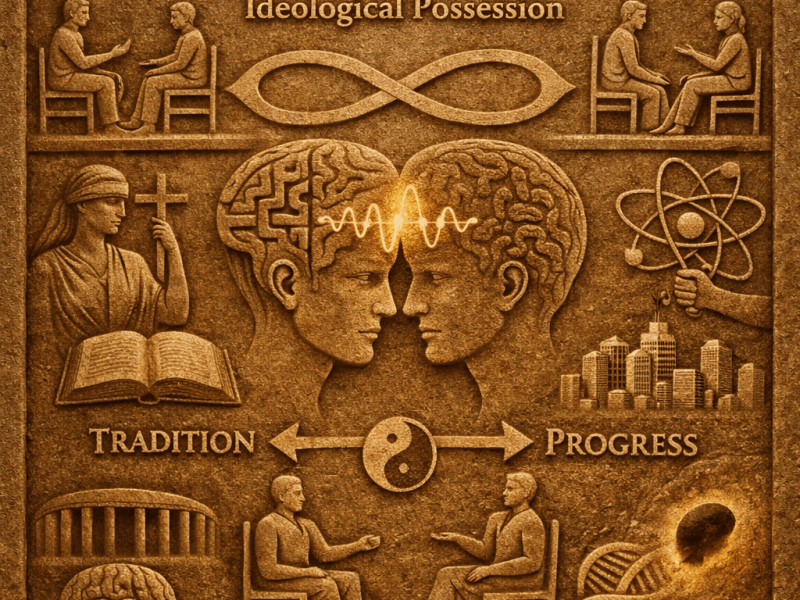




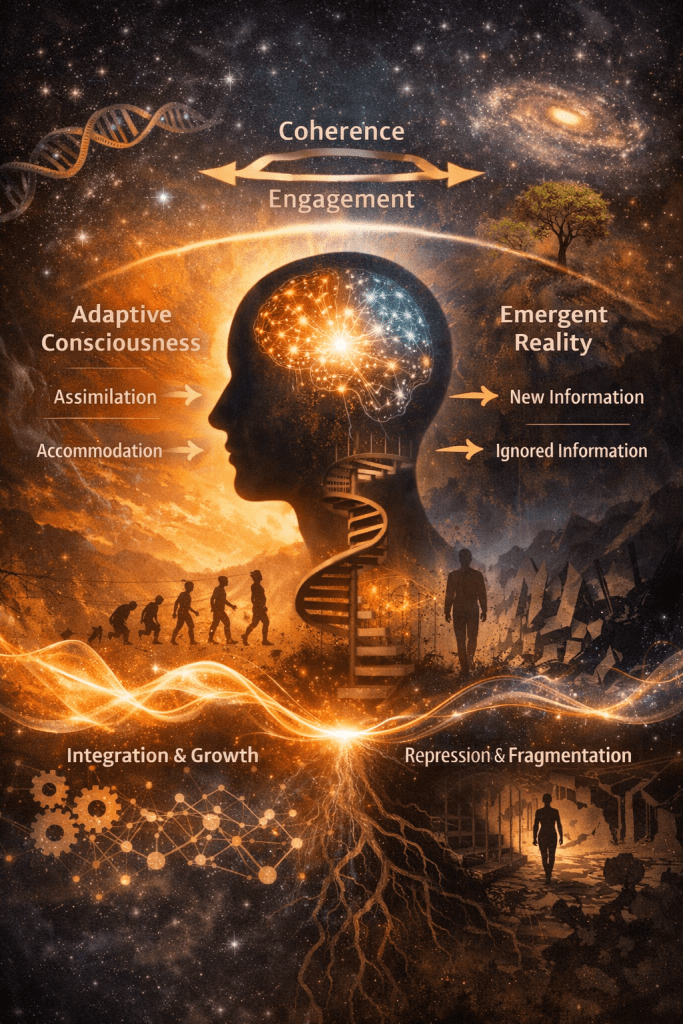
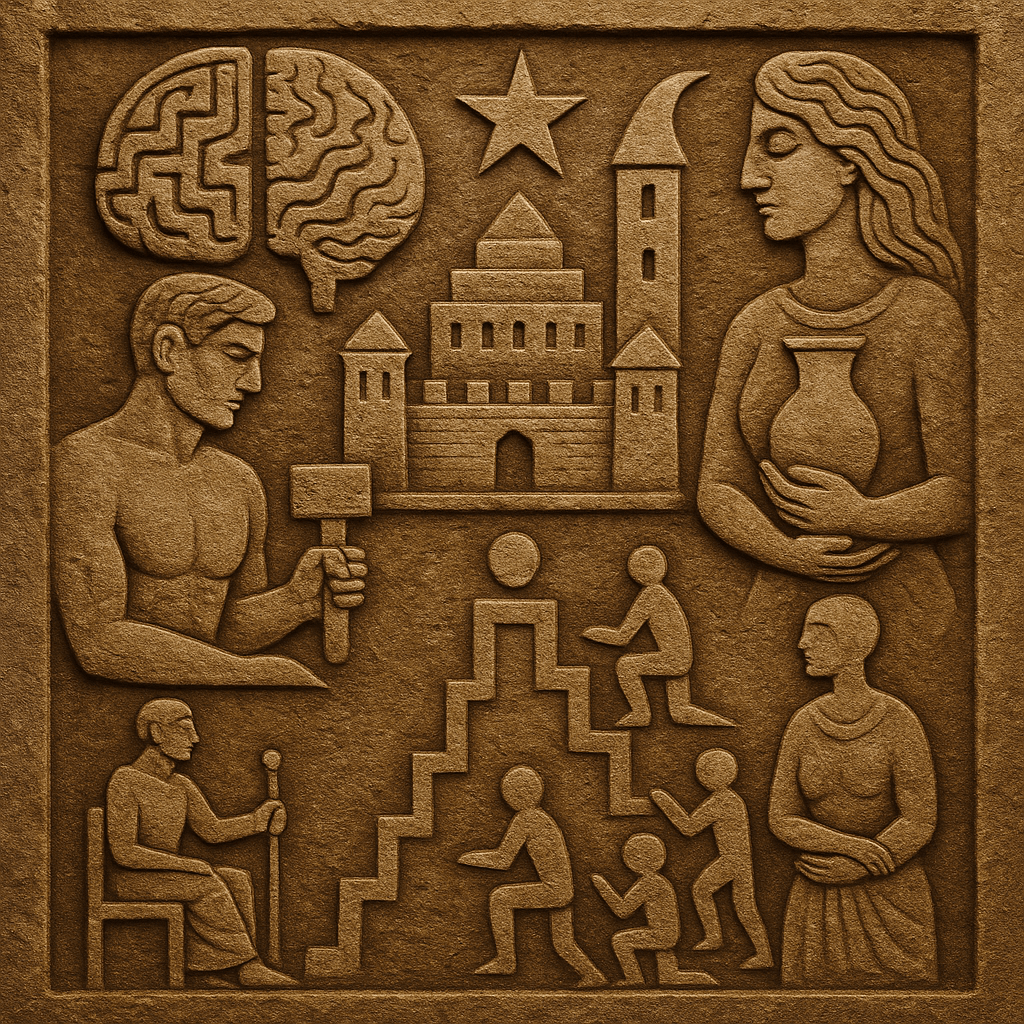

 Michael Thacker