Series Note:
This is the second installment in a two-part research series on the effects of modernity on the mental health of young adult men. Part One examined the problem of rising depression among young men through evolutionary and Jungian analysis. Part Two builds on that foundation, outlining an integrative treatment approach that unites biological reconnection with psychological meaning-making.

Abstract
Depression among young adult males in the United States has reached unprecedented levels, with profound personal, social, and economic consequences. While often addressed through symptom management, a deeper approach is needed to restore balance and resilience. This article integrates evolutionary psychology and Jungian theory to outline a dual framework for treatment. Evolutionary psychology emphasizes reconnection with ancestral adaptations through exercise, diet, nature immersion, and sunlight exposure, addressing the biological and environmental roots of depression. Jungian theory complements this perspective by emphasizing individuation, symbolic engagement, and meaning-making practices such as psychodynamic therapy and mindfulness. Together, these frameworks provide a holistic strategy that unites physiological restoration with cultural and psychological renewal. Such an integrative approach addresses not only the symptoms of depression but also its underlying causes, offering young men pathways toward identity, resilience, and meaning in the modern world.
Keywords: depression; young men; evolutionary psychology; Jungian theory; young adults; depth psychology; mental health
Depression is a deliberating mental disorder that disrupts mood, motivation, sleep, concentration, and social functioning, with consequences extending beyond the individual to jobs, education, finances, and relationships (Remes et al., 2021). Among adults, depression is the most common mental illness, affecting 18% of the population, but young adults (age 18-30) show the highest prevalence at 21%, and this trend is rising (Brody & Hughes, 2025; Kranjac et al., 2025; Villarroel & Terlizzi, 2020). While gender differences appear modest, the consequences are more severe for men, who die by suicide at a rate 3.6 times higher than women. Furthermore, men often present distinct symptom patterns–including anger, aggression, risk-taking, and substance abuse (Sileo & Kershaw, 2020). Young men are also the most reluctant to seek out and participate in treatment (Lu et al., 2022).
Multiple factors contribute to this rising prevalence. For instance, modernity and sedentary lifestyles have been linked to obesity, gut-microbiome dysregulation, and declining testosterone rates among men, each strongly correlated with depression (Blasco et al., 2020; Hauger et al., 2022; Hidaka, 2012; Lambana et al., 2020). Urban living further compounds the issue, exposing young men to chronic stress and pollution that negatively affect the developing brain (Jiayuan et al., 2022; Xu et al. 2023). Cross-cultural studies confirm this incompatibility: hunter-gatherer tribes such as the Ik of Uganda experienced a sharp rise in depression and suicide following transitions into modern life (Colla et al., 2006; Steven & Price, 2000).
Globalization and the internet amplify acculturative stress, as the flood of cultural information and rapid adaptation demands overwhelm coping mechanism and destabilize identity (Alsaleh, 2024; Amado et al., 2020; Angkasawati, 2024). Meanwhile, technology itself heightens risk by overstimulating the nervous system and diminishing frontal lobe functioning (Dai et al., 2019; Kosmyna et al., 2025; Small et al., 2020).
Cultural and ethical dimensions must also be addressed. Within U.S. “honor culture,” men are expected to be strong, stoic, and resilient; vulnerability is often concealed to preserve reputation, and seeking help may invite criticism (Bock et al., 2025). At the same time, existing theory and research–often grounded in Western and predominantly white sample–risk excluding the experiences of more diverse populations (Reohr et al., 2022; Vibhute & Kumar, 2024). Ethical principles of integrity and justice therefore demand accuracy, inclusivity, and freedom from bias in both research and practice (APA, 2017).
Solution
The solution lies not in modern tools that treat symptoms but in reconnecting with the fundamental structures of human being. Both evolutionary psychology and Jungian theory provide frameworks for healing by addressing the deep roots of consciousness, culture, and adaptation. By restoring engagement with nature, cultivating stillness, and reclaiming archetypal value systems that historically anchored meaning, young men may recover balance and resilience. Such an approach not only speaks to the individual level but also ripples outward strengthening families, communities, and society as a whole.
Theories
Evolutionary psychology
Evolutionary psychology provides a profound historical understanding of human nature, tracing back to approximately six million years ago when humans and chimpanzees last shared a common ancestor (Young et al., 2015). From this point, humans emerged bipedally from the African forests, foraging a variety of foods across the savannah. This transition set the stage for the evolution of larger brains and development of the frontal lobe wherein complex thinking skills are situated (Gałecki & Talarowska, 2017). Through bipedal locomotion, collaborative hunting, cooking, and tool making, humans evolved into sophisticated animals, ultimately creating culture and built civilizations. For millions of years, humans and nature coevolved harmoniously, with nature providing sustenance imbued with profound meaning (Veldhuis et al., 2014).
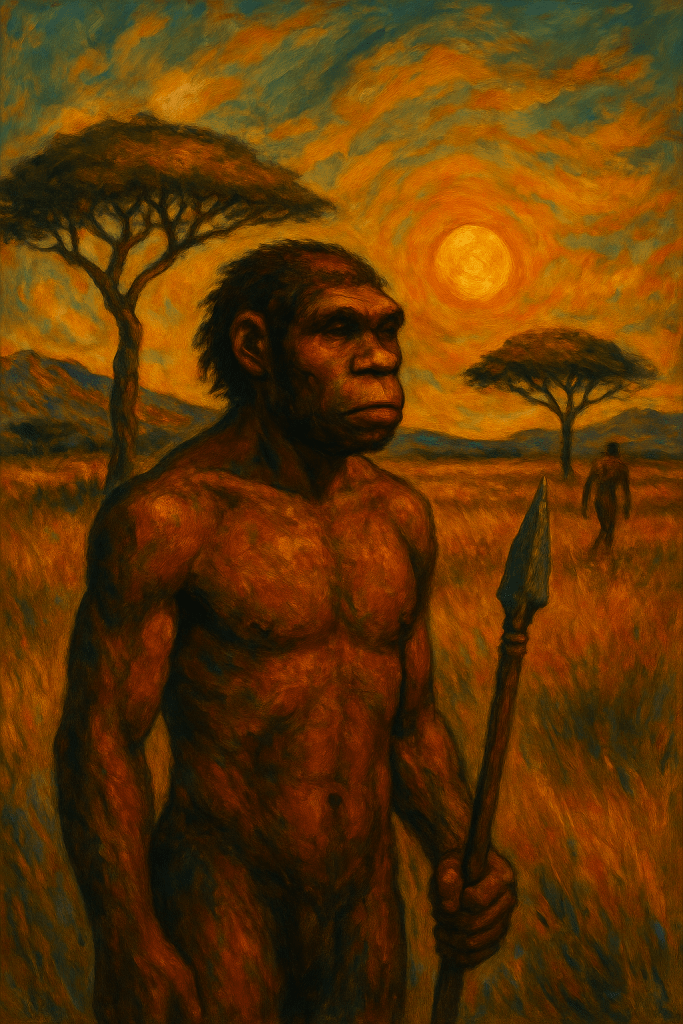
In contrast, modern living relies heavily on technology while neglecting nature, creating what some describe as a devolutionary trend. This shift, which began roughly 6,000 years ago with the rise of civilization, has disrupted the evolutionary trajectory, contributing to obesity, chronic stress, physical illnesses, and a range of mental disorders (Rao, 2022; Griffiths & Bourrat, 2023). Compounding this disruption, average IQ rates have steadily increased over the millennia, leading to heightened sensory sensitivity and, in turn, greater susceptibility to mental disorders (Karpinski et al., 2018; Parks & Smaers, 2018; Pietschnig & Voracek, 2015).
Although both young men and women have been affected by these changes (Brody & Hughes, 2025), men have fared worse, experiencing dramatically lowered testosterone and reductions in muscle mass (Fain & Weatherford, 2016; Kahl, 2020). These declines in biologically vital traits have further contributed to depression in young men (Hauger et al., 2022). Compared to women, men are increasingly falling behind academically, occupationally, and relationally. While gender parity has leveled some aspects of social life, modernity has tilted the scales in ways that disadvantage men (Pasquini, 2025).
Historically, men thrived through exploration and by overcoming environmental challenges (Mehta et al., 2024; Sefcek et al., 2006). Modernity disrupts these adaptive roles, replacing them with sedentary, technology-driven behaviors–an abrupt mismatch that contributes to depression in young men. Instead of engaging in physical activity outdoors, many men now spend hours gaming in confined spaces while consuming gut-disrupting processed foods (Aguiar et al., 2017; Limbana et al., 2020). The result is a disruption of both physiological and psychological processes.
Central to evolutionary psychology is the concept of “mismatch,” wherein an organism experiences adaptive lag when confronting a novel environment (Tybur et al., 2012). Humans are currently experiencing such a mismatch: after millions of years adapting to organic environments, the adjustment to today’s artificial settings has been rapid and acute. Restoring balance requires reintroducing aspects of ancestral living–not through a wholesale return, but through reintegration. Physical activity (Wanjau et al., 2023), time in nature (Koselka et al., 2019), sunlight exposure (Wang et al., 2023), and healthy diets (Staudacher et al., 2025) remain as relevant for survival and well-being today as they were in the past.
Jungian theory
Carl Jung argued that psychological disorders were often the result from a loss of meaning. In his view, this loss stemmed from modernity and the decline of religious belief. As transcendent frameworks withered away, so too did humanity’s propensity to engage with them (Jones, 2022; Roesler & Reefschläger, 2021). Since the Industrial Revolution, consumerism has surged, accompanied by rising materialism (Groumpos, 2021). This shift coincides with increasing rates of depression, further exacerbated by the dominance of technology in recent decades (Alsaleh, 2024). Globalization and internet have dismantled many traditional cultural frameworks, destabilizing not only local communities but also the individual’s orientation and life aim (Angkasawati, 2024; Making Caring Common, 2023). The result is often an identity crisis strongly correlated with depression (Rogers, 2006; Schwartz et al., 2015).
While modernity has produced progressive gains, the rapid integration of diverse values frequently generates imbalance. Heavy reliance on technology is associated with reduced motivation (Kershaw, 2023), detachment from reality (Ruben et al., 2021), and declining attention and empathy (Small et al., 2020). For young people especially, these trends produce a disconnect not only from others but from themselves and reality as such.
Jungian theory views this disconnection as a marker of immaturity, symbolized by the ego’s absorption in the unconscious. Within the unconscious lie elements of the Self awaiting integration, a process Jung termed individuation (Neumann, 1949). A process of self-realization that necessitates Individuation requires conscious effort–critical engagement with novel experiences, reflection, and meaning-making. This voluntary engagement generates pressures that reshape one’s personality, perception, and behavior (Vibhute & Kumar, 2024). Symbolically, the ego detaches from the unconscious while incorporating its constructive elements (Neumann, 1949).
For Jung, individuation is a lifelong cycle of descent (engagement), integration, and renewal. Encouraging young men to undertake this process can strengthen their connections with both Self and reality, fostering identity and meaning. Practical applications include psychodynamic therapy (Roesler, 2013), meditation, and mindfulness practices (Hofmann & Gomez, 2017), which help individuals engage the unconscious and integrate its insights.
Unified solutions
Taken together, these two theories provide complimentary therapeutic approaches. Evolutionary psychology offers an empirically grounded framework but risks oversimplifying cultural dimensions. Jungian theory, while less empirically robust, emphasizes culture, consciousness, and meaning making. Each theory thus compensates for the other’s weaknesses, generating a holistic framework for understanding depression in young men.
An integrated approach might pair lifestyle interventions–such as exercise, nature immersion, and diet–with practices of individuation, symbolic engagement, and meaning making. By uniting biological adaptations with existential depth, such a framework addresses both the physiological roots and cultural-psychological dimensions of depression.
Research
Empirical evidence is essential in establishing the validity of any proposed solution. The following section synthesizes key findings that support the application of both evolutionary psychology and Jungian theory in addressing depression among young American men. Evolutionary psychology will be explored in relation to nature and sunlight exposure, diet, and physical activity, while Jungian theory will be examined through its therapeutic practices, particularly psychodynamic therapy and mindfulness-based approaches.
Application of evolutionary psychology and Jungian theory
Evolutionary psychology emphasizes the importance of aligning human behavior with the environmental conditions in which the ancestors of the past evolved (Rigolot, 2021). Within this view, nature exposure, sunlight, physical activity, and diet are not merely lifestyle preferences but biological necessities. Without them, psychological dysfunction, including depression, becomes more likely. For example, Koselka et al. (2019) found that time spent walking in nature significantly reduced depressive symptoms. Similarly, Lim 2025 conducted a longitudinal study involving over 4 million South Korean participants and found that moderate to vigorous exercise was inversely related to depression.

Sunlight exposure also plays a protective. Wang et al. (2023), using the Chinese version of Kesseler 10 (K10) scale, while involving 787 participants, found that more hours of sunlight exposure were associated with improved mental health and reduced depressive symptoms. Sunlight exposure has also been linked to increases in testosterone levels (Wehr et al., 2010), which, when combined with physical exercise, can enhance mood and muscle development (Chasland et al., 2021).
A systematic review involving 770 articles further confirmed an inverse relationship between physical activity and depression (Wanjau et al., 2023). In parallel, Staudacher et al. (2025) identified diet as a critical variable, highlighting the role of the gut microbiome and HPA axis in mood regulation. Diets high in processed foods disrupt these systems, while the Mediterranean diet was shown to reduce depression risk by 33% (Staudacher et al., 2025).
While evolutionary psychology focuses on biological reconnection with nature as a form of treatment, Jungian theory focuses on internal processes of meaning-making and transformation. It proposes that psychological health requires engagement with unconscious material through practices such as psychodynamic therapy and mindfulness. Jungian therapy incorporates free association, dream work, and moments of synchronicity. Roesler & Reefschlager (2021) gathered data from 46 synchronistic cases analyzing the effects of synchronistic events and therapeutic outcomes. They found a significant correlation (r=.40, p<0.5) between synchronistic and positive therapeutic outcomes (Roesler & Reefschlager, 2021). Roesler (2013) reached similar conclusions in he analysis of European case studies from the 1990s and 2000s using Jungian therapeutic approaches, demonstrating improvements in symptom severity, personality structure, and daily functioning.
Closely related to Jungian approaches, mindfulness practices offer a complementary pathway to the unconscious (Olivetti, 2014). These practices often include mediation and journaling as a means to help discover unconscious elements that transform personality and perception. For example, Nave et al. (2021) found that meditation can dissolve the ego, thus allowing unconscious material. Supporting this evidence in a series of experiments, Lush et al. (2016) showed that experienced mindfulness practitioners had heighted awareness of unconscious processes and responded more adaptively compared to novices.
Such inner work translates into measurable improvements in mental health. Dahl & Davidson (2019) described mindfulness as a reawakening of the sacred and a source of renewed meaning. Zhang et al. (2021) conducted a meta-analysis showing small to moderate effects of mindfulness practices on anxiety and depression. Similarly, Fu et al. (2024) compared findings from 26 different and found a significant overall effect (SMD=-1.14, p < 0.001) in reducing depressive symptoms.

Physiological benefits for men have also been observed. Fan et al. (2024) observed such effects in their study on the hormonal impact of mindfulness meditation. Their study involved 32 Chinese healthy male college students with a mean age of 21. After seven consecutive days of mindfulness meditation following a stressor, participants in the experimental group showed increased testosterone and stabilized cortisol levels.
Expressive writing, similar to free association, enables individuals to articulate unfiltered thoughts and feelings. Lin Guo (2022) conducted a meta-analysis of 31 experimental studies involving over 4,000 participants, and found a small but significant effect of expressive writing on depressive symptoms (Hedges g = -0.12).
Together, evolutionary psychology and Jungian theory provide complementary strategies. The former emphasizes reconnection with ancestral patterns through physical health and environmental engagement. The latter guides individuals inward, toward symbolic integration and individuation. When paired, these approaches offer a biologically and spiritually grounded path toward healing.
Cultural Considerations
Despite promising evidence, cultural considerations are essential when designing and implementing psychological interventions. Many of the cited studies are based on Asian and European populations, raising questions about generalizability to a diverse American population (Fan et al., 2024; Lim, 2025; Lush et al., 2016: Roesler, 2013). An inclusive strategy must therefore be flexible. For example, lighter-skinned individuals may require more cautious sun exposure (Merin et al., 2022). Religious considerations may also limit engagement with traditional mindfulness practices; alternatives such as contemplative prayer could serve a similar purpose (Henning et al., 2024).
Cultural identity further complicates mental health outcomes. Bock et al. (2025) observed that many regions in the U.S. maintain values rooted in honor culture, which emphasizes toughness, self-reliance, and reputation. While these traits may align with ancestral adaptation, they also create barriers to emotional vulnerability and therapeutic help-seeking. Men entrenched in honor culture are less likely to pursue treatment, often due to perceived social criticism, thus compounding the problem (Bock et al., 2025).
Ethical Considerations
When implementing the proposed intervention, three APA (2017) ethical principles are especially relevant here: informed consent, integrity, and justice. Informed consent ensures that individuals voluntarily engage in the therapeutic process and understand the nature of the treatment being offered. This is especially important when working with young men who may be reluctant to seek help and who may carry internalized stigma around vulnerability.
Integrity involves presenting information and interventions accurately. Practitioners must disclose potential risks, including physical injury during exercise, sun exposure side effects, or psychological discomfort arising from engagement with unconscious material.
Justice emphasizes equal access to treatment and the responsibility of psychologists to confront their own biases. Practitioners must remain attentive to the cultural and gender-specific needs of young men, ensuring that interventions are relevant, respectful, and inclusive.
Conclusion
Over the past several decades, depression among young American men has increased at an alarming rate (Kranjac et al., 2025). Multiple factors appear to be contributing to this rise, including identity loss, sedentary lifestyles, overstimulation, and declining motivation (Blasco et al., 2020; Karpinski et al., 2018; Hauger et al., 2022; Schwartz et al., 2015). As a result, men have fallen behind in academia, career development, and relationship maintenance in comparison to women (Pasquini, 2025). This trend carries serious societal consequences (Kupferberg & Hasler, 2023), with recent research estimating an economic burden of depression at $100 billion annually (Greenberg et al., 2021).
Evolutionary psychology and Jungian theory offer insights into the deeper causes of this pattern and present a comprehensive strategy for intervention. From the perspective of evolutionary psychology, the primary causal factor is mismatch: modern conditions are incompatible with the biological and psychological adaptations of young men (Tybur et al., 2012). Jungian theory deepens this insight by pointing to the psychic disorientation brought about by the collapse of traditional frameworks and the erosion of spiritual meaning (Angkasawati, 2024).
In response, each theory proposes a path of reconnection. Evolutionary psychology advocates a return to ancestral rhythms through nature immersion, sunlight exposure, movement, and nutritious diets (Koselka et al., 2019; Staudacher et al., 2025; Wang et al., 2023; Wanjau et al., 2023). While Jungian theory proposes an inward journey through dreams, symbols, and self-inquiry, accessed through psychodynamic therapy and contemplative practice (Hofmann & Gomez, 2017; Roesler, 2013).
By integrating both outer and inner elements, the individual is invited to reengage with the world and with the Self. In this unity lies the potential not only for symptom reduction, but for a more coherent, resilient, and meaningful life.
References
Aguiar, M., Bils, M., Charles, K.K. & Hurst, E. (2021). “Leisure luxuries and the labor supply of young men,” Journal of Political Economy, 129(2), 337-382. https://doi.org/10.1086/711916
Alsaleh, A. The impact of technological advancement on culture and society. Science Report, 14, 32140 (2024). https://doi.org/10.1038/s41598-024-83995-z
Amado, S., Snyder, H. R., & Gutchess, A. (2020). Mind the gap: The relation between identity gaps and depression symptoms in cultural adaptation. Frontiers in psychology, 11, 1156. https://doi.org/10.3389/fpsyg.2020.01156
American Psychological Association. (2017). Ethical principles of psychologists and code of conduct. https://www.apa.org/ethics/code
Angkasawati, A. (2024). The impact of modernization on social and cultural values: A basic social and cultural sciences review. International Journal of Education, Vocational and Social Science, 3, 56-65. DOI:10.63922/ijevss.v3i04.1228
Blasco, B. V., García-Jiménez, J., Bodoano, I., & Gutiérrez-Rojas, L. (2020). Obesity and depression: Its prevalence and influence as a prognostic factor: A systematic review. Psychiatry investigation, 17(8), 715–724. https://doi.org/10.30773/pi.2020.0099
Bock, J. E., Brown, R. P., Johns, N. E., Closson, K., Cunningham, M., Foster, S., & Raj, A. (2025). Is honor culture linked with depression?: Examining the replicability and robustness of a disputed association at the state and individual levels. Journal of Cross-Cultural Psychology, 0(0). https://doi.org/10.1177/00220221251348586
Brody DJ, Hughes JP. Depression prevalence in adolescents and adults: United States, August 2021–August 2023. 2025 Apr; NCHS (527)1–11. DOI: https://dx.doi.org/10.15620/cdc/174579
Chasland, L.C., Yeap, B.B., Maiorana, A.J., Chan, Y.X., Maslen, B.S., Cooke, B.R., Dembo, L., Naylor, L.H. and Green, D.J. (2021). Testosterone and exercise: effects on fitness, body composition, and strength in middle-to-older aged men with low-normal serum testosterone levels. American Journal of Physiology, 320(5), 1985-1998. https://doi.org/10.1152/ajpheart.00010.2021
Dahl, C.J. & Davidson, R.J. (2019). Mindfulness and the contemplative life: pathways to connection, insight, and purpose. Current Opinion in Psychology, 28, 60-64, https://doi.org/10.1016/j.copsyc.2018.11.007.
Dahl, C. J., Lutz, A., & Davidson, R. J. (2015). Reconstructing and deconstructing the self: cognitive mechanisms in meditation practice. Trends in cognitive sciences, 19(9), 515–523. https://doi.org/10.1016/j.tics.2015.07.001
Dai, L., Zhou, H., Xu, X., & Zuo, Z. (2019). Brain structural and functional changes in patients with major depressive disorder: a literature review. PeerJ, 7, e8170. https://doi.org/10.7717/peerj.8170
Fain, E., & Weatherford, C. (2016). Comparative study of millennials’ (age 20-34 years) grip and lateral pinch with the norms. Journal of hand therapy: Official journal of the American Society of Hand Therapists, 29(4), 483–488. https://doi.org/10.1016/j.jht.2015.12.006
Fan, Y., Cui, Y., Tang, R., Sarkar, A., Mehta, P., & Tang, Y. Y. (2024). Salivary testosterone and cortisol response in acute stress modulated by seven sessions of mindfulness meditation in young males. Stress, 27(1). https://doi.org/10.1080/10253890.2024.2316041
Fu, Y., Song, Y., Li, Y., Sanchez-Vidana, D. I., Zhang, J. J., Lau, W. K., Tan, D. G. H., Ngai, S. P. C., & Lau, B. W. (2024). The effect of mindfulness meditation on depressive symptoms during the COVID-19 pandemic: a systematic review and meta-analysis. Scientific reports, 14(1), 20189. https://doi.org/10.1038/s41598-024-71213-9
Gałecki, P., & Talarowska, M. (2017). The evolutionary theory of depression. Medical science monitor:international medical journal of experimental and clinical research, 23, 2267–2274. https://doi.org/10.12659/msm.901240
Greenberg, P. E., Fournier, A. A., Sisitsky, T., Simes, M., Berman, R., Koenigsberg, S. H., & Kessler, R. C. (2021). The economic burden of adults with major depressive disorder in the United States (2010 and 2018). PharmacoEconomics, 39(6), 653–665. https://doi.org/10.1007/s40273-021-01019-4
Griffiths, P. E., & Bourrat, P. (2023). Integrating evolutionary, developmental and physiological mismatch. Evolution, medicine, and public health, 11(1), 277–286. https://doi.org/10.1093/emph/eoad023
Groumpos, P. P. (2021). A critical historical and scientific overview of all industrial revolutions. IFAC-PapersOnLine, 54, 464-471. https://doi.org/10.1016/j.ifacol.2021.10.492
Guo, L. (2023). The delayed, durable effect of expressive writing on depression, anxiety and stress: A meta-analytic review of studies with long-term follow-ups. British Journal of Clinical Psychology, 62, 272–297. https://doi.org/10.1111/bjc.12408
Han, W., & Chen, B. B. (2020). An evolutionary life history approach to understanding mental health. General psychiatry, 33(6), e100113. https://doi.org/10.1136/gpsych-2019-100113
Hauger, R.L., Saelzler, U.G., Pagadala, M.S. & Panizzon, M.S. (2022). The role of testosterone, the androgen receptor, and hypothalamic-pituitary–gonadal axis in depression in ageing men. Reviews in Endocrine and Metabolic Disorders, 23, 1259–1273. https://doi.org/10.1007/s11154-022-09767-0
Henning, M.A., Lyndon, M., Ng, L., Sundram, F., Chen, Y. & Webster, C.S. (2025). Mindfulness and religiosity: Four propositions to advance a more integrative pedagogical approach. Mindfulness, 16, 681–694 (2025). https://doi.org/10.1007/s12671-024-02325-6
Hidaka B. H. (2012). Depression as a disease of modernity: Explanations for increasing prevalence. Journal of affective disorders, 140(3), 205–214. https://doi.org/10.1016/j.jad.2011.12.036
Hofmann, S. G., & Gómez, A. F. (2017). Mindfulness-Based interventions for anxiety and depression. The Psychiatric clinics of North America, 40(4), 739–749. https://doi.org/10.1016/j.psc.2017.08.008
Jiayuan, X., Liu, X., Li, Q., Ran, G., Wen, Q., Liu, F., Congying, C., Qiang, L., Ing, A., Lining, G., Liu, N., Huaigui, L., Conghong, H., Jingliang, C., Wang, M., Zuojun, G., Zhu, W., Zhang, B., Weihua, L., . . . Gunter, S. (2022). Global urbanicity is associated with brain and behaviour in young people. Nature Human Behaviour, 6(2), 279-293. https://doi.org/10.1038/s41562-021-01204-7
Jones, J.M. (2022). Belief in God in U.S. dips to 81%, a new low. Gallup. https://news.gallup.com/poll/393737/belief-god-dips-new-low.aspx
Kahl, K.L. (2020). Testosterone levels show steady decrease among young US men. Urology Times Journal, 48(70), 28. https://www.urologytimes.com/view/testosterone-levels-show-steady-decrease-among-young-us-men
Kanaev, I.A. (2022). Evolutionary origin and the development of consciousness, Neuroscience & Biobehavioral Reviews, 133, https://doi.org/10.1016/j.neubiorev.2021.12.034
Karpinski, R.I., Kolb, A.M.K., Tetreault, N.A., & Borowski, T.B. (2018). High intelligence: A risk factor for psychological and physiological overexcitabilities, Intelligence, 66, 8-23, ISSN 0160-2896, https://doi.org/10.1016/j.intell.2017.09.001.
Koselka, E. P. D., Weidner, L. C., Minasov, A., Berman, M. G., Leonard, W. R., Santoso, M. V., de Brito, J. N., Pope, Z. C., Pereira, M. A., & Horton, T. H. (2019). Walking Green: Developing an Evidence Base for Nature Prescriptions. International journal of environmental research and public health, 16(22), 4338. https://doi.org/10.3390/ijerph16224338
Kosmyna, N., Hauptmann, E., Yuan, Y.T., Situ, J., Liao, X-H., Beresnitzky, V.A. Braunstein, I. & Maes, P. (2025). Your brain on ChatGPT: Accumulation of cognitive debt when using an AI assistant for essay writing tasks. MIT. https://doi.org/10.48550/arXiv.2506.08872
Kranjac, A.W., Kranjac, D. & Chung, V. (2025). Temporal and generational changes in depression among young American adults. Journal of Affective Disorders Reports, 21, 100949, ISSN 2666-9153, https://doi.org/10.1016/j.jadr.2025.100949.
Kupferberg, A. & Hasler, G. (2023). The social cost of depression: Investigating the impact of impaired social emotion regulation, social cognition, and interpersonal behavior on social functioning. Journal of Affective Disorders Reports, 14, 100631, ISSN 2666-9153, https://doi.org/10.1016/j.jadr.2023.100631.
Limbana, T., Khan, F., & Eskander, N. (2020). Gut microbiome and depression: How microbes affect the way we think. Cureus, 12(8), e9966. https://doi.org/10.7759/cureus.9966
Lim Y. (2025). Longitudinal association between consecutive moderate-to-vigorous physical activity and the risk of depression among depressed and non-depressed participants: A nationally representative cohort study. Journal of affective disorders, 381, 475–483. https://doi.org/10.1016/j.jad.2025.03.048
Lu, W., Bessaha, M., & Muñoz-Laboy, M. (2022). Examination of young US adults’ reasons for not seeking mental health care for depression, 2011-2019. JAMA network open, 5(5), e2211393. https://doi.org/10.1001/jamanetworkopen.2022.11393
Lush, P., Naish, P., & Dienes, Z. (2016). Metacognition of intentions in mindfulness and hypnosis. Neuroscience of consciousness, 2016(1), niw007. https://doi.org/10.1093/nc/niw007
Making Caring Common. (2023). On edge: Understanding and preventing young adults’ mental health challenges. https://mcc.gse.harvard.edu/reports/on-edge
Mehta, S., Chahal, A., Malik, S., Rai, R. H., Malhotra, N., Vajrala, K. R., Sidiq, M., Sharma, A., Sharma, N., & Kashoo, F. Z. (2024). Understanding female and male insights in psychology: Who thinks what?. Journal of lifestyle medicine, 14(1), 1–5. https://doi.org/10.15280/jlm.2024.14.1.1
Merin, K. A., Shaji, M., & Kameswaran, R. (2022). A review on sun exposure and skin diseases. Indian Journal of Dermatology, 67(5), 625. https://doi.org/10.4103/ijd.ijd_1092_20
Nave, O., Trautwein, F. M., Ataria, Y., Dor-Ziderman, Y., Schweitzer, Y., Fulder, S., & Berkovich-Ohana, A. (2021). Self-Boundary dissolution in meditation: A phenomenological investigation. Brain sciences, 11(6), 819. https://doi.org/10.3390/brainsci11060819
Ogden, C.L., Ansai, N., Fryar, C.D., Wambogo, E.A. & Brody, D.J. (2025). Depression and diet quality, US adolescents and young adults: National health and nutrition examination Survey, 2015-March 2020. Journal of the Academy of Nutrition and Dietetics, 125(2), 247-255. doi: 10.1016/j.jand.2024.08.007
Olivetti, K. (2014). Ideas about mindfulness and willpower: A conversation with Kelly McGonigal. Jung Journal, 8(1), 89–99. https://doi.org/10.1080/19342039.2014.866825
Parks, A.N., Smaers, J.B. (2018). The evolution of the frontal lobe in humans. In: Bruner, E., Ogihara, N., Tanabe, H. (eds) Digital endocasts. replacement of neanderthals by modern humans series. Springer, Tokyo. https://doi.org/10.1007/978-4-431-56582-6_14
Pasquini, N. (2025). Why men are falling behind in education, employment, and health. Havard Magazine. https://www.harvardmagazine.com/2025/05/harvard-men-gender-gap-education-employment
Pietschnig, J., & Voracek, M. (2015). One century of global IQ gains: A formal meta-analysis of the Flynn effect (1909-2013). Perspectives on psychological science: a journal of the Association for Psychological Science, 10(3), 282–306. https://doi.org/10.1177/1745691615577701
Rao, V.C.S. (2022). The impact of science and technology on the growth of civilization. The Review of Contemporary Scientific and Academic Studies, 2(1), 1-6. https://www.researchgate.net/publication/359165772_The_Impact_of_Science_and_Technology_on_the_Growth_of_Civilization
Remes, O., Mendes, J. F., & Templeton, P. (2021). Biological, psychological, and social determinants of depression: A review of recent literature. Brain sciences, 11(12), 1633. https://doi.org/10.3390/brainsci11121633
Reohr, P., Irrgang, M., Watari, H., & Kelsey, C. (2022). Considering the whole person: A guide to culturally responsive psychosocial research. Methods in Psychology, 6, 2590-2601. https://doi.org/10.1016/j.metip.2021.100089.
Rigolot C. (2021). Our mysterious future: Opening up the perspectives on the evolution of human-nature relationships. Ambio, 50(9), 1757–1759. https://doi.org/10.1007/s13280-021-01585-z
Roesler C. (2013). Evidence for the effectiveness of jungian psychotherapy: a review of empirical studies. Behavioral sciences (Basel, Switzerland), 3(4), 562–575. https://doi.org/10.3390/bs3040562
Roesler, C., & Reefschläger, G. I. (2022). Jungian psychotherapy, spirituality, and synchronicity: Theory, applications, and evidence base. Psychotherapy, 59(3), 339–350. https://doi.org/10.1037/pst0000402
Ruben, M. A., Stosic, M. D., Correale, J., & Blanch-Hartigan, D. (2021). Is technology enhancing or hindering interpersonal communication? A framework and preliminary results to examine the relationship between technology use and nonverbal decoding skill. Frontiers in psychology, 11, 611670. https://doi.org/10.3389/fpsyg.2020.611670
Schwartz, S. J., Hardy, S. A., Zamboanga, B. L., Meca, A., Waterman, A. S., Picariello, S., Luyckx, K., Crocetti, E., Kim, S. Y., Brittian, A. S., Roberts, S. E., Whitbourne, S. K., Ritchie, R. A., Brown, E. J., & Forthun, L. F. (2015). Identity in young adulthood: Links with mental health and risky behavior. Journal of Applied Developmental Psychology, 36, 39–52. https://doi.org/10.1016/j.appdev.2014.10.001
Small, G. W., Lee, J., Kaufman, A., Jalil, J., Siddarth, P., Gaddipati, H., Moody, T. D., & Bookheimer, S. Y. (2020). Brain health consequences of digital technology use. Dialogues in clinical neuroscience, 22(2), 179–187. https://doi.org/10.31887/DCNS.2020.22.2/gsmall
Sefcek, Jon & Brumbach, Barbara & MA, Geneva & Miller, Geoffrey. (2006). The evolutionary psychology of human mate choice. Journal of Psychology & Human Sexuality, 18, 125-182. https://doi.org/10.1300/J056v18n02_05
Staudacher, H. M., Teasdale, S., Cowan, C., Opie, R., Jacka, F. N., & Rocks, T. (2025). Diet interventions for depression: Review and recommendations for practice. The Australian and New Zealand journal of psychiatry, 59(2), 115–127. https://doi.org/10.1177/00048674241289010
Veldhuis, D., Kjærgaard, P.C., Maslin, M. (2014). Human Evolution: Theory and Progress. In: Smith, C. (eds) Encyclopedia of Global Archaeology. Springer, New York, NY. https://doi.org/10.1007/978-1-4419-0465-2_642
Vibhute, S. & Suresh, K. (2024). Unraveling the depths of the psyche: A review of Carl Jung’s analytical psychology. International Journal of Indian Psychology. 12. 628-642. DOI:10.25215/1201.059
Wang, J., Wei, Z., Yao, N., Li, C., & Sun, L. (2023). Association between sunlight exposure and mental health: Evidence from a special population without sunlight in work. Risk management and healthcare policy, 16, 1049–1057. https://doi.org/10.2147/RMHP.S420018
Wanjau, M. N., Möller, H., Haigh, F., Milat, A., Hayek, R., Lucas, P., & Veerman, J. L. (2023). Physical activity and depression and anxiety disorders: A systematic review of reviews and assessment of causality. AJPM focus, 2(2), 100074. https://doi.org/10.1016/j.focus.2023.100074
Wehr, E., Pilz, S., Boehm, B. O., März, W., & Obermayer-Pietsch, B. (2010). Association of vitamin D status with serum androgen levels in men. Clinical endocrinology, 73(2), 243–248. https://doi.org/10.1111/j.1365-2265.2009.03777.x
Xu, C., Miao, L., Turner, D., & DeRubeis, R. (2023). Urbanicity and depression: A global meta-analysis. Journal of affective disorders, 340, 299–311. https://doi.org/10.1016/j.jad.2023.08.030
Young, N. M., Capellini, T. D., Roach, N. T., & Alemseged, Z. (2015). Fossil hominin shoulders support an African ape-like last common ancestor of humans and chimpanzees. Proceedings of the National Academy of Sciences of the United States of America, 112(38), 11829–11834. https://doi.org/10.1073/pnas.1511220112
Zhang, D., Lee, E. K. P., Mak, E. C. W., Ho, C. Y., & Wong, S. Y. S. (2021). Mindfulness-based interventions: an overall review. British medical bulletin, 138(1), 41–57. https://doi.org/10.1093/bmb/ldab005
 Michael Thacker