Introduction
Over the past six million years of human evolution, tremendous changes have transpired within the human cranium such as overall brain size and neuroanatomical organization. These changes have helped the homo species better understand, or perceive, their environment, enabling them to acquire, assess, and integrate novel information that allowed for improved adaptation skills that were essential for the survival of the species (Sherwood et al., 2008). According to Britannica, perception is best defined as the processing of sensory information that is organized into a coherent experience (2024). This perceptive ability allowed human ancestors to assess and integrate newfound information into their existing knowledge structure, or schema, and therein enhance their current perceptual knowledge of themselves and environment that allowed for improved innovative strategies to overcome obstacles such as climate change and hunger as they manifested themselves (Mattson, 2014). Without this adaptive ability of perception, the species would have become victim to the environment and the selection pressures they presented, leading to the extinction of the human species (Zeller et al., 2023; Fogarty & Kandler, 2020).
Some of these perceptive and adaptive abilities were driven by underlying emotional and motivational neural circuits found within the limbic system of the brain that helped direct the attention of early humans towards relevant and novel stimuli that would help ensure the survival of the species (Lang & Bradley, 2010; Garrett & Hough, 2020). As time went on and human brain size and intelligence increased, so did the sophistication of these emotional and motivational circuits that influenced the perception of their experiences. This ultimately led to the formation of religious ideas and the appreciation of art that was especially evident beginning around 45,000 BCE (Narr, 2021). Humans began to not only recognize what objects were and their value to survival, but also their imbued perceived value in accordance with their created value system which became known as “sacred” objects to be admired and contemplated (Eliade, 1987).

The ability to perceive one’s environment consists of an amalgamation of various levels of interconnected systems that are a top-down process that range from fundamental to subjective to interactive that are cognitively analyzed and processed at multiple levels (Garrett & Hough, 2020). This intricate processing not only provides a perceiving entity a means to understand their own self and their environment, but also instantiates meaning into the context in which they have their being. Cognitive perception relies on prior experiences to help the perceiver to understand and navigate an experience (Sohn et al., 2019). Not only are prior experiences an essential component within the confines of perception, but future learning opportunities are as well. Future learning engagements help transform and enhance prior schemas, that are then utilized to “update” an observer’s perceptual interaction with a given experience (Zhang & Li, 2020; Gold & Watanabe, 2010). To further shed light on the concept of perception, this paper will seek first to address whether perception of experience is strictly a direct or indirect phenomenon by examining arguments for the former and then addressing those arguments with counter evidence that will consist of two studies examining perceptual effects. And in accordance with the bottom-up concept of analysis stated previously, this paper will further examine evidence from the foundational level of quantum effects, then examine brain processes that are found within hemispheric differences, and finally societal and cultural influences on perception.
Direct or Indirect Perception?
This ability for perceptual interaction with the environment thus begs the question, do humans perceive reality as it is, or do they perceive and interact with the essence thereof in a way that imbues sets of value and meaning on a given object? As suggested so far within the introduction, it would appear to be the latter, and more evidence will be laid out to support this concept later. However, despite this evidence, there are opponents to this concept of value imbuement within the interactive dynamics between humans and reality, and instead they insist that humans perceive reality in a direct manner with little to no subjective value structure imposed upon objects they interact with or observe. One user on Quora, Mark Werner (2019), that due to evolution, our brains provide us with a “perception that is quite accurate”, and it is due to this accuracy that has helped to ensure our survival as a species. Another user on the same platform, Zane Scheepers (2017), believed, akin to the previous user, that perception was strictly a mind model that creates/observes actual reality and is only subjective in a sense according to when or where one might be observing a particular phenomenon occurring. He went on to state that comprehension also played a role in observation but was separate from the construct of perception itself.
Study 1
The first study to be examined focuses on the effects of depression on the perception of positive and negative stimuli. This research was conducted by Mathilde Bigot and colleagues earlier in 2024 with approval from the Human Research Ethics Committee, CPP-Ile de France IV (2015/44), and support from Agence Nationale de la Recherche Grants and other such enterprises. The researchers recruited 48 participants with 25 being in a euthymic state and 23 a depressive or mixed state that ranged in age from 18-65 years old. They then had the participants participate in a identification task of the Sniffin’ sticks test while an odor valence assignment was evaluated during the process. These results were then paralleled with previous work on mice models of depression wherein mice were chronically administered corticosterone (Bigot et al., 2024).
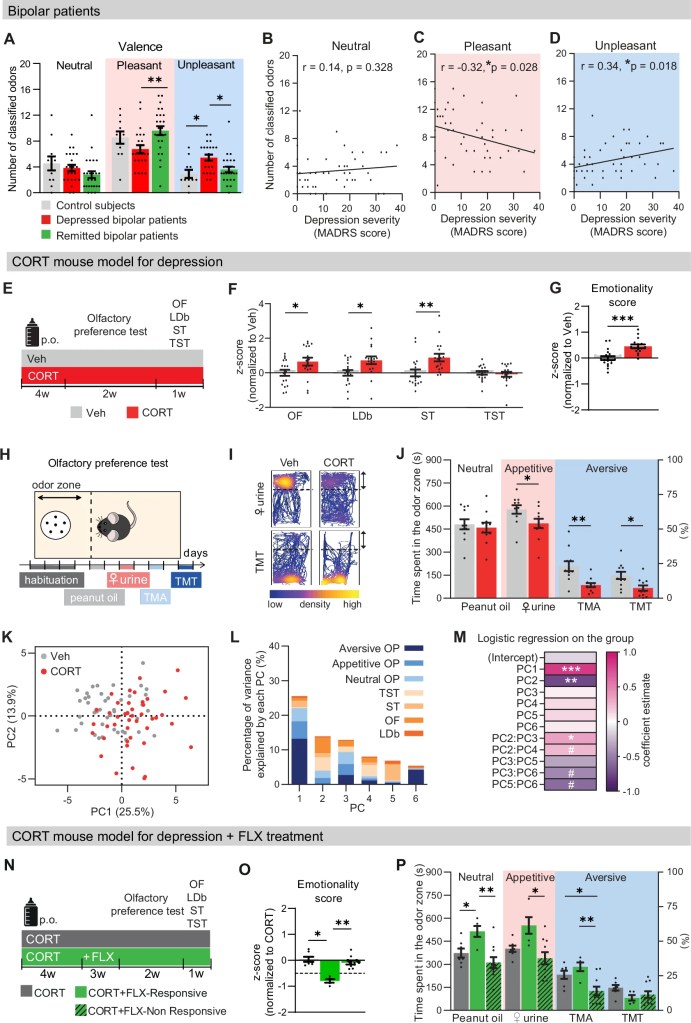
The results of these two evaluations found that both mice and humans during depressive states demonstrated an acute and global shift towards a negative assessment of both pleasant/attractive and unpleasant/unattractive odors. One particular area of the brain that was of interests was the basolateral amygdala (BLA) circuits wherein negative and positive valence evaluations of attended stimuli are processed. This circuit becomes disrupted during depressive states which increases proclivity towards a more negative valence bias in the evaluation of both positive and negative stimuli. The findings help shed light on the potential cause of negative bias towards attended stimuli during depression that could help discover future treatment options (Bigot et al., 2024).
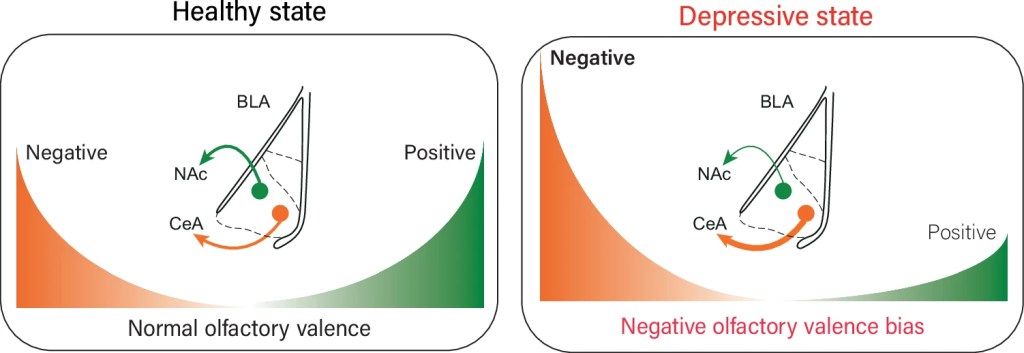
This study’s validity appears to be intact as they used tests and procedures that have been reliably tested and used multiple times by various institutes. The reliability of this study is evident in the fact that the results from the human participants were paralleled and found to be highly correspondent. Although the sample size was fairly small, the generalizability potential can be found within the age range of participants and the varying types of depression being evaluated in this study. Finally, the code of ethics provided by the American Psychological Association (APA) appear to have been followed accordingly with informed consent provided by all participants in the study; no harm being caused by the researchers; benefiting participants through the findings of the research that could bring about new methods of treatment; integrity and justice appear to be evident through their stringent and thorough research methods being utilized; and lastly, privacy and dignity were evident as none of the personal information of participants were provided (APA, 2017).
Study 2
The second study utilized in this paper focuses on the effects of emotional states and affectivity in the recall of past events. This study was conducted by Jennifer M. Talarico and colleagues in 2009 with approval from The Institutional Review Board for the Protection of Human Subjects in Non-medical Research at Duke University. The researchers recruited 170 undergraduate students to participate in the study with a median age of 19 years old. They asked each participant to recall eight distinct emotional events – happy, calm, in love, positive surprise, negative surprise, angry, sad, and afraid. The first four were categorized as positive emotions while the last four were negative emotions. They were also further categorized into low and high arousal with the high arousal emotions being fear, happiness, love and anger. The participants were then asked to think about and recall events in as many details as possible that correlated with a given emotion. They were then asked to answer various rating scale questions about phenomenological properties, metacognitive properties (belief in the memory’s accuracy), and event properties (significance) taken from the Autobiographical Memory Questionnaire (Talarico et al., 2009).
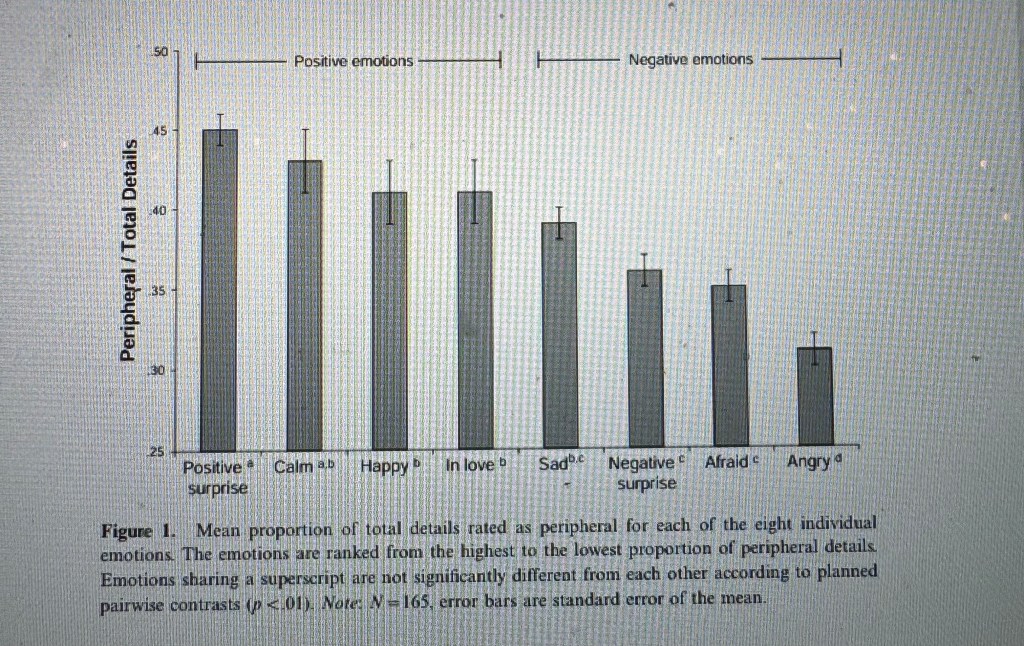
What the researchers discovered through the results of the participants was that the more positive-valence events provided greater peripheral details while more negative-valence events impaired peripheral details, and instead enhanced centralized features of those events. These results were explained in terms of the broaden-and-build theory of positive emotions which posits that positive emotions promotes a broadened perception of events that allows for greater and broader details to be acquired and stored for later recall. In accordance with this theory, negative emotions promote a more centralized and precise range of perceptions that focuses more on threat detection, which therefore inhibits the ability to acquire greater details from an engaged event (Talarico et al., 2009).
In accordance with the APA (2017), this study appeared to incorporate all five ethical principles of psychology. First, informed consent was provided from all participants while at the same time no harm was caused throughout the process. Second, no conflict of interest was claimed, and the researchers maintained a professional approach to their investigation of the research topic. Finally, they maintained integrity by maintaining honesty and providing accuracy in their methods and results.
The validity of the study is evident in the tests they administered being utilized in other research, and the reliability of this study is evident in the fact that it was tested on 170 participants that all provided similar results in event recall. Lastly, the generalizability is a bit on the low side as they used only undergraduate students. However, the sample size was moderate, and the gender ratio was approximately 60/40 with females outnumbering males (Talarico et al., 2009).
Influences of Culture and Society
The environment is the surface or top level of the analysis process of perception. One’s surrounding environment influences can influence their cognition and thus their perception of reality through cultural norms and beliefs, as well as the components of technology that emerge from the confines of that culture (Ji & Yap, 2016). For instance, research by Stephanie de Oliveira and Richard E. Nisbett in 2017 revealed that culture influences what one attends to and how they assess certain circumstances with those born and raised in Eastern cultures are more dialectical in their approach while attending more to context and relationships. On the other hand, western cultures are more systematic in their approach with a focus more on components of a given situation and an emphasis on extrinsic personal achievements and material gain.

What is even more fascinating is that according to Iain McGilchrist in his book The Master and His Emissary (2009), this same divide of perception can be found within the hemispheric differences within the brain. According to his research and the accumulated research of others, the right-hemisphere has evolved to perceive the world in a holistic fashion that considers context over parts, ambiguity over rigidity, and is more in tune with reality than the left, among many other attributes. On the contrary, the left-hemisphere is systematic in its perception of the world and is where more schematic perceptual models are housed. Moreover, the left-hemisphere is more precision oriented (being the same hemisphere that birds use to swoop down and grab up prey situated on the ground) with a desire for clarity and control, and it is slightly paranoid. And it perceives the world in terms of objects of utilization for personal gain. According to McGilchrist, as an individual develops within a given cultural context, a hyper-functionality of one hemispheric perceptual framework can occur and thus influence what an individual perceives in the world. As an example, he used modern, industrialized societies’ emphasis on a left-hemispheric perceptual orientation which appears to be influencing many of those born into western societies, especially those living in urban spaces. As mentioned previously in the second study on event recall details, positive emotions experienced during past events enhanced the recall of peripheral details while negative emotions dampened this ability and rather narrowed the focus of perception of the perceiver (Talarico et al., 2011). This finding appears to, at least part and partial, echo Iain McGilchrist’s proposal of right-hemisphere functionality resulting in a wholesome perception while the left-hemisphere was precise in partial details and had characteristics of paranoia (2009).
As mentioned previously, value systems that are constructed by individuals also help dictate what they attend to and how they perceive any given object as they perceive the object through a lens of value that is imposed upon it. This causes individuals to not see an object for what it is by rather in an interpretative manner of utility and sentiment. These personal value systems, of course, are not entirely personal as they are also the byproduct of an amalgamated cultural value system as well (Frese, 2015). One excellent example of object value interpretation due to cultural value influence is that of animal symbolism and value found in the various philosophies and religions. According to Caruana (2020), perceptual value of animals is different among the religions such as Buddhism and Christianity. Buddhism perceives animals as sacred manifestations of the divine energy, or Chi, that encompasses all of existence, and thus they must incur no harm with many practicing Buddhist maintaining a vegan lifestyle. On the other hand, Christianity perceives animals as divine gifts from God that must be cared for and then utilized for human consumption while giving thanks to God for what has been provided.
Emotional Systems and Perception
The cultural influence upon one’s personal value and perceptual structure, again, is only partial with the remainder being influenced by personal experiences and thoughts that are intermeshed with the former influences. This overarching value structure is intrinsically and intricately interconnected with underlying emotional systems within the brain. Known as the limbic system, this underlying emotional system includes structures such as the amygdala, hippocampus, hypothalamus, pituitary gland, mammalian bodies, fornix, and cingulate gyrus, among others (Torrico & Abdijadid, 2023). Each of these structures contributes varying emotional modes that, when augmented together, form a perceptual framework that is value oriented and that imbues motivational drive towards what is valued (Chiew & Braver, 2011).

These valued substances or objects, again, are being perceived from a perceptual framework that increases in complexity as the value of orientation increases in complexity. For example, on a fundamental level of cognition and behavior, this can be as simple as the motivation towards the value of water when one is thirsty wherein signals are sent to the hypothalamus that then motivates an individual to value water above most other current motivations (Garrett & Hough, 2020). As certain aims increase in complexity such as vocational interests, higher order cognitive processes are required with sets of values and motivational factors also increasing in interconnected complexity and functionality, values that have been extracted from cultural influences and one’s own personal experiences in conjunction with their personality dynamics interworking together (Bandhu et al., 2024).
Not only do underlying emotional systems and their value and motivational components play a role in directing perception towards specific value imbued objects or substances, but experienced emotional states also influence what and how something or someone is perceived. For instance, a study by Nicholas J Kelley and Brandon J Schmeichel in 2014 revealed that experienced negative emotions, specifically fear, reduces tactile sensory perception. Another study by Elisa C. Baek and colleagues in 2023 found that lonely people perceive the world in an idiosyncratic way, and that these differences in perception are due to structural and functional differences in the default-mode network of the brain, another area associated with emotional processing that includes structures such as the posterior cingulate cortex, medial prefrontal cortex, and the inferior parietal lobule. This dysfunction of the default mode network was found to be the result of the lack of significant connections with other wherein social and emotional networks within the brain and their resulting neurotransmitter and hormonal release are active.
Quantum Effects and Attention
At the highest level of the perceptual analysis hierarchy and thus the most fundamental, the subatomic realm of reality is a peculiar and yet highly essential part of perception. Since the time of the discovery of the atom and its constituents, the quantum world has fascinated professionals and enthusiasts alike. It is due to these quirky substances that gives reality its essence, and it is because of these that we can exist and engage with the world (Youvan, 2024). Despite their essentiality to being, how does this relate necessarily to perception? The answer is found within the infamous dual slit experiment wherein light particles, or photons, were shot through two slits onto a backdrop to help determine the nature of these particles. However, as the particles were released, something peculiar happened as they traveled through the slits and onto the backdrop; each photon traveled through both slits while making a wave light pattern on the backdrop. What researchers discovered through this experiment and the ones that followed was that particles were both a particle and wave at the same time, and thus they consisted of a dual nature (Ananthaswamy, 2023).
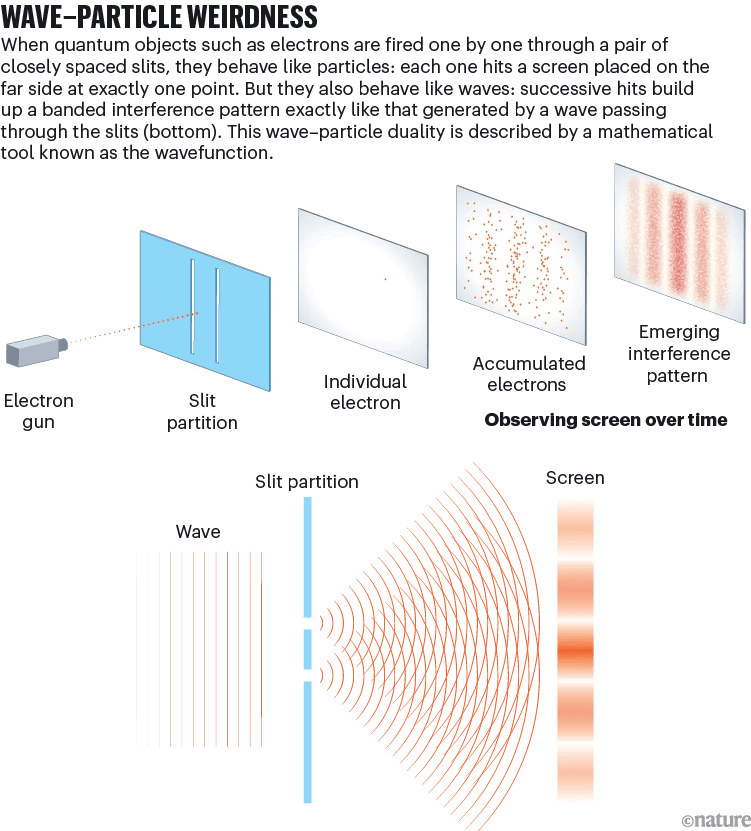
To further mystify this puzzle, later research revealed that these particles would only become actual particles apart from their wave function when they were observed or measured. This need for attendance appears to imply that reality only exists when a conscious entity is observing or attending to these substances wherein the essence of reality manifests itself. Albert Einstein disliked such an idea as he did not care to believe the moon to not be there if he were not observing it. This implies the idea that as an individual interacts with reality, it manifests itself to them. Therefore, what one attends to, to a certain degree, shapes what is perceived as this attendance causes the essence of reality to emerge. A most fundamental interactive process with the nature of being that can be shaped or morphed by the attention of an individual, a process that has some roots with human brain activity and the visual system itself (Radin et al., 2012).
What one attends to is that which is brought into focus and thus processed to a more precise degree in comparison to the peripheral range of vision. The attended visual stimulus is processed through both the ventral and dorsal streams that begin with images captured by the eyes that is then transferred through these pathways through the visual cortex towards the back of the brain to the higher order systems housed within the prefrontal cortex for further processing and potential action execution (Garrett & Hough, 2020). According to quantum theory, this visual process is accomplished as one observes, or interacts, with the underlying subatomic realm. As the wavefunction collapses and the substance of the quantum entities become particles under the observation under a conscious entity, reality appears and is then processed by the brain through the visual system mentioned. This interactive interplay of consciousness and the quantum reality helps give rise to reality and ultimately what is perceived.
One study by Mordehai Heiblum and colleagues in 1998 revealed that the more one observes a particle, the more they influence the behavior of that particle. These results help confirm previous observations such as the double-slit experiment mentioned previously wherein an observer helps dictate, to a lesser or greater extent, how and what emerges within the confines of observed reality. Moreover, this may also be some of the reasons, at the most fundamental level, why certain emotional states and their conjoining value systems help determine what one finds. It may not necessarily be that emotions, values and motivations help direct us towards “tools” that helps one achieve an aim, but rather the aim and its underlying mechanisms may be that which helps reality produce the tools necessary to achieve the aim (Glattfelder, 2019; Schwartz et al., 2005).
Conclusion
Perception is an interesting component of human experience that helps one understand, interact and adapt with their environment. However, as mentioned previously with the proposed arguments by the Quora users which stated that the brain perceives reality accurately, and that perception was strictly a mind model that creates/observes actual reality and is only subjective in a sense according to when or where one might be observing a particular phenomenon occurring. These statements are true, however, part and partial to the actual overarching perceptual narrative that plays out in both the mind of the perceiver and reality itself. As examined earlier, the mind perceives its environment and the events that transpire within those confines through a framework that is influenced by a top-down mechanism.
First, perception is influenced by cultural value systems that have been acquired throughout the perceivers life that imbues events and objects with value that transcends the explicit objective module of what is being observed (de Oliveira & Nisbett, 2017; Frese, 2015). Second, at the deeper level of perceptual analysis is the influence of emotions that are processed through the limbic system of the brain (Torrico & Abdijadid, 2023). Emotions, in conjunction with the schematic value structure, provides a perceiver with information that can alter an observed object or given situation (Chiew & Braver, 2011).
Finally, at the highest level of analysis, the quantum level of reality influences what an individual perceives as the perceiver interacts with reality (Youvan, 2024). This interaction causes the wavefunction nature of the subatomic realm to collapse and become a particle and thus tangible reality in which the perceiver can observe and interact with (Radin et al., 2012). This also means that reality unfolds through the interactive dynamics between consciousness and the subatomic realm, and thus the reality that unfolds can mimic, to a certain degree, what the preconceived value structures and emotional states within consciousness desire or are oriented towards (Heiblum et al., 1998; Glattfelder, 2019).

What does the sum of all this mean, precisely? The theory being proposed here is that perception is an interconnected and intricate process that involves multiple levels of interaction and analysis. Not only is there a multilevel analysis process of what is being observed, but a multifaceted process embedded within the object or situation itself. The observer is perceiving the substance or situation through a value and emotional laden framework while also, if taken far enough, can assess the substance or situation’s components at multiple angles. This expands the perception of any given object or event past the proximal observation and into a realm that could further enhance the observer’s perceptual framework in the future. One can perceive an object within their value and emotional framework at each level of analysis, and yet they can trek beyond this uni-faceted analysis by contemplating or analyzing the multiple components of an object or situation, not only from their own perceptual framework, but also through the empathetic expanse of other perceivers as well. This empathetic reach provides the benefits to help understand what others are perceiving when an object or situation is present which enhances interconnections, and it also allows for a greater intraconnectedness within and the enhancement of their current perceptual framework and understanding of the world around them.
References
American Psychological Association (2017). Ethical principles of psychologists and code of conduct. https://www.apa.org/ethics/code
Ananthaswamy, A. (2023). Particle, wave, both or neither? The experiment that challenges all we know about reality. Nature 618, 454-456. doi: https://doi.org/10.1038/d41586-023-01938-6
Baek, E. C., Hyon, R., López, K., Du, M., Porter, M. A., & Parkinson, C. (2023). Lonely Individuals Process the World in Idiosyncratic Ways. Psychological Science, 34(6), 683-695. https://doi.org/10.1177/09567976221145316
Bandhu, M.D., Mohan, M., Nittala, N.A.P., Jadhav, P., Bhadauria, A., Saxena, K.K. (2024). Theories of motivation: A comprehensive analysis of human behavior drivers. Acta Psychologica, 244, 104177, ISSN 0001-6918, https://doi.org/10.1016/j.actpsy.2024.104177
Bigot, M., De Badts, CH., Benchetrit, A. (2024). Disrupted basolateral amygdala circuits supports negative valence bias in depressive states. Transl Psychiatry 14, 382. https://doi.org/10.1038/s41398-024-03085-6
Caruana Sj L. (2020). Different religions, different animal ethics?. Animal frontiers : the review magazine of animal agriculture, 10(1), 8–14. https://doi.org/10.1093/af/vfz047
Chiew KS and Braver TS (2011) Positive affect versus reward: emotional and motivational influences on cognitive control. Front. Psychology 2:279. doi: 10.3389/fpsyg.2011.00279
de Oliveira, S., & Nisbett, R. E. (2017). Culture Changes How We Think About Thinking: From “Human Inference” to “Geography of Thought”. Perspectives on Psychological Science, 12(5), 782-790. https://doi.org/10.1177/1745691617702718
Eliade, M. (1987). The sacred and the profane: the nature of religion. Harcourt Brace Jovanovich.
Fogarty, L., & Kandler, A. (2020). The fundamentals of cultural adaptation: implications for human adaptation. Scientific reports, 10(1), 14318. https://doi.org/10.1038/s41598-020-70475-3
Frese, Michael. (2015). Cultural Practices, Norms, and Values. Journal of Cross-Cultural Psychology. 46. 10.1177/0022022115600267. https://www.researchgate.net/publication/283895506_Cultural_Practices_Norms_and_Values
Garrett, B. & Hough, G. (2022). Brain & behavior: an introduction to behavioral neuroscience 6th edition. Sage Publications, Inc. https://capella.vitalsource.com/reader/books/9781544373454/epubcfi/6/10[%3Bvnd.vst.idref%3Ds9781544373447.i30]!/4
Glattfelder, J.B. (2019). The Consciousness of Reality. In: Information—Consciousness—Reality. The Frontiers Collection. Springer, Cham. https://doi.org/10.1007/978-3-030-03633-1_14
Gold, J. I., & Watanabe, T. (2010). Perceptual learning. Current biology : CB, 20(2), R46–R48. https://doi.org/10.1016/j.cub.2009.10.066
Ji, L. & Yap, S. (2016). Culture and cognition. Current Opinion in Psychology, 8, 105-111, ISSN 2352-250X, https://doi.org/10.1016/j.copsyc.2015.10.004
Kelley, N. J., & Schmeichel, B. J. (2014). The effects of negative emotions on sensory perception: fear but not anger decreases tactile sensitivity. Frontiers in psychology, 5, 942. https://doi.org/10.3389/fpsyg.2014.00942
Lang, P. J., & Bradley, M. M. (2010). Emotion and the motivational brain. Biological psychology, 84(3), 437–450. https://doi.org/10.1016/j.biopsycho.2009.10.007
Mattson M. P. (2014). Superior pattern processing is the essence of the evolved human brain. Frontiers in neuroscience, 8, 265. https://doi.org/10.3389/fnins.2014.00265
McGilchrist, I. (2009). The master and his emissary: the divided brain and the making of the western world. Yale University Press.
Narr, K. J. (2021, April 14). prehistoric religion. Encyclopedia Britannica. https://www.britannica.com/topic/prehistoric-religion
Radin, Dean & Michel, Leena & Galdamez, Karla & Wendland, Paul & Rickenbach, Robert & Delorme, Arnaud. (2012). Consciousness and the double-slit interference pattern: Six experiments. Physics Essays. 25. 157-171. 10.4006/0836-1398-25.2.157. https://www.researchgate.net/publication/258707222_Consciousness_and_the_double-slit_interference_pattern_Six_experiments
Scheepers, Z. (2017). How do we explain perception of reality? Quora. https://www.quora.com/Is-there-an-objective-reality-or-only-subjective-perception
Schwartz, J. M., Stapp, H. P., & Beauregard, M. (2005). Quantum physics in neuroscience and psychology: a neurophysical model of mind-brain interaction. Philosophical transactions of the Royal Society of London. Series B, Biological sciences, 360(1458), 1309–1327. https://doi.org/10.1098/rstb.2004.1598
Sherwood, C.C., Subiaul, F. and Zawidzki, T.W. (2008), A natural history of the human mind: tracing evolutionary changes in brain and cognition. Journal of Anatomy, 212: 426-454. https://doi.org/10.1111/j.1469-7580.2008.00868.x
Sohn, H., Narain, D., Meirhaeghe, & Jazayeri, M. (2019). Bayesian computation through cortical latent dynamics. Elsevier, 103(5), 934-947. https://doi.org/10.1016/j.neuron.2019.06.012
Talarico, J. M., Berntsen, D., & Rubin, D. C. (2009). POSITIVE EMOTIONS ENHANCE RECALL OF PERIPHERAL DETAILS. Cognition & emotion, 23(2), 380–398. https://doi.org/10.1080/02699930801993999
Torrico, T. J., & Abdijadid, S. (2023). Neuroanatomy, limbic system. In StatPearls. StatPearls Publishing. https://pubmed.ncbi.nlm.nih.gov/30860726/
Werner, M. (2019). How do we explain perception of reality? Quora. https://www.quora.com/Is-there-an-objective-reality-or-only-subjective-perception
West, L.J., Epstein, W. & Dember, W.N. (2024, November 13). perception. Encyclopedia Britannica. https://www.britannica.com/topic/perception
Youvan, Douglas. (2024). Quantum Logic and the Philosophical Frontier: Rethinking Reality, Causality, and Knowledge. 10.13140/RG.2.2.21653.91360. https://www.researchgate.net/publication/377926268_Quantum_Logic_and_the_Philosophical_Frontier_Rethinking_Reality_Causality_and_Knowledge
Zeller, E., Timmermann, A., Yun, K., Raia, P., Stein, K. & Ruan, J. (2023). Human adaptation to diverse biomes over the past 3 million years. Science, 604-608, 380, 6645. doi:10.1126/science.abq1288
Zhang, E., Li, W. Improved fidelity of orientation perception: a learning effect dissociable from enhanced discriminability. Sci Rep 10, 6572 (2020). https://doi.org/10.1038/s41598-020-62882-3
 Michael Thacker